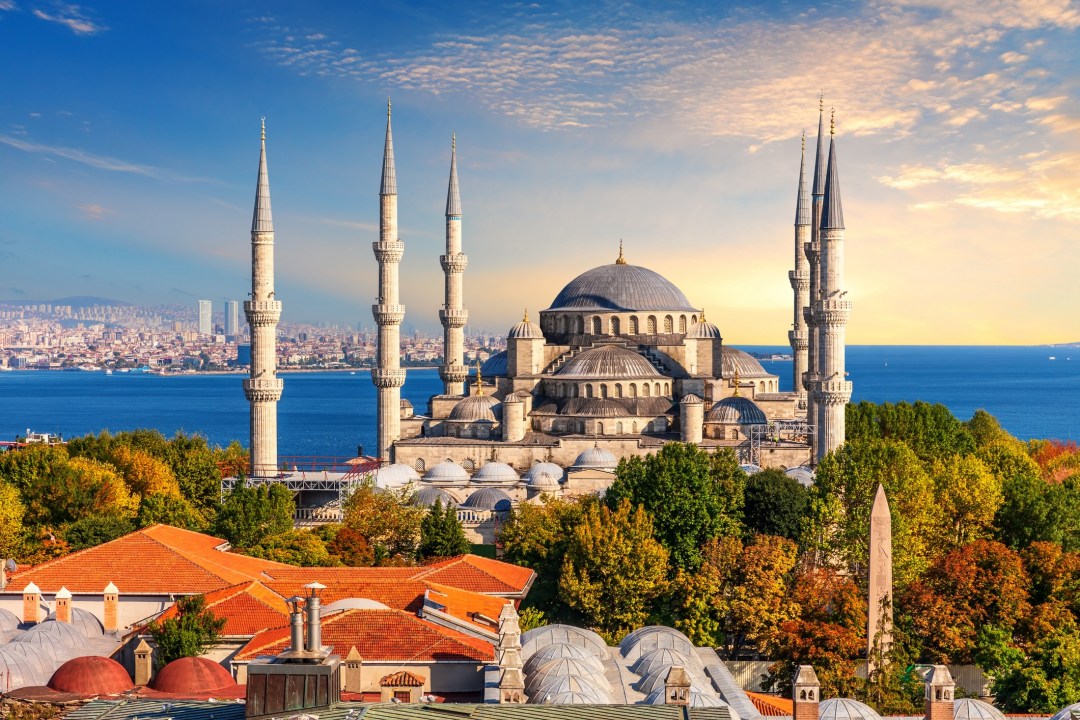

It’s the largest city in Europe, spans two continents, has been the capital of three mighty empires – Roman, Byzantine and Ottoman – and is visited each year by some 20 million tourists. These days – and I’m only guessing here based on the scores of battered, bloodied and bandaged scalps I spotted – it’s also the hair transplant capital of the world. Little wonder so many choose to come here for their cosmetic ‘enhancements’ (or ‘maimings’ depending on your view): if there’s one city that understands reinvention, it’s this one.

I’m talking, of course, of Istanbul where continents and cultures, Christianity and Islam collide. To my shame, I’d never been before but, crikey, I loved it. I can’t recall when last I was so smitten by a city – and so swiftly.
Everyone I know has visited Istanbul, so I wasn’t short of advice of where to go and what to do. And, since dispensing advice and telling me where to go and what to do is apparently Mrs Ray’s sole reason for living, I allowed her to tag along, too.
Everyone told us to go in winter to avoid the crowds. So we did, staying at the deliciously swish Rixos Tersane. The hotel is vast and sits right on the banks of the Golden Horn, like a stately cruise liner in dock.
On our doorstep was the Tersane Istanbul: an inner-city development project to ‘transform’ the 600-year-old shipyard. If the hotel was a decadent delight, though, this squillion-dollar development seemed – well – a little naff. Chanel, Gant, Guerlain, Lacoste, Nike and Victoria’s Secret are among the retailers now inhabiting the shipyard’s former warehouses. It could be any mall, anywhere, and, on our visit, was completely empty.
In fairness, the Tersane Istanbul development is brand spankers. Even our wonderful guide, Cüneyt (pronounced ‘june-eight’), who joined us for a day thanks to the good offices of Kirker Holidays (organisers of our fabled Spectator Wine Club tours), hadn’t been. He had, though, been everywhere else and if there’s a wittier, warmer or wiser guide to the city, then I would be astonished.
Cüneyt led us to such must-sees as the Sultanahmet Camii, aka the Blue Mosque (the light flooding in through its 260 windows makes it blue), the Hagia Sophia Grand Mosque and the 15th-century Grand Bazaar. With its 65 streets and 4,000-plus shops, this is the place to come for jewellery, rugs, leather goods, tiles, scarves, pottery and – perhaps most notoriously – fakes. The sellers of the latter are remarkably frank: ‘I’ve got the best genuine fake Rolexes in all the bazaar,’ boasted one.
After three heady days in town, I’m already desperate to return
Fake Rolexes in the bustling Grand Bazaar or real Nikes in the barren Tersane Istanbul mall? I know which I prefer. But Istanbul has always balanced east and west, tradition and reinvention, and the new development merely reflects a more globalised, luxury-oriented city. As Cüneyt pointed out, Istanbul has been looking west since the Ottoman Tanzimat reforms of the 19th century. The sparkling, yet sterile new mall is merely a continuation of that long dialogue rather than a new trend.
We took a cab (which, unlike everything else in Istanbul, was cheap as chips) to the almost empty Chora Church, famed for its remarkable 14th-century mosaics charting the life of the Virgin Mary. It was worth the journey, not only for said mosaics, but also for Cüneyt’s masterful distillation of Istanbul’s 3,000 years of history into just 30 minutes.
Back in the old town, we nipped into Bag Pera, a brand new wine bar with more than 400 Turkish wines, the Pera Palace Hotel – once the city’s finest and where Agatha Christie wrote Murder on the Orient Express – and had fabulous cocktails at Mikla on the top floor of the Marmara Pera hotel while gawping at what must be the finest view of this bewitching city.
The following day we struck out on our own. Mrs R had a quick dip in the Bosphorus before we took in the Topkapi Palace, the remarkable Basilica Cistern (built by the Romans to bring water to the city) and the historic Pandeli restaurant where we had an excellent lunch of mixed meze, grilled meatballs and rice. I gave the kazandibi dessert – a caramelised milk pudding sprinkled with chicken – the swerve but Mrs R declared it excellent and both she and the waiter gave me a look for being so feeble. It’s a classic of Ottoman cuisine, apparently, born in the sizzling cauldrons of the palace kitchens. The strange mix of finely shredded chicken breast and milk creates a rich, creamy, silky texture, which is still much loved by locals as a nostalgic comfort food.
Having walked ourselves to a standstill, we flaked out in the cossetting embrace of Rixos Tersane (our room even had a pillow menu) before making a renewed assault on the city starting at my new favourite cocktail bar Flekk in the trendy Beyoğlu district. We then rounded things off nicely with the tasting menu and accompanying vino at the coolest of cool Aheste.
After three heady days in town, I’m already desperate to return. And, no, despite being as bald as the poor proverbial coot, I’m not planning a bloody hair transplant, thank you for asking.



Comments