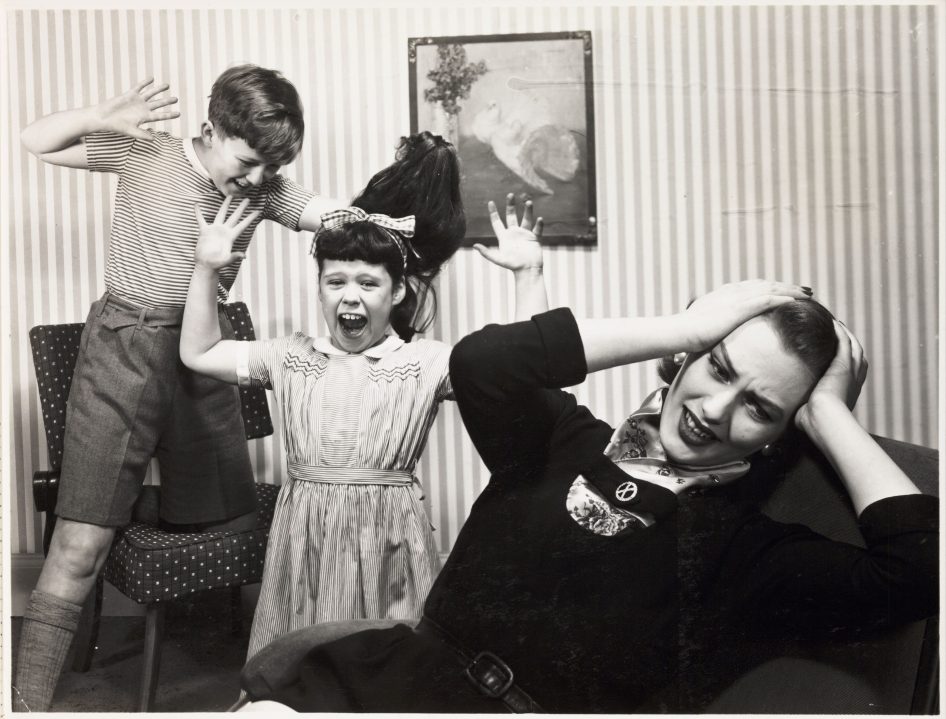
In recent months, much has been made of “FAFO parenting.” Touted as the backlash to “gentle parenting,” the philosophy of “Fuck Around & Find Out” seems to be that children should learn the natural consequences of poor decision-making. While gentle parenting advocates empathy and respect, reasoning and explanation, FAFO parenting dictates that rather than going nine rounds with your small person to persuade him or her to go to the bathroom before going out / to put a raincoat on when it’s pouring / not to pull the cat’s tail, you should let them see what happens when they have the temerity to exercise their own free will.

Reading about how widely endorsed FAFO parenting apparently is on social media, my immediate reaction wasn’t: sounds sensible. Or: surely that’s a bit tough? But rather: who the hell has a parenting philosophy? If asked to formulate one, I’d like to think my response would be similarly evasive to Frank Sinatra’s when he was asked about his religious philosophy by Playboy magazine (which presumably was big on God back in 1963). He declared that he was “for whatever gets you through the night – be it prayer, tranquilizers or a bottle of Jack Daniels.” Make mine a Campari, and I’m basically with him all the way.
Guiding principles? Yes, absolutely. Red lines? Critical. My own are embargoes on drugs, tattoos and television Monday to Friday. It’s a riot round ours on a dank Tuesday in February. Why, only the other evening I regaled my girls with a few of Gerard Manley Hopkins’s finest as we had supper, and they could hardly contain their joyful enthusiasm. But surely having something as concrete as a philosophy marks you out as, well, rather a parental prig? One with the luxury of time to navel-gaze, and mold principles and boundaries into a school of thought, while presumably outsourcing the hard graft to a passing nanny.
I asked my friends to gauge their opinions and check if any of them are indeed prigs. I was consoled by the first response I got which came from a particularly fabulous American academic. Grappling with the finer points of constitutional jurisprudence by day and crafting a papier-mâché replica of the Rosetta Stone by night, in response to my query she found herself in a quandary. She decided to do what any fine mind might and ask ChatGPT. She was swiftly assured that having such a thing would make her unlikeable. “The way not to parent,” she reasons, “is to be widely disliked by other parents. Nobody will want to arrange a playdate with your child.” As socialization is surely the main reason for sending children to school before their teenage years, developing a parenting philosophy risks being a spectacular unforced error.
A seafaring friend of mine is similarly skeptical about parenting philosophies. Prioritizing fun, love, humor and engagement are a given, but the formalization of what should really be the natural development of a relationship between parent and child he finds ultimately reductive and an invitation to indulge in psychobabble. “What next? Maslow’s Hierarchy of Needs? Too simple. And no fun.”
‘The way not to parent,’ one friends reasons, ‘is to be widely disliked by other parents. Nobody will want to arrange a playdate with your child’
Another friend, let’s call him Tom because that’s his name, says that his parenting philosophy extends to assuming, modestly, that whatever way he does things is almost certainly the best conceivable way. He believes the key is to avoid “infantilizing infants” at all costs by “trying to educate them with a vast catalog of age inappropriate experiences,” from trips to galleries and stately houses, to violent films and the great ideologies of the 19th century and teaching them how to spell “ideologues,” Oh, and lots of tree climbing.
While I’m confident that my tree-climbing days are behind me (mercifully, as I tended to go up and be unable to get down), I feel rather comforted to know that there are excellent parents out there who aren’t at all priggish, and are similarly cynical about the idea of espousing any particular philosophy. It’s not so much that I disagree with the content of these codes of practice; it’s more that I object to the self-indulgence of relying on a code to affirm oneself. That, and the fact I just really wouldn’t want to have that Campari with any parent who claimed they had a philosophy for child-rearing.



Comments