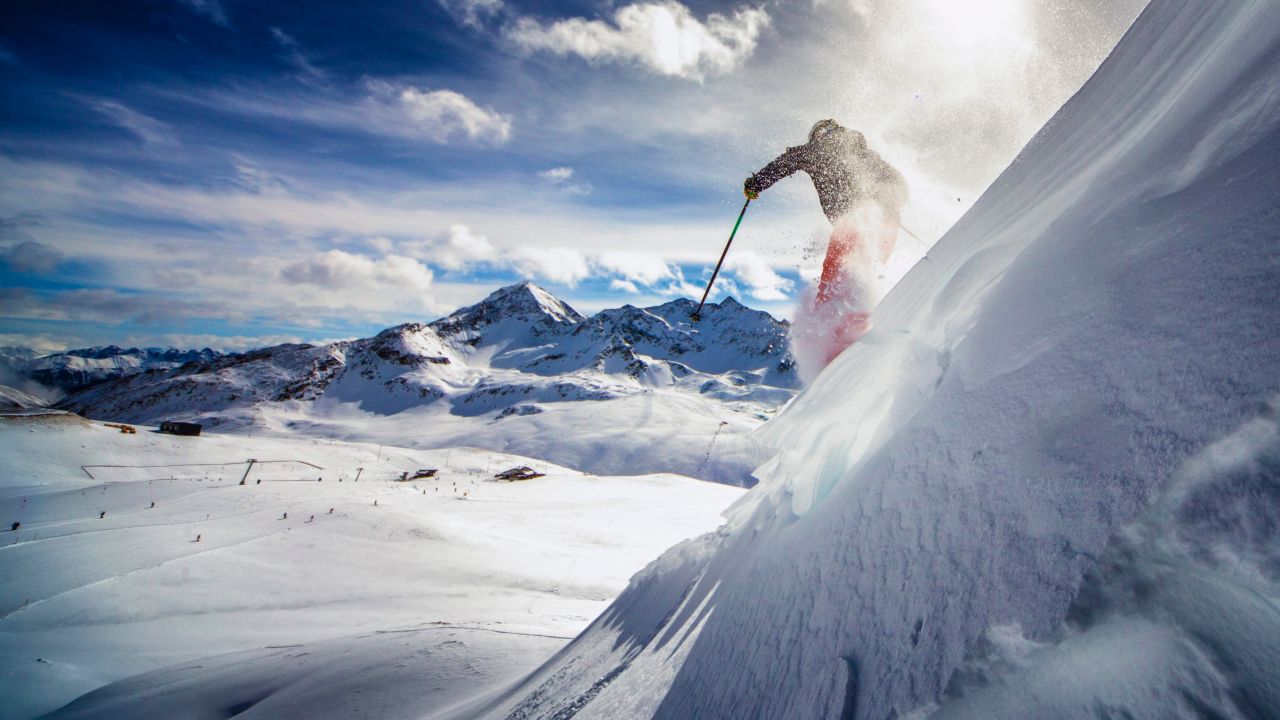
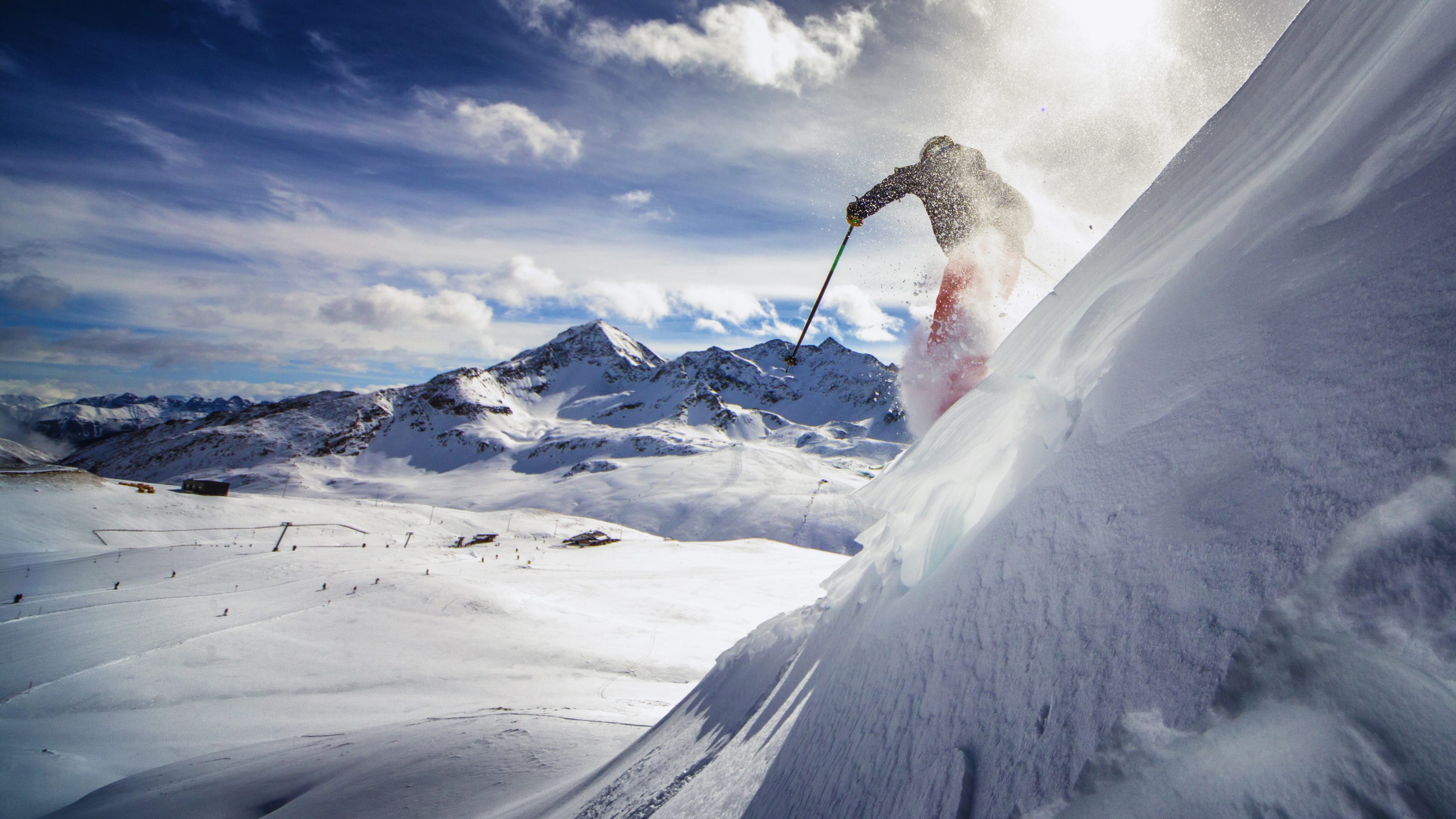
The problem with conventional ski holidays is that every day is more or less the same. You step eagerly out after your hotel breakfast to take the same ski-lifts and ski on the same slopes every day, and return to the same room every night. It can feel like a work commute, albeit a bit more fun.

Ski ‘safaris’, by contrast, offer a far less humdrum experience; but the terrain must be right. In the case of the Dolomites, a ski safari works precisely because the ski area is made up of loosely interconnected resorts with, crucially, a series of rifugi (mountain huts) high up on the slopes providing food and accommodation for an overnight stay.
For the most part, Dolomites skiing is pretty unchallenging, consisting mostly of fast blue and red runs, which means that a bit of variety during a week-long stay is essential. Thankfully, a safari offers just that – the opportunity to explore a major part of this vast system and never to ski the same piste twice.
There is, too, a genuine sense of adventure. Skiing becomes a mode of transport by which you travel through an area – 50km or more a day is the norm – out of which there is some 8,000m of downhill. This means that the safari is not for beginners – or the unfit. It is physical fitness, the ability to ski all day without being exhausted, that is probably more important than skiing ability, though you do need to be of a decent intermediate standard.
There are other features that may deter the casual skier. You need to carry your belongings in a small 23-litre rucksack provided by the company, which is insistent that you limit yourself to the minimum: a couple of T-shirts, underwear, a washbag, clothes for the evening and not much else, as you have to ski carrying the rucksack all day. Most people soon become oblivious to the little load on their backs as they cruise down the exceedingly well groomed slopes (moguls seem to be banned in Italy). The most challenging issue is on the ski-lifts, where you are supposed to take them off and rest them on your lap, though some people become adept at squeezing into the seats while keeping them in situ.
The rewards for overcoming these minor hassles are a unique and unforgettable skiing experience without the hassle of making the first lift. Already, over breakfast in the rifugio, you will have enjoyed watching the sun rise over white peaks, the initial pinks blending slowly into muted yellow and then bright sunlight. The night before you will have enjoyed copious amounts of the fusion food that is found in most of the rifugi, a blend of Austrian hearty stews and dumplings and Italian antipasto and pasta.
It is physical fitness, the ability to ski all day without being exhausted, that is probably more important than skiing ability
The most remote and highest of the rifugi is Lagazuoi, set amidst the debris of one of the deadliest battlegrounds of the First World War between the Italians and Austrians. Astonishingly, as glaciers and the permafrost melt, bodies and ammunition are still being found in the mountains, which are dotted with caves created during the fighting. Lagarzuoi can only be reached by a cable car and one of the great pleasures is skiing down what is called the Hidden Valley on the other side first thing in the morning with the added advantage that the last section, which is flat, involves holding onto a rope and being hauled by a team of horses – at a cost of just five euros.
Things have changed quite a lot since I did this same safari a decade ago. In those days, the rifugi were fairly basic, still appearing to cater for the summer hikers, for which they were originally built, rather than the more affluent skiers. Now, they are going somewhat upmarket, thereby losing their ‘let’s all muck in’ youth hostel feel and becoming more like conventional hotels. But not entirely. They have few rooms and you may have to share; something of a deterrence to some potential clients. And, shock horror, not all the accommodation is en suite, though the recent improvements have made the need for walks along dark corridors in the middle of the night less likely.
We were blessed with good though very cold weather and enough snow, though all man-made, which is often the case in the Dolomites as the snow is less dependable than in the Alps further north. That meant conditions were a bit icy and it was inadvisable to fall on to the hard, closely packed snow – which I managed to do twice, resulting in more than a few bruises.
There has been considerable investment in improving the ski-lifts and cable cars, partly for the influx of people expected in 2027, inspired by this year’s Winter Olympics. This reflects a confidence in the continued survival of skiing in the Dolomites, which is not shared by all the locals. One taxi driver expressed scepticism about the sport’s long-term viability in the area, pointing to glaciers that had disappeared. Indeed, in July 2022, 11 mountaineers were killed when, after a particularly hot period unusually early in the year, an avalanche of ice and rock on the Marmolada, the longest ski run in the area, swept down the mountain. Perhaps, therefore, it is best to grab a safari soon before it all melts away.
Christian Wolmar was the guest of Inspired Italy.




Comments