
Twice a year the taxman comes to call, exhibiting all the bossy incompetence one expects from the government machine. Why not do as the Romans did, and privatise it? After all, one would surely rather give one’s money to a publican, even if a sinner.
The publicanus, as the name suggests, was a public servant, i.e. a contractor for public works of any kind. Indeed, from early on, wars were fought, roads built and mines worked on the back of service contracts offered out to hopeful bidders, as was the right to gather dues from harbours and toll stations.
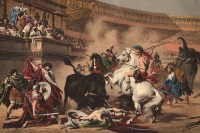
Gaius Gracchus in 123 bc legislated for publicani to collect taxes in the new and wealthy Roman province of Asia (modern Turkey), with contracts auctioned off by the state to the consortium (societas) offering them the largest take. The winners paid off the provincials’ tax debt for the year and pocketed the rest. Over time they diversified into banking and mail delivery.
There were two great advantages to the system. First, it continued Roman policy of utilising private individuals in order to avoid creating a civil service. More important, it meant the government got its taxes for the year from the winning consortium all at one go, at the beginning of the fiscal year. They probably accepted a price lower than the total (vast) theoretical sum to be collected, but the advantages outweighed any loss.
Inevitably the system was abused by ruthless publicani working hand-in-glove with corrupt provincial governors and officials. In a letter to his younger brother Quintus (60 bc), who was serving as governor of Asia at the time, Cicero comments on the difficulty of keeping the publicani happy while preventing them bleeding the provincials white. Augustus (31 bc – ad 14) tried to control abuses, but they continued under Nero (ad 54-68). It was even suggested that the only way to end them was to abolish taxes…
Now that he has nothing else to do, Peter Mandelson’s track record surely suggests he would be the perfect man to run the show.





Comments