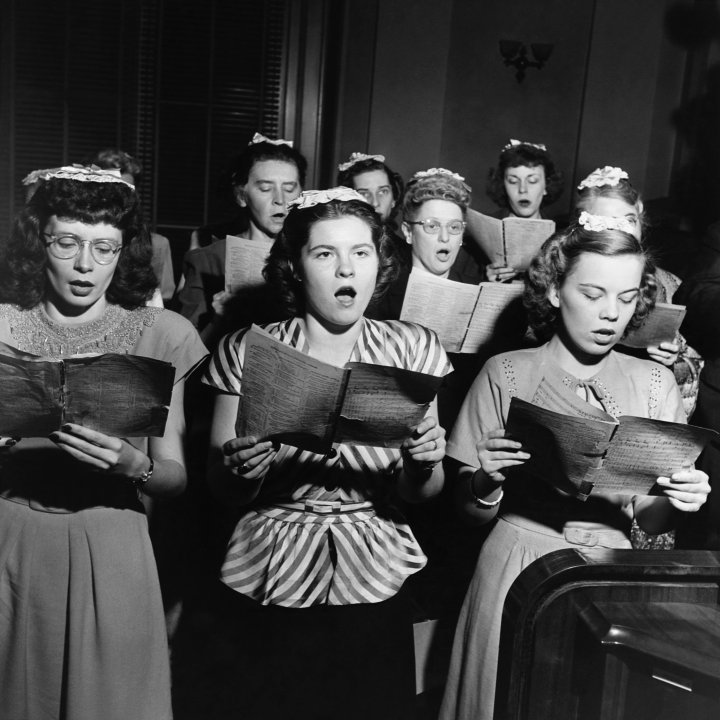
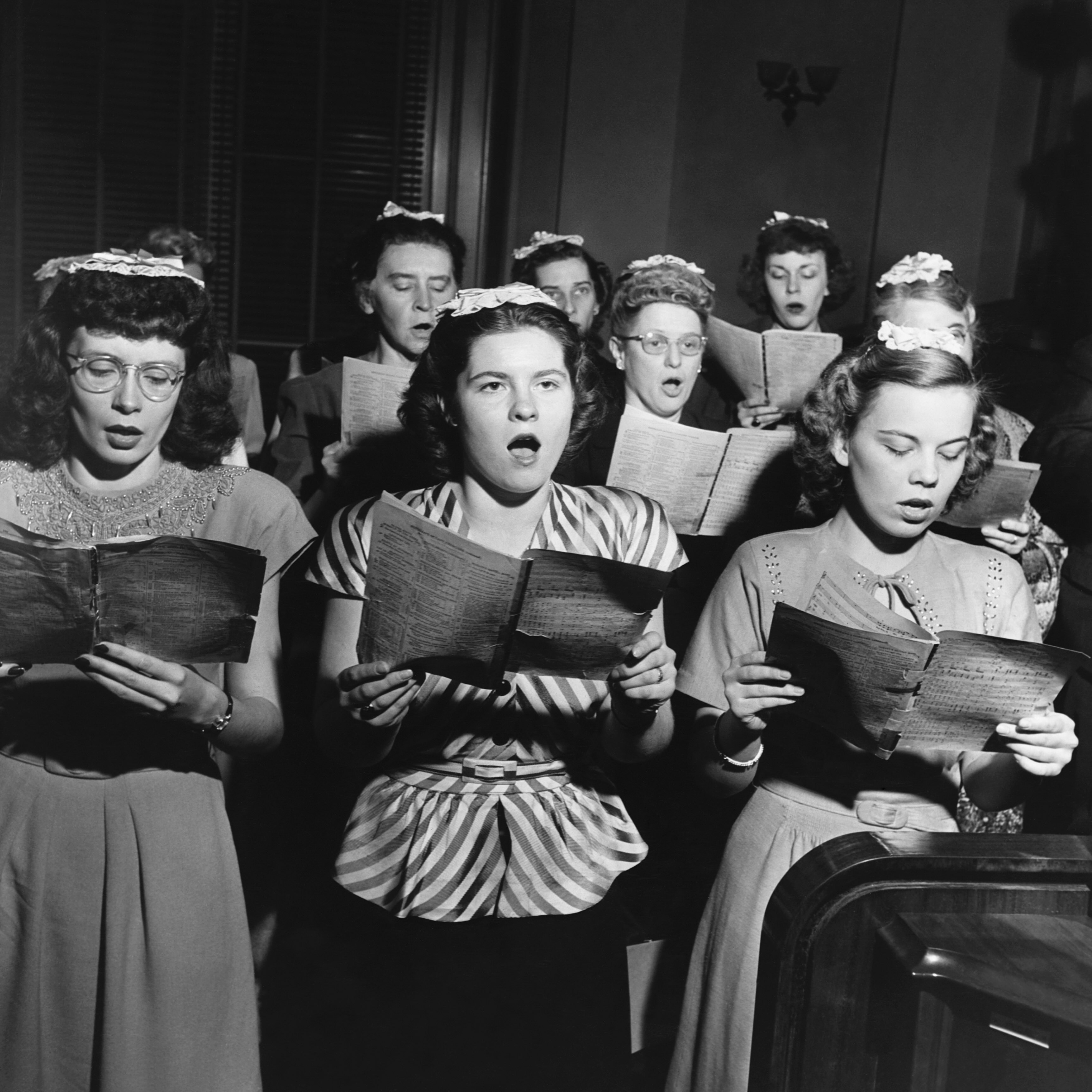
‘Screenagers’, ‘lonely’, ‘boring’ – all words used to describe Gen Z. Born between 1997 and 2012, we are the first generation to grow up with omnipresent technology and are often maligned as phone addicts and loners. But things are changing. Now the first tech-native generation is actively seeking out the most analogue hobby of all: community choir.

Community choirs have boomed across the UK following the pandemic, and the country’s youngest adults are clamouring to get in. Some Voices, a non-audition choir in London which started as six friends singing in 2010, has grown to more than 1,200 members since 2020. Many of these newer members are Gen Z, searching for a connection which is more reliable than the wifi.
‘For Gen Z, who have grown up in such a digital world, the opportunity to be in the room, to connect in real life, feels even more meaningful,‘ says Frankie Stansfield, a spokesperson for Some Voices. ‘Singing in a choir offers a genuine sense of belonging and shared energy. Members often tell us things like, “I’ve had a tough day at work, I can’t wait to go to choir tonight and forget everything for a few hours”. It’s more than music: it’s community and wellbeing rolled into one.’
In fact, in a choir, community and wellbeing are inextricable. A study from the University of Oxford concludes that the positive neurochemicals released during communal singing can be directly linked to positive health outcomes such as an improved immune system and even pain relief. The strong social network created from harmonising with other people can, the study reports, have even more positive health benefits than quitting smoking.
‘I can always count on the fact that I’ll leave choir feeling better than when I arrived,’ says Tallulah Farrar, 26, who joined a community choir after moving to London from New Zealand. ‘It’s just so joyous. Having that space to join others and make music together, it’s the best feeling and a great way to spend a weeknight… We’re not musicians, we’re regular people choosing to sing just for the love and community of it.’
‘There’s also this “cringe culture” that I think lots of my friends are really trying to reject,’ continues Farrar. ‘We’re doing things that we want to do even if they’re not typically the coolest, which choir definitely wasn’t at school.’
In a choir, community and wellbeing are inextricable
The term that comes up over and over again is ‘real-life community’. Meg Whitehead, 24, recently moved to London from Australia. Wracking her brain to figure out how to meet people, she remembered how much joy her dad gets from his choir back home, and in a bout of jet-lagged insomnia started to Google ‘community choirs near me’.
‘I was scared that I didn’t know anyone when I first joined, and that fear almost instantly evaporated,’ says Whitehead. ‘Singing is such a sharing of emotion as well as a sharing of skill. I think singing is storytelling, and to sing as a group is innately community.’
Izzy Hughes, 27, a social leader in her London community choir, started singing at university and has sought out community choirs ever since. ‘When you’re harmonising or making music together, it’s quite different from other ways of meeting people. I feel like a lot of other ways to meet people are sports and stuff and that can be quite competitive, whereas singing I feel, is more about constructing something.’
For a generation burdened with the highest reported levels of anxiety and depression, stemming from a multitude of sources including loneliness and the lingering impact of the pandemic, a community choir’s proven capacity to boost serotonin, dopamine, and self-confidence can be part of the solution.
As Hughes puts it: ‘People join choirs because they can feel quite isolated by social media and are looking for a sense of togetherness. Or maybe they just really like singing.’





Comments