
I just had lunch with several European ambassadors and they asked me whether Keir Starmer’s trip to China was important or significant. My answer was that it was important but not significant.
Starmer has been given a respectable degree of pomp, will be able to point to multiple billions in Chinese investment in British firms and has today secured the lifting of Chinese state sanctions against British parliamentarians. Iain Duncan Smith, Tom Tugendhat and others will now be able to travel to China should they wish.
China got what it wanted – a massive new embassy near the Tower of London – having made clear Starmer would not be welcome in Beijing unless it was approved
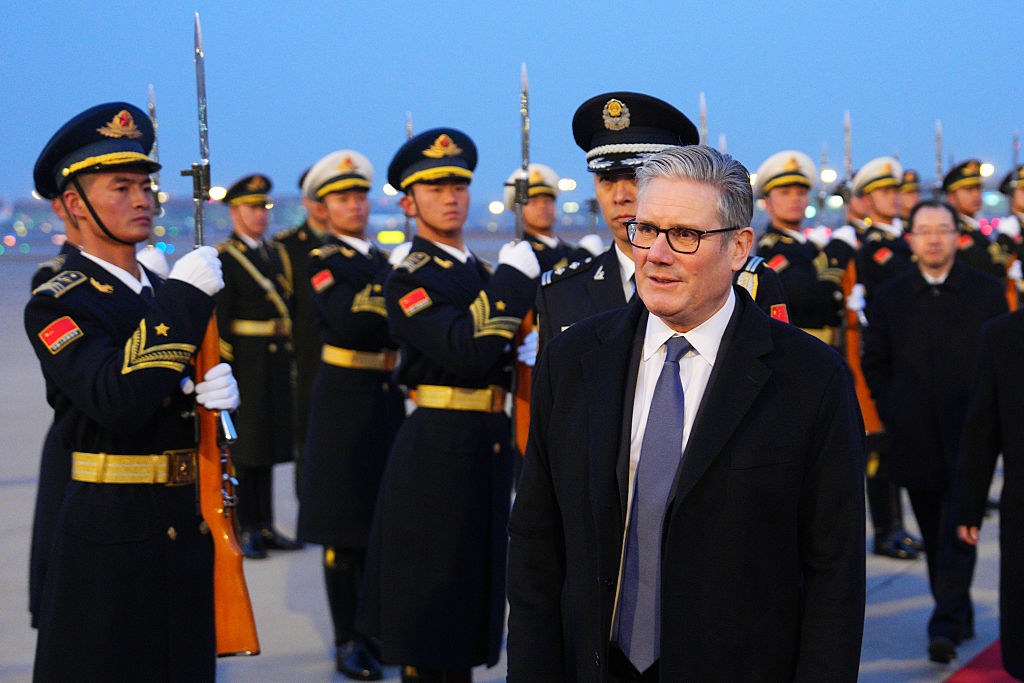
Much of diplomacy is flummery and show, and at least Starmer was given the red carpet, rather than the cold shoulder which is sometimes the Chinese way – though there was something of a satirical drama about footage of the Prime Minister being greeted with an honour guard yesterday, where the lead role seemed to have been handed to an actor too short for it.
But has Britain’s posture to China really changed that much? Is this the boost to economic growth the Treasury craves? Not so much.
As Downing Street has rightly pointed out, UK policy towards China veered from ‘golden age to ice age’ between David Cameron and Rishi Sunak, and it probably makes sense to have polite dialogue with one of the world’s two superpowers (particularly when the other one is behaving so erratically). But most of the business deals would have happened anyway and this is not an era-defining visit.
I keep thinking about the lunch I had a day earlier with a prominent figure who has done a lot of business with China. He declared: ‘None of it really matters. The volume of trade is not that high. The Chinese will talk to us when they want something, and they will throw us a few crumbs which matter a bit to us but don’t matter to them.’ Exhibit A: cuts in whisky tariffs and easier tourist visas.

The sanctions thing is good symbolism but it won’t stop China trying to spy on MPs and peers, hack phones and laptops or compromise political officials. I doubt Messrs Duncan Smith and Tugendhat will be jumping on a plane to see the Terracotta Warriors this summer.
Their phones and computers have been hacked and buggered about with so often that the invitation to take them into China, where they would be at the mercy of the Ministry of State Security, will seem about as appealing as a maggot in a bowl of noodles.
China got what it wanted – a massive new embassy near the Tower of London – having made clear Starmer would not be welcome in Beijing unless it was approved. Yet even this is not a game changer. Yes, this will be a huge espionage hub in the capital, but having all the Chinese spies in one place, instead of scattered around London, may have some advantages to MI5 counterintelligence people.
The spy chiefs also think talk of cables under the property being compromised is overdone and told No. 10 so. But all this means is it will be business as usual – and Chinese spies are already more active in the UK than ever before.
So while the Prime Minister can say his ‘never here Keir’ nickname is unfair, and in this case misguided, nothing that has happened over the last few days in Beijing and Shanghai is going to materially affect the cost of living, Labour’s performance at May’s crunch elections or whether Starmer survives in Downing Street. Some things in politics are necessary and useful but the number of things which is transformational is very limited.
Having spent three weeks in China in 2009 I would recommend it to everyone, both for its famous historic sights and because the speed of change there is extraordinary. In one city I went to sleep in a hotel next to a construction site and when I woke up the building next door was two storeys higher. But if you’re going, make sure you take a burner phone.





Comments