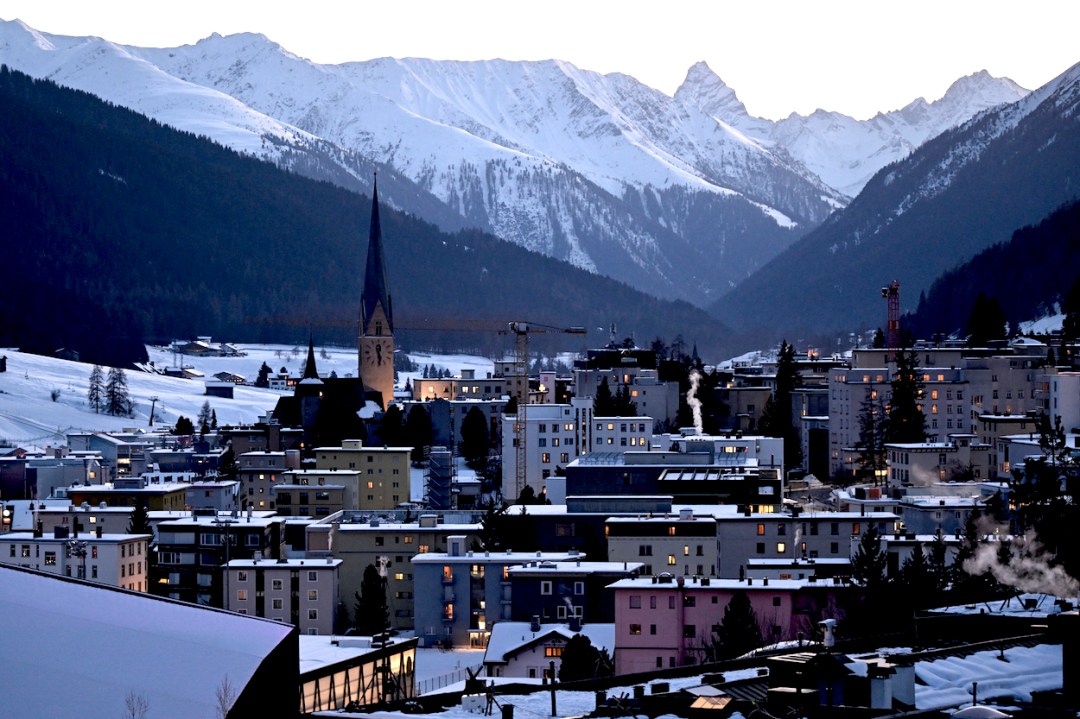
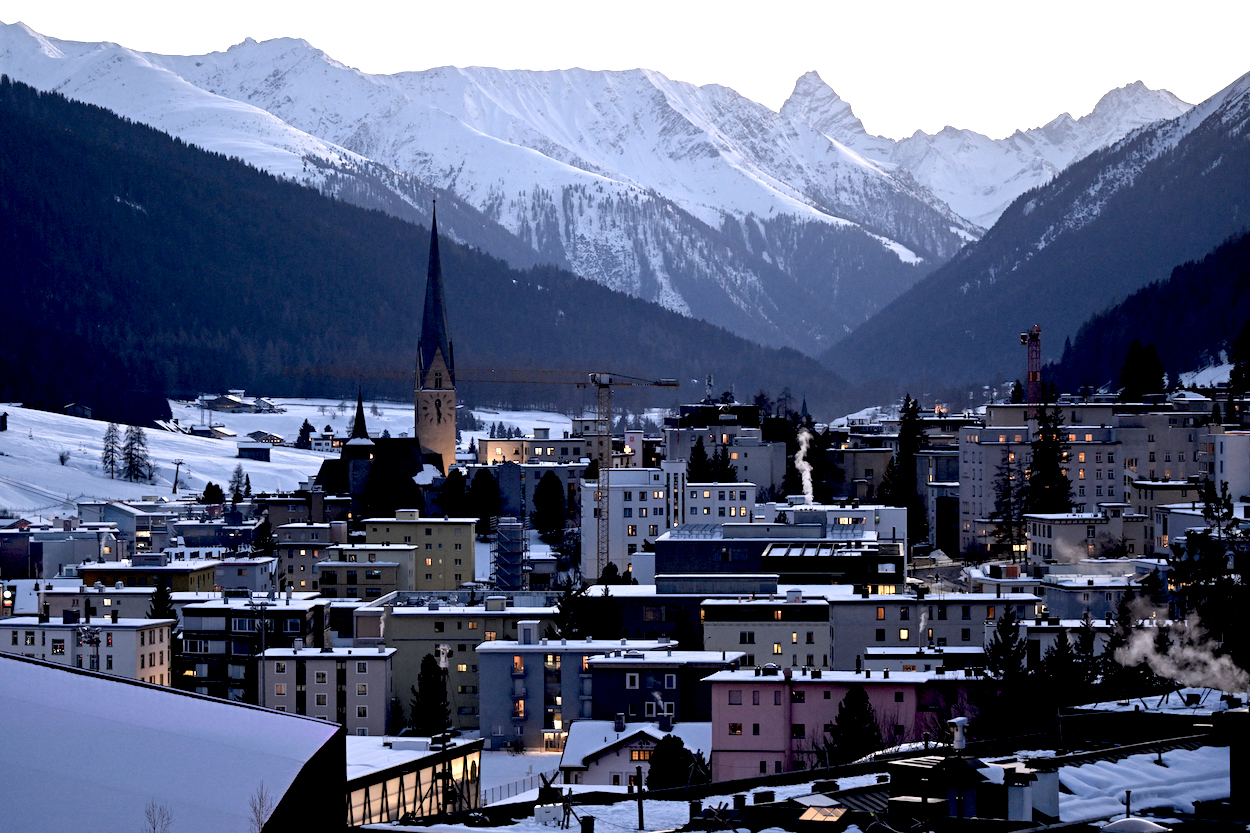
A most unlikely proposition emerged this week in Davos. Larry Fink, interim co-head of the World Economic Forum, proposed moving the annual gathering of the world’s ultra-elite to Detroit or Dublin. The WEF, he said, should ‘start doing something new: showing up – and listening – in the places where the modern world is actually built.’
This is the least of the forum’s worries. Davos this year moved so far from its customary mission that its location hardly matters. An organisation founded to improve the world’s condition and promote global integration – the kind of place where chief executives would routinely ink and announce multi-billion dollar, cross-border deals – has turned into a geopolitical demolition derby.
Davos’ transformation has been gradual. There have been meetings devoted to climate change and ESG more broadly. There have been meetings where questions of global inequality took centre stage. Geopolitics, too, is ever present.
But if geopolitics has always been an undercurrent at Davos, this year it turned into a riptide that threatened to sweep the entire enterprise out to sea. An historically large US delegation arrived determined to smash the meeting to pieces and just about succeeded. Economic nationalism and strongman brute force – and the forces pushing back against them – dominated. It’s almost worth repeating the name of the World Economic Forum out loud, as a reminder of what it was meant to be.
Greenland was the most visible feature of Davos’ descent into full-blown geopolitical discord. Since his second inauguration, President Trump has telegraphed in the most threatening way his intent to acquire Greenland, using expressions such as ‘right title and ownership’, as if the Danish territory were land under a high-rise condominium. Davos waited for Trump this year in a state of maximal agitation: Would the irascible president announce from the dais that an invasion of Greenland had commenced?
The modern-day, global nobility assembled at Davos, not to mention the New York Stock Exchange, heaved a collective sigh of relief when Trump ruled out taking Greenland – or was it Iceland? – by force. But Trump has not abandoned his desire to ‘own’ territory he covets for its strategic location and the mineral wealth below its ice. As Davos wound down, the red lines between Trump, Denmark, Nato and the EU remained clear and unmoved. What lies beyond those lines, for now, remains unclear.
Proceedings even included the launch of a Trump-backed Board of Peace, a geopolitical indulgence complete with a shiny gold logo. This organisation, made up of nations such as Paraguay and Mongolia (and a few heavy hitters such as Turkey and Saudi Arabia) will likely accomplish quite little, other than to further undermine the global order that Davos was formed to foster.
Countries and companies will always need times and places to come together to work on issues of mutual concern. But the size, shape and composition of those platforms themselves are in flux. Was this year’s Davos a replacement for a session of the UN General Assembly or its Security Council? Was it more powerful than a Brics summit? Do these bodies, not to mention the multi-vector shuttling of Steve Witkoff and Jared Kushner, calm the polycrisis or make it worse?
A globalised business world was as much under attack this week as the geopolitical order. US Commerce Secretary Howard Lutnick came to Davos with a sledgehammer aimed at the bedrock of Davos’ foundation. ‘Globalisation,’ he said from the stage, ‘has failed the West and the United States of America.’ Lutnick was reportedly heckled at a private dinner hosted by Fink; Christine Lagarde, head of the European Central Bank, was said to have walked out on the meal. Canadian Prime Minister Mark Carney stole the show on opening day with a speech that diplomatically but forcefully said the quiet part out loud. The old, rules-based world order is over, he told attendees, adding that it may have been a fiction all along.
Was this year’s Davos a replacement for a session of the UN General Assembly or its Security Council?
To be fair, Davos still features robust executive handshaking and deal-making; business leaders assembled in the Alps are putting a brave face on a messy situation. Morgan Stanley CEO Ted Pick told reporters he was ‘pretty amped up’ about Davos, presumably because his bank will be backing some of the deals coming out of the week-long meeting. Chancellor of the Exchequer Rachel Reeves is reportedly bringing a slim but realistic $1.5 billion in private investments back to the UK. Others wondered aloud about trust and confidence and remained distinctly on edge.
When Davos returns to its usual, more bucolic self, Fink and the WEF’s leadership team will have a lot to reflect on. Location, of course, matters. People go to Davos because it is in a hyper-modern country known for its extreme wealth and all the associated trappings. Nearby Zurich Airport is a world-beating transportation hub. And with the greatest of respect to Detroit, an erstwhile powerhouse reportedly on the verge of a rebirth, few people will brag about having ‘been to Detroit’ in the same way they dine out on ‘when I was at Davos’.
Location, however, is the smaller part of the problem. More importantly, Fink and co. will have to determine whether Davos should – or can – again become a place where the world comes closer together.




Comments