


For years, retailers have been behaving like needy friends. My phone would ping. “Hi there!” an email would read, “We’ve missed you.” Who could this be? I would wonder happily, before realizing that the warm and loving message was from someone in the marketing department of the emporium from which I’d once bought a couple of pairs of expensive shoes. Emma usually, or Olivia.
With the advent of artificial intelligence, though, personalized, over-the-top PR is getting much, much worse. At least in the past you’d needed an actual Emma to send these emails, some girl who’d gone into marketing, typing enthusiastic nonsense all day. There was at least a human who had “reached out” – they always “reach out.”
AI is just so needy. Can’t we have the equivalent of the cool and tough friend who tells it like it is?
Now, in a trice, AI can compose a limitless amount of this oleaginous stuff, calling me by my first name, begging me to get in touch, sympathizing. It also has an in-depth knowledge of my shopping history – and who knows what else?
Over the past month, my phone hasn’t stopped pinging. “How popular I must be!” I thought. And then I looked more closely and all those exuberant “Happy Holidays” messages – every one with a string attached, casually dropping into the conversation that their New Year sale was starting, that there were bargains to be had and that I must log on before all the great savings are snapped up by other people. It’s so cheap to program AI to compose and send messages that they now come in a seamless flow.
It’s not just the misplaced enthusiasm of the voice that’s irritating. Because sensitivity is so vital to the 21st century, AI PR often adopts a pseudo-caring tone. A place that specializes in cards and gifts emailed recently: “Valentine’s Day is coming up, and we know it can be a difficult day for some people,” it began. “So if you want to opt out of Valentine’s Day marketing, just let us know.” Gee, thanks. I have a husband, but in that moment I felt like a tragic spinster, destined to be eaten by her cats.

The same thing happens around Mother’s Day and Father’s Day. Because my shopping habit is international, I receive tenderly worded messages of consolation from robot PRs on both sides of the Atlantic.
Mother’s Day falls on two different dates in the US and the UK and so I receive two sets of reminders that my mother is no longer with me from quite a few different shops. “Hey there! I hope your day is fabulous. We here at the cashmere sock shop understand that Mother’s Day can be traumatic…” I also receive Father’s Day messages from companies in both countries.
Now, I miss my parents, but they are both long gone and, as a relatively well-balanced person, I have moved on. I can see a reference to Mother’s Day without going into a complete emotional meltdown. It’s called real life, robots. And then there’s the awful assumed familiarity. “Hi Virginia!” “Hi Justin!” (This particularly annoys my husband). It’s like being trapped in the worst sort of nursing home, where nothing can persuade staff not to treat you as if you were a child.
“It’s Mr Urquhart-Stewart to you,” I snarl at the message. Perhaps Debrett’s, the British expert guide to manners and social etiquette, should offer a service to Silicon Valley to teach their AIs how to address customers: a finishing school for robots.
I’d rather, I think, that the AI voice was brusque, or at least in keeping with how the company it serves behaves. No genuine friend greets you with such puppyish enthusiasm, before keeping you on hold for three hours, then sending you round in ever more complicated loops via chatbots and automated messages, before cutting you off completely. This is how psychopaths behave.
And if it’s a utility company that’s got in touch, or anyone you pay for some vital service, the more cheerfully familiar the tone, the more likely an email is to be bad news. A message will pop up from the gas company for instance, which may not be a shop per se, but which is certainly trying to sell you something. “Hey Virginia, here at the ethical electric company we have a passion for the environment. That’s why we’ve committed as a company to doubling the price of turning the radiator on!”
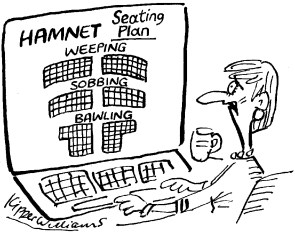
Anyway, AI is just so needy. I prefer my friends to be a little less clingy than this. Can’t we have the AI equivalent of the cool and tough friend, who tells it to you like it is? “You know how you really, really wanted that new Dolce & Gabbana dress? It would have made you look so sexy, you thought, and you were right. But tough luck, sugar. You waited too long and now it’s already been sold! I could put you on the waiting list – or are you going to miss out on that too?”
In recent weeks the media has been full of the rise of generative AI, and the ability to make videos in which your own movement, expression and voice appear to come from someone completely different – anyone, any celebrity.
Lord alone knows what this will mean for PR and for all our inboxes and texts. Perhaps, quite soon, I’ll be getting FaceTime calls from… don’t believe it, it can’t be, George Clooney? How did he get my number? What does he want? “Hello, Ginny,” he’ll say, smiling that smile of his and crinkling a little around the eyes in the way he does so well. “It’s been a while. Now. Just why did you turn down that Nespresso deal of mine?”
This article was originally published in The Spectator’s February 2, 2026 World edition.





Comments