
Just two years ago, Mary Barra, chief executive of General Motors, declared: “We believe in an all-electric future.” She went on to claim that the challenges her company was facing in the EV market were merely temporary bumps on the road to net zero. But as Bob Dylan famously observed, things have changed.
On January 8, GM announced it would take a $7.1 billion hit in charges against its earnings, of which $6 billion is due to Barra’s failed EV strategy. In a filing with the SEC, the company also warned that it would take more write-downs this year as part of a “strategic realignment of EV capacity.”
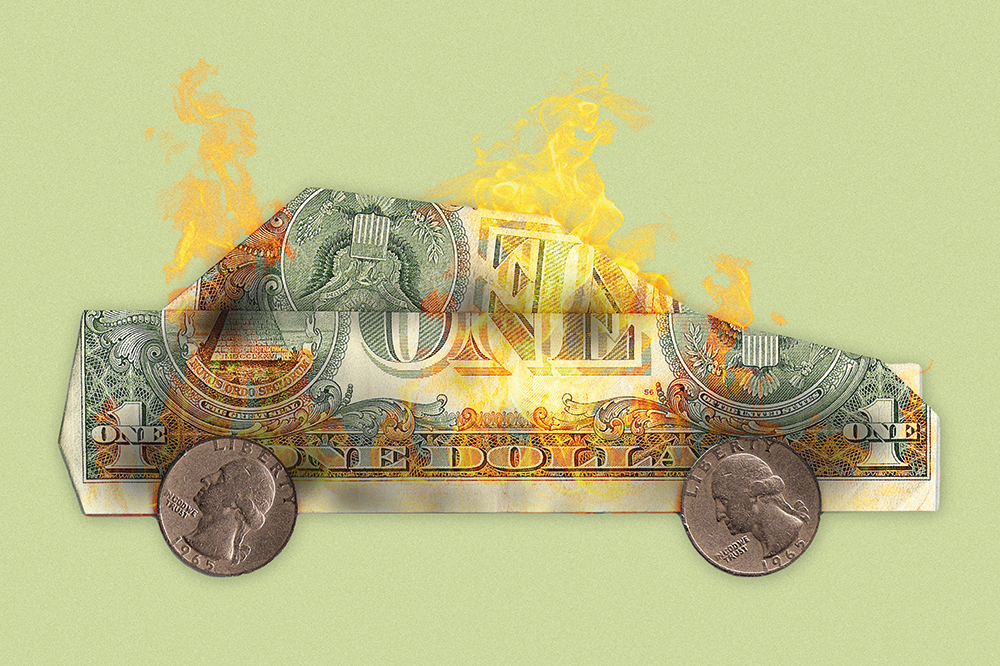
The car companies made 5.4 million EVs in three years – and incurred an astonishing $20,887 loss on each one
GM’s move came less than a month after Ford Motor Co. announced it was taking a $19.5 billion writedown on its EV business. Ford has racked up a jaw-dropping$35.1 billion in losses on its EV misadventure, which raises the question: why on earth has Ford chief executive Jim Farley still got a job? Ford’s EV disaster will go down as one of the biggest fiascos in modern automobile history, yet Farley still took home $24.9 million in compensation in 2024.
Yes, it’s true global EV sales are rising. Some 20.7 million EVs were sold last year, up 20 percent on 2024, but those numbers are misleading because nearly two-thirds of those EVs were sold in China. Of the20.7 million EV units sold, China accounted for 12.9 million and Europe for 4.3 million. Meanwhile, North American EV sales totaled just 1.8 million last year, or 9 percent of the global total. Further, EV sales in the US grew by just 1 percent in 2025 and in Canada, they dropped by a whopping 41 percent.

Indeed, the US-based pure-play EV makers had a lousy 2025. For instance, Tesla, which is now the world’s second-largest EV maker, saw its sales drop 9 percent in 2025. CNBC reported that it was “a stunning reversal” for Elon Musk.
Rivian got hammered. The EV company delivered 42,247 vehicles in 2025, an 18 percent decline from the previous year’s 51,579 units. The largest drop came in the fourth quarter and that decline was blamed on the expiration of the $7,500 tax credit at the end of September. In addition, Kia’s EV sales dropped by a stunning 50 percent in December.
It’s worth considering what’s happening at Porsche. In 2022, the company declared that by 2025, half of its sales would be either fully electric or hybrid electric, and that by 2030, all-electric cars would make up “more than 80 percent” of profits. That just hasn’t happened. Last October, Porsche recorded a third-quarter loss of $1.1 billion. A company official said the loss reflected the cost of Porsche reworking its product portfolio to shift back to gas-powered vehicles in the face of tepid EV demand. Earlier this month, Porsche admitted it had lost $1.9 billion on its EV investments. As one news outlet noted, the losses “stem from projects that failed to attract customers, particularly in China and the US.” Sales in those markets “dropped sharply… prompting the company to halt or scale back several planned EV projects.”
My colleague and I have analyzed seven companies. We picked the Big Three US brands – GM, Ford and, yes, we still think of Stellantis (Chrysler/Jeep/AMC) as a US brand – and the two European giants Mercedes and Volkswagen. As for Tesla, we excluded it from our analysis because its profits are padded by sales of regulatory credits to other automakers and by its other businesses. Those facts make its profit-and-loss data structurally different from the legacy brands we are focusing on here. We included Rivian and Lucid because they are pure-play EV makers, allowing us to see how their results stack up against the legacy players.
So how much money did the automakers lose on EVs over the past few years, and how many EVs did they sell? Our numbers are based on company data and our best efforts to tease out the correct data on EVs and the losses each company has incurred on them.
For companies such as Ford, Lucid and Rivian, the loss figures come straight from their own SEC filings. For GM, Stellantis, Mercedes and VW, which don’t break out EV figures, we used conservative estimates based on their earnings, writedowns, and our own analysis. Among the legacy automakers, Ford is the only one that provides EV-specific financial reporting.
The losses for the seven automakers have totaled nearly $114 billion. We estimate that between 2022 and the third quarter of 2025 (including the writedowns at Ford and GM), the legacy automakers lost a combined $83.6 billion on their EV businesses. Meanwhile, Lucid and Rivian combined for losses of about $30.2 billion.
Sixteen years and $114 billion in losses later, it’s clear that when it comes to EVs, idiocy abounds
The European automakers don’t provide EV-segmented data, making an accurate profitability assessment difficult. That said, declining margins and disclosed charges indicate substantial losses. Mercedes saw EV sales fall 23 percent to 185,100 units in 2024, and the company announced a$5.45 billion cost-cutting program. Last month, Mercedes reported that in 2025, its “electrified vehicle” sales – a segment that appears to include hybrids – were flat for the year.
We also estimated the per vehicle losses for the automakers and extrapolated that the seven car companies produced 5.4 million EVs between 2022 and the third quarter of 2025, and they incurred, on average, an astonishing loss of $20,887 per EV sold.

Beyond financial losses, thousands of workers have been laid off due to EV-related restructuring. Ford has cut more than 1,400 employees at its Rouge Electric Vehicle Center, reducing operations from three shifts to one. GM laid off more than 3,400 workers across multiple facilities, including Orion Assembly, Factory Zero and Ultium battery plants. Rivian and Lucid have also cut staff, slowed factory plans and warned investors that profitability remains years away. In late 2024, Volkswagen announced it would cut 35,000 jobs by 2030, a move made in part due to its push to build more EVs and, of course, Germany’s high energy costs. In October last year, Mercedes launched what it is calling the largest layoff in the company’s history, with plans to encourage some 30,000 workers to leave over the next few years. In April 2025, Stellantis said it would lay off 900 workers at parts factories in the US due to slowing sales, tariffs and other factors. This January, the firm announced it would lay off 740 employees at a factory in Poland, in part due to slow EV sales in Europe.
The only really surprising thing about these losses is how unsurprising they are. The history of the EV is a century of failure tailgating failure. Further, EVs have always been a niche product mainly bought by wealthy households. More than half of all EV owners in the US earn more than $100,000 annually, 75 percent are male and 87 percent are white. Back in 2009, Johan de Nysschen, who was the president of Audi of America, made fun of the new all-electric Chevy Volt, saying, “No one is going to pay a $15,000 premium for a car that competes with a Corolla.” He continued, saying EVs are mainly “for the intellectual elite who want to show what enlightened souls they are... so there are not enough idiots who will buy it.” Today – 16 years and more than $114 billion in losses later – it’s clear that when it comes to EVs, idiocy abounds.
This article was originally published in The Spectator’s February 2, 2026 World edition.






Comments