The Czech author Karel Capek is probably best known for his plays: high-concept speculative dramas such as R.U.R. and The Insect Play, bristling with wit and ideas. But he paid his bills as a newspaper columnist, and he seems to have been pleasantly surprised when Janacek approached him about turning his ‘conversational, fairly unpoetical and over-garrulous play’ (Capek’s words) The Makropulos Affair into an opera. Capek licensed Janacek to adapt it as the composer saw fit, in words that have the authentic ring of the working journalist – ‘because I simply wouldn’t get round to revising it myself’.
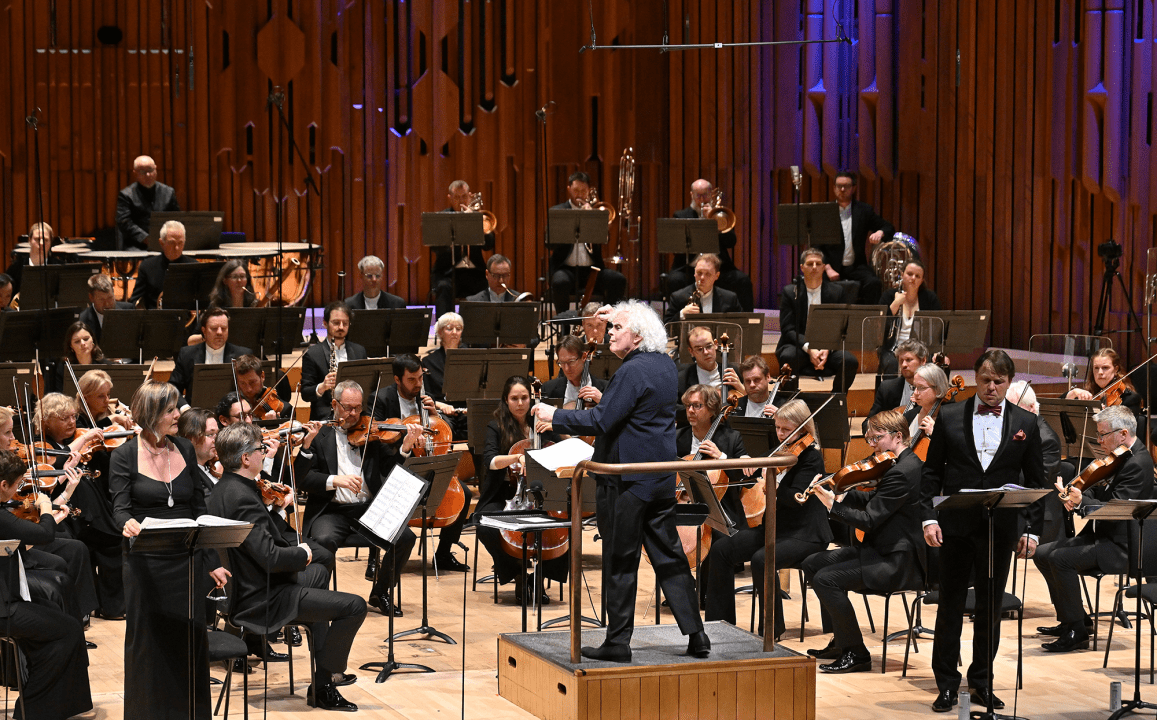
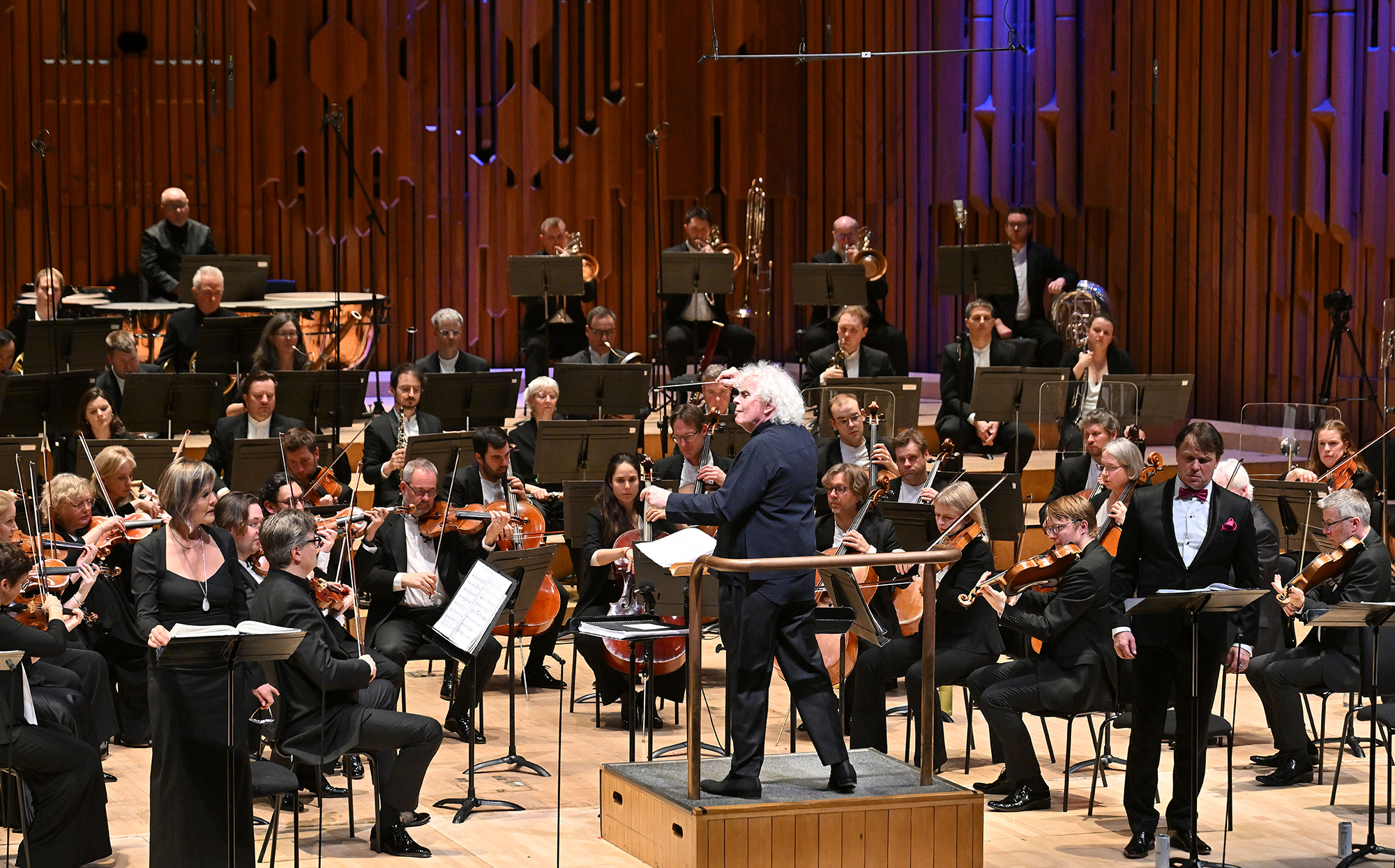
No fear on that count. The Makropulos Affair is a brisk, nervy play but Janacek, at 69 (there’s hope for us all), was an old theatrical hand. He understood precisely what could be conveyed by the action on stage, and carved out space for music to carry the rest. So how to approach a concert version – in this case, Simon Rattle’s two performances last week with the London Symphony Orchestra? Many opera buffs claim to prefer concert performances, and if your most recent Makropulos Affair was Katie Mitchell’s self-indulgent, agenda-driven car crash at Covent Garden last November, it’s tempting to sympathise.
But it’s a temptation that must be resisted, at least if you believe that opera is theatre and not just (and admit it, musos; this is exactly what you think) an unnecessarily fussy pretext for some ace music. Admittedly, the score of The Makropulos Affair sounded stupendous here; bigger, brighter and supercharged beyond the possibilities of any orchestra pit, with slashing chords and a rhythmic drive that made the air crackle. And then those echoing offstage trumpets, and the swell of wholly unsentimental nostalgia that floods the orchestra like afternoon sunlight – one of those hot-sweet impossible contrasts that only Janacek knew how to bring off.
Cards on the table: I was predisposed to enjoy it. The first live Janacek opera I ever heard, somewhere around the millennium, was Rattle conducting The Makropulos Affair – one of those musical encounters that pins you to the spot and stays with you for decades. It felt last week as though Rattle’s interpretation has got faster over the years. But I don’t think anyone present would dispute the glory of the LSO’s playing, and the hallucinatory clarity that they brought to this head rush of a score. There were details here to make the imagination whirl. Horns turned quiet somersaults in the middle distance; bassoons spun filigree over shimmering, multilayered string chords.
And that’s without mentioning the cast, which was as smart as you’d expect for a prestige project with Rattle’s name attached (it’s destined for release as a recording). Peter Hoare (Vitek) and Alan Oke (Baron Hauk-Sendorf) have both sung these roles in British opera houses; in fact, Oke practically owns the part of the lust-crazed senile delinquent Hauk. Vit Nosek (Janek), Doubravka Novotna (Krista) and Svatopluk Sem (Baron Prus) all looked the part, and exuded vocal charisma. Above all, Emilia Marty was sung by Marlis Petersen with an ardour and a flashing vitality (aristocratic steel one minute; passionate sincerity the next) that made it credible that her suitors would risk everything for her. The final scenes were wrenching.
Still, this remained a concert performance, with all its limitations. If the conversational intricacies of Janacek’s first act demand virtuoso direction in the theatre, they’re almost impenetrable when delivered by a row of blokes in dinner suits. Ultimately, operas belong on stage, and the ending might have made more sense if the surtitles had included the stage directions. Against that, there was the way those final scenes opened out in a way that the theatre doesn’t always permit – the sense of collapse, of a world rupturing, as Marty’s secret is revealed; and then the rising tide of compassion and astonishment in the final pages, where the music (in Rattle’s hands, anyway) really does have its head. Put it this way: the recording has gone straight on my wish list.
Words mattered as much as music at the Wigmore Hall, too, where the soprano Sabine Devieilhe and the pianist Mathieu Pordoy performed lieder by Liszt, Strauss and Schubert plus a cleverly woven garland of songs by French composers, including Cécile Chaminade (subtle, Pernod-and-water harmonies), Lili Boulanger (in the Duparc class) and Germaine Tailleferre, whose tumbling, kittenish mini-monologues about infidelity couldn’t have been more Gallic if they’d been directed by Jacques Demy.
A Ronsard setting by Milhaud had Devieilhe’s pure, supple voice wheeling and darting in imitation of a swallow. Pordoy was discreet and attentive, providing blanc sec support to a sequence of romantic lullabies and mewing wistfully along – ‘miaouw, miaouw’ – in a little toy of a cat song by the Swiss composer Jacqueline Mani, who died in 2016. Devieilhe clearly has a devoted fanbase, and the audience was large, youthful and very enthusiastic. Quite right, too.




Comments