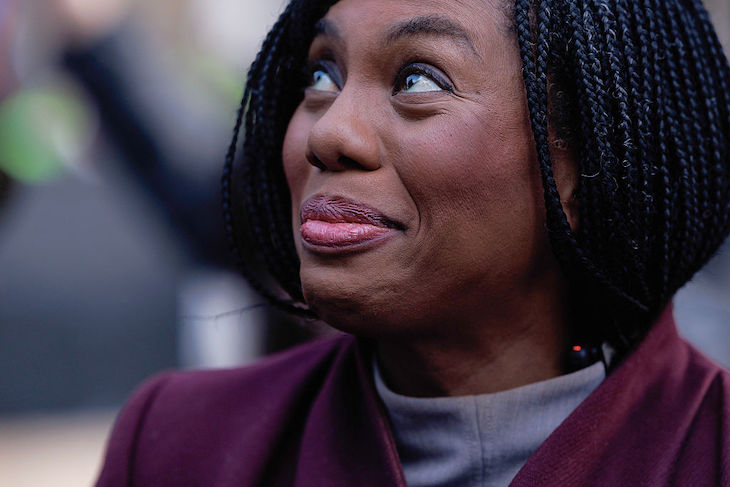
If Kemi Badenoch needs a little relaxation from the ‘psychodrama’ of Robert Jenrick’s defection to Reform, she could do a lot worse than watch Shekhar Kapur’s 1998 Elizabeth. The historical drama, about the plots and betrayals surrounding the early days of Elizabeth I’s reign, is uncannily reminiscent of recent events in her own party.
With her bitterest opponent now banished from the court – pushed before he could jump – those looming May elections hold fewer fears for the Tory leader
The film (spoilers aplenty) begins as Mary I dies childless, leaving her callow and inexperienced half-sister a tattered kingdom. ‘Your majesty has inherited a most parlous and degenerate state,’ one advisor tells her. ‘Your treasury is empty, the navy is run-down, there is no standing army, and no munitions’ (cf. Tory Party, 2024).
No one takes the new queen seriously and no one expects her to survive. The court teems with conspirators and those who, whether for reasons of doctrine or personal ambition, wish for her downfall: not least Thomas Howard, Duke of Norfolk (played by Christopher Eccleston), a Catholic pretender to the throne who strides and skulks about, muttering: ‘At last I shall see the fall of that heretic girl!’
With the whole world, it seems, trying to rub her out, Elizabeth, mentored by spymaster Sir Francis Walsingham (a feline Geoffrey Rush), slowly finds her inner Machiavelli. Dispensing at last with scruples, she dispatches her enemies with a spate of murders and executions. Gloriana arises victorious! Norfolk ends up not with the throne, but his grimacing head on a pike.
Such a moment, differing in degree rather than nature, seemed to come for Robert Jenrick last week, when Kemi Badenoch learned of an incriminating ‘draft letter’ left ‘lying about’ by the shadow justice secretary. Jenrick had therein reportedly rubbished his colleagues, declared his resignation from the party and vowed a defection to Reform UK.
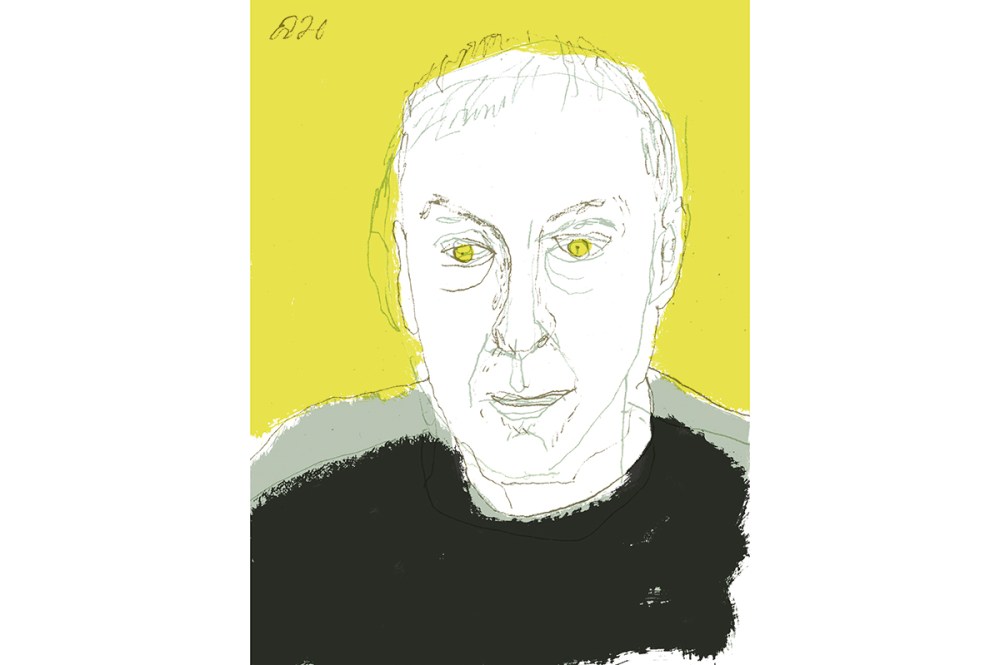
Kemi, duly instructing chief whip Rebecca Harris to sack him, announced Jenrick’s demise on X. Condemning him for ‘disloyalty and dishonesty,’ Badenoch said she had seen ‘clear, irrefutable evidence, not just that he was preparing to defect, but he was planning to do so in the most damaging way possible to the Conservative party and his shadow cabinet colleagues.’
She added: ‘When individuals chose to undermine the party ‘for personal ambition, that tells you nothing about the Conservative Party and everything you need to know about them.’ She was, it was said, particularly furious that, with dastardly plans afoot, Jenrick had turned up at shadow cabinet a few days earlier ‘as if nothing was going on.’
Meanwhile, murderous metaphors abounded. Said Badenoch’s team: ‘We are in no doubt whatsoever about Jenrick’s involvement in the drafting of these words and his intention to stab his Conservative colleagues in the back.’ Kemi, explained one supporter, ‘didn’t wait to be stabbed in the face. She got in first.’ Later that day, north of the border, Badenoch was photographed drinking a blood red cocktail. Given the carnage of the morning, it seemed quite appropriate.
All of this took place in an atmosphere of corridors-of-power skulduggery that to Elizabeth’s spymaster Walsingham would have been perfectly familiar. There were mutterings about Jenrick’s ‘grid of shit plotters’ and tales of not-so-secret meetings in December with Nigel Farage, his new master. In a greasy nod to popular culture, a Lib Dem commented: ‘The Conservative shadow cabinet makes The Traitors roundtable look united.’ Farage admitted he and Jenrick had been in contact since September but added, with regal airiness, ‘I haven’t offered [him] a rank. I haven’t offered him a title… I haven’t offered him money or anything like that.’
Loyalists set out to hang, draw and quarter Jenrick’s reputation. ‘Were you to remove ambition from the core of Robert Jenrick,’ thundered Times columnist Matthew Parris, ‘he would collapse like a boneless chicken!’ An unnamed Tory source was quoted describing the ex-shadow justice secretary as ‘a shit…caught with his hands in the till.’ Another added: ‘When the good Lord created Robert Jenrick he gave him many virtues, including intelligence and a sense of humour. He did not bless him with loyalty or patience.’
‘There will be a lot of commentary about this decision,’ Kemi forecast, and she was right. Who, the court began to chatter, had really won the bout? One prominent nay-sayer was Kwasi Kwarteng, claiming Kemi risked a ‘fatal weakening’ of her own cause by firing Jenrick. Reform Policy-Head Zia Yusuf seemed to dance about gleefully, describing the brouhaha as the ‘last days of Rome,’ while George Osborne, lamenting Jenrick’s despatch as a ‘proper crisis’, said it was the real ‘beginning of the civil war… about who is to lead the right.’
Yet there were far more who felt Badenoch had emerged triumphant and raised a warning flag to other malcontents. ‘Behold the head of a traitor! So perish all the Queen’s enemies!’ her morning-of-the-long-knife seemed to say.
Commentator Camilla Tominey said Kemi had shown herself as ‘focused, forensic and ruthless when required’ and looked ‘like a leader with an eye in the back of her head; alert to backstabbers and braced for betrayal.’ Alan Cochrane wrote that ‘in little more than the twinkling of an eye,’ Kemi had ‘lanced [a] boil’ and ‘laid down a marker to say that she would not tolerate betrayal in her ranks.’ In a bracingly acerbic bit of punditry, journalist Robert Hutton, calling Jenrick ‘the most shameless man in Britain, the most shameless man on Earth,’ said he was less ‘Francis Urquhart’ than ‘Baldrick.’ Hutton marvelled that the ‘irrefutable evidence’ of Jenrick’s treachery ‘turned out not simply to be “everything he said” and “everything he did.”’
Kemi’s stock, most concluded, had gone soaring since breakfast time. Even the Guardian, no natural fan of the Tory leaderene, declared that ‘Kemi Badenoch emerges stronger from Jenrick’s messy split from Tories,’ adding, ‘Pre-empting rival’s defection cements her position as leader.’
With her bitterest opponent now banished from the court – pushed before he could jump – those looming, louring May elections hold fewer fears for the Tory leader. Yet, as George Osborne pointed out, the party’s psychodrama ‘is only just beginning’, with more conspiracies and betrayals surely on the way. Will Jacob Rees-Mogg be the next to decamp? Or Suella Braverman? Or Katie Lam? Should a skirmish arise, sooner or later as it must, with the Armada of wets in her own party, will Kemi show a similar mettle and resolve?
Meanwhile, all eyes are on Jenrick as he plots out his next gambit, from a stronghold some miles hence. Last week there emerged stories of his attendance at a shadow-cabinet away-day, shortly before his defection, taking ‘copious’ notes of Tory strategy – to hand on, perhaps, to ill-wishers of the party. ‘If you looked out of the window,’ one colleague observed, ‘you could see where traitors used to end up – the Tower of London.’
Should Robert Jenrick’s new allegiance not go to plan, God help him. He may end up in a far worse place than that.




Comments