


What does it mean to be a ‘good’ sports presenter? Really, it should mean nothing. They aren’t important. They should have a sense of perspective, a sense of remembering that they are peripheral to the most popular consumer product and human activity that we have come up with.
Of course, it doesn’t work like that. Look at Gary Lineker. The BBC paid him £1.3 million to ask Danny Murphy things like ‘Bournemouth look to have run out of steam a little bit?’ for 75 minutes a week. Such is our infatuation with sport that we end up really caring about who asks this kind of question. That person gets to be the highest-paid broadcaster in the country. We inhale sports commentary because there simply isn’t enough sport to watch, dependent as it is on people made of flesh who get ‘tired’.
Last year saw us take this to its logical conclusion. Lineker’s thoughts on Gaza became as important as the Prime Minister’s. Some generations get Isaiah Berlin as their public intellectuals; we got Gary Lineker. It’s not really Gary’s fault. Why were any of us ever listening to what the guy who says ‘let’s have a look at the Premier League table’ thinks about international law?
Before Lineker there was Des Lynam. Lynam, who is 83 and has looked 83 since the 1970s, provided a sort of ambient purr. Presenters are usually remembered by one line, and his is good: ‘Shouldn’t you be at work?’ The question was posed straight to camera just before England was about to play a World Cup match at 2 p.m. on a Monday. After Lynam retired, football presenting lost its patrician haughtiness and entered the forced-banter zone, a place of half-smiles and staccato laughter. Cricket fans at least got the languid class of David Gower until 2019.
Some generations get Isaiah Berlin as their public intellectuals; we got Gary Lineker
Here, we entered a bizarre period – c.2010 – where Adrian Chiles was as sought after by broadcasters as Mesut Ozil was by football clubs. Before Amol Rajan, it was all Chiles. ITV paid him lots of money to host their football coverage. True, his everyman demeanour did make you feel at ease, carrying with it the authority of a smiling policeman at the church coffee morning. But the hours increasingly demanded of presenters meant there were some slips. The nadir was in 2012 when a match between Poland and England was called off because of a waterlogged pitch. Chiles, filling time, turned to Roy Keane and asked him: ‘When does heavy rain become an actual downpour?’
Football presenters are increasingly empty vessels (a compliment). There is a guy on Sky Sports who presents all the most-watched football matches in the country, and not a single person knows his name (it’s David Jones). When a football presenter just had to sit in a chair, their personal magnetism was all they had. Now there’s technology, and David Jones has to walk around a Sky set that’s as large as a ballroom, pulling levers and touching screens, like he’s working at an oil refinery.
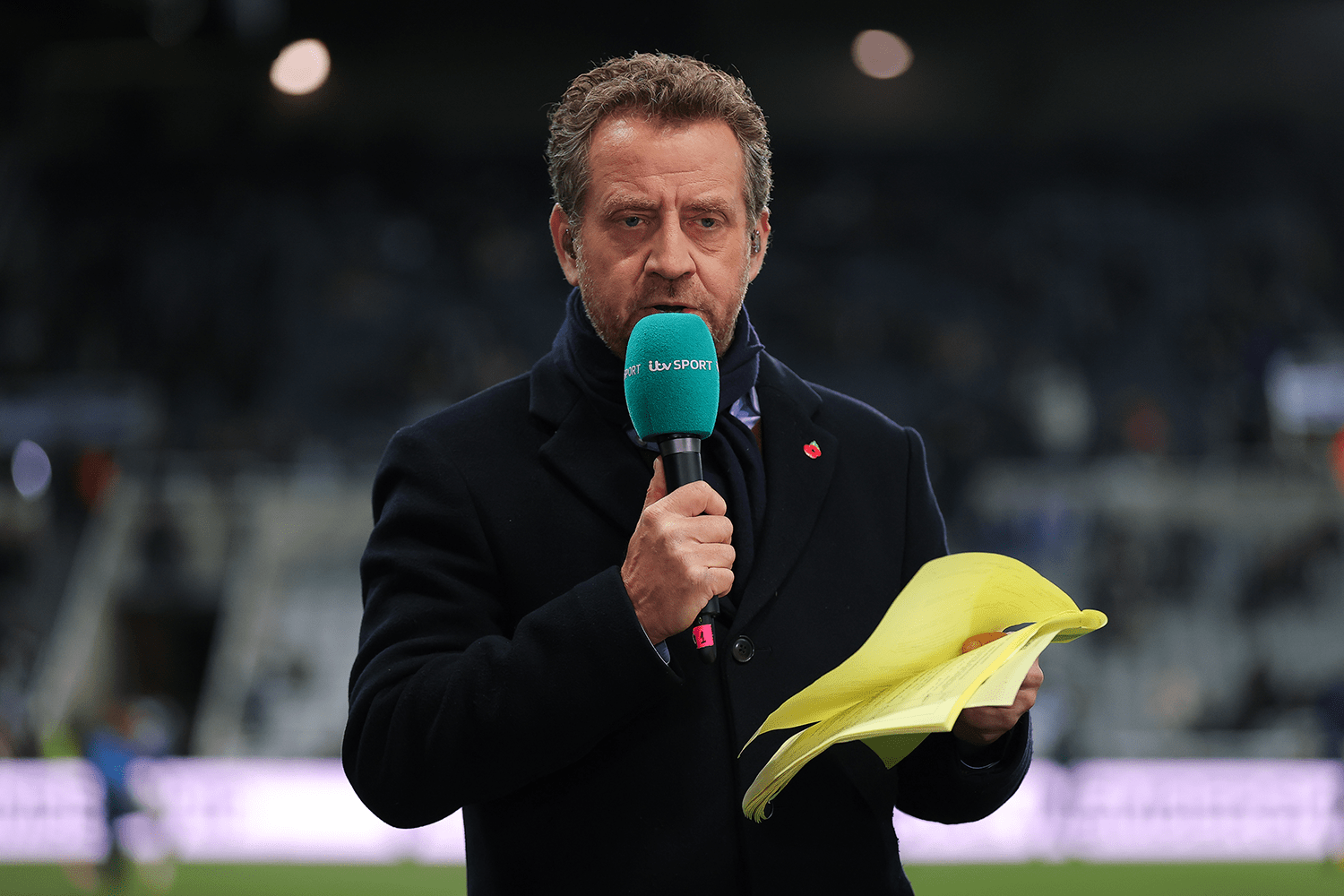
Mark Pougatch has been ITV’s lead football presenter for ten years. It’s excellent that I didn’t know that. Pougatch has some essential qualities: his voice has a good timbre, and he doesn’t look weird. His affability is a kind of cricket-pavilion bonhomie. You watch him and think: I bet he’s good at compèring charity auctions.
Pougatch now has a podcast where he talks about sport with his mate Paul Hayward. It’s called How It All Played Out and consists of two middle-aged dudes chatting about great sporting moments to each other. No budget; no real narrative structure. What we get is a set of Pougatchwave ambient anecdotes to get the dishes cleaned to. The 2005 Ashes is recalled: ‘Australia had Ponting! McGrath! Warne! Langer! Hayden! Damien Martyn! Gillespie!’ The analysis doesn’t get much deeper than this. It’s all enthusiastic re-descriptions: ‘The harder and faster Brett Lee bowled, the further Kevin Pietersen hit him over square leg!’ Do we really need much more than that?






Comments