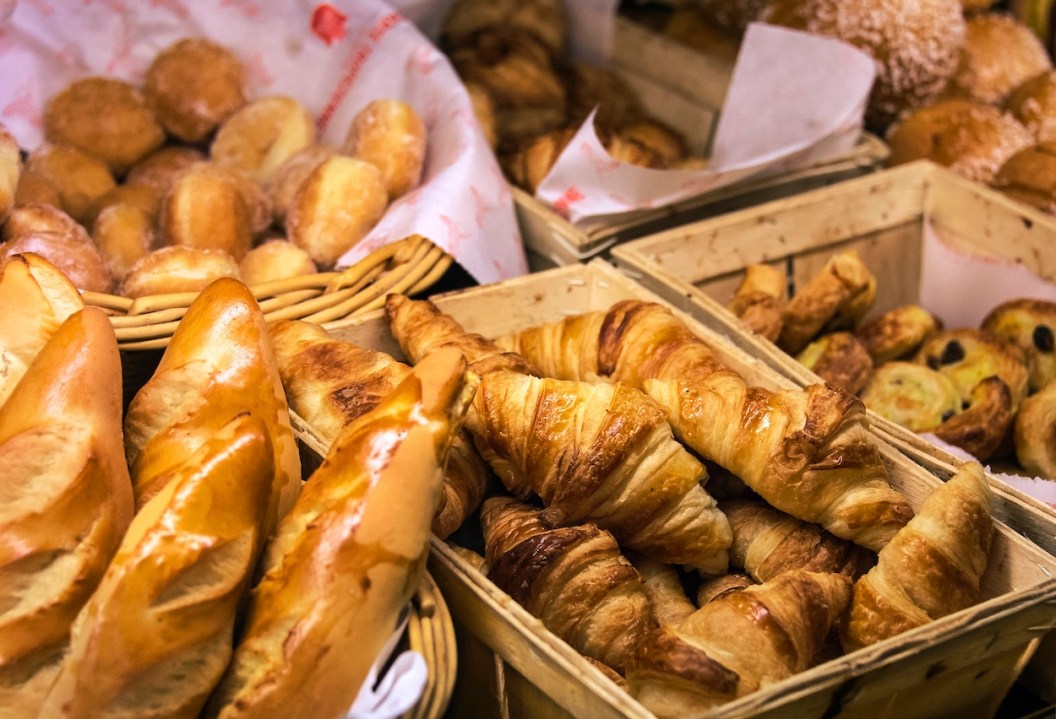
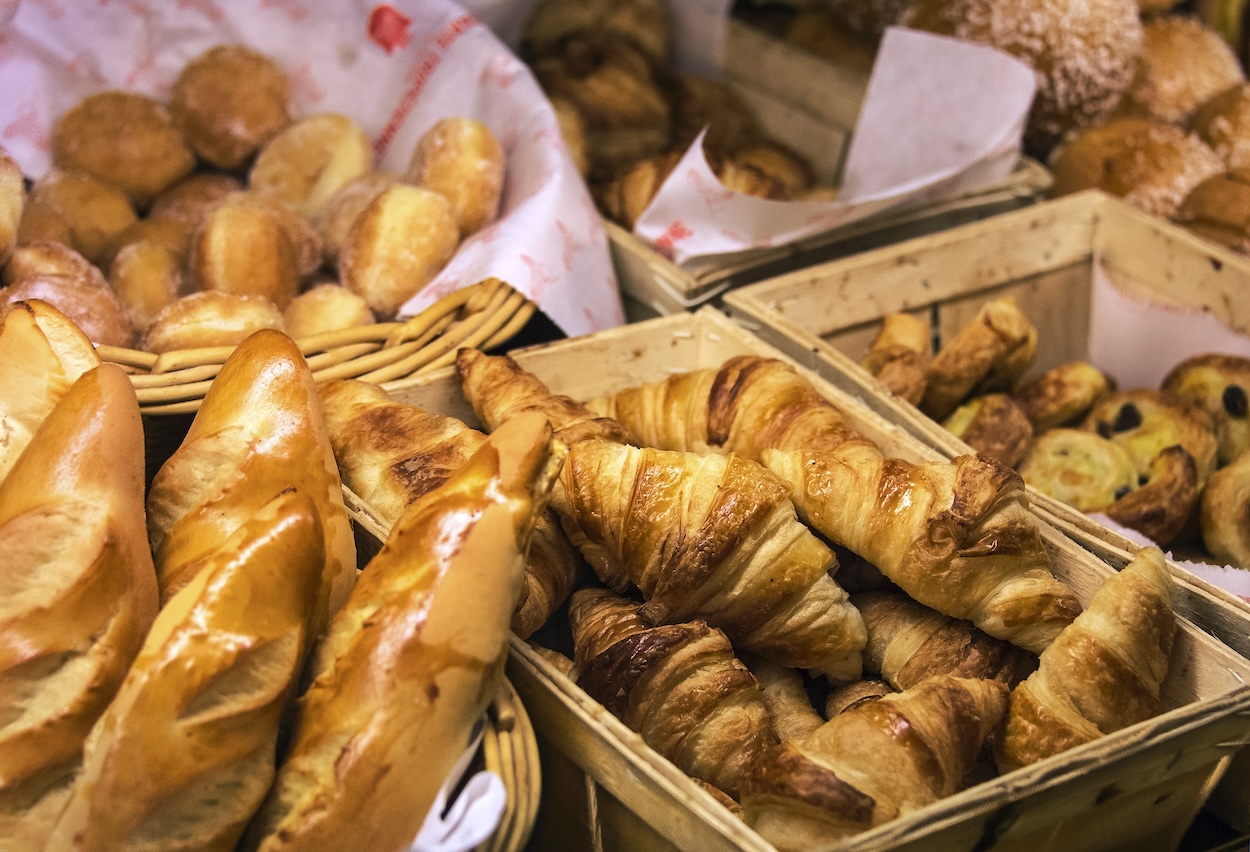
Occasionally, a French person reveals – without any malice or superciliousness – that they run on an alternative operating system from us Brits. Over the years, a surprising theme has emerged in my conversations with Frenchmen: butter. Take my first visit to Paris, more than 30 years ago. I innocently asked for butter with my croissant. Simple answer: ‘Non.’ Naturally, I remonstrated. The waiter retorted: ‘A croissant eeez butter!’
He had a point. Upon biting into said viennoiserie, I had to concede: it was nothing like the dry grocery store versions I was used to. Moments later, a small pot of raspberry confiture was graciously placed on my table. (To this day, it remains the best service I’ve ever received in Paris.)
Fast-forward 20 years and I’m in rural Brittany, ordering a ham and cheese baguette. This time, the young woman behind the counter asked if I’d like butter. ‘Mais bien sûr!’ Clearly irritated by my overconfidence, she spread it thinly, added the fillings, and was about to wrap when I piped up with a final request. Mayonnaise? ‘But you already ’av butter!’ Her revulsion was palpable.
After my Paris humiliation decades earlier, I dug in. After all, I knew what I wanted. Butter and mayonnaise are hardly strangers in a sandwich – and I happen to be an expert in my own taste. She resentfully slopped some on, gratis. I asked for mayo on my wife’s sandwich too, if only to normalise it.
When we moved to France permanently, we rented a tiny house in the centre of a small Catalan town. Our British landlord drew our attention to the croissantière just around the corner. Assuming this was a veritable French term for ‘croissant specialist’ (it isn’t), I investigated the next morning. The croissants did not disappoint – still warm, they transported me back to that Parisian revelation. So naturally, I returned the next day. And the next…
‘You’ll get fat,’ the croissant-maker’s wife warned, deadpan, as she handed over the bag. I looked up, expecting a smile. There was none. I tried to hide my offence, but her comment bounced around my head for days. It wasn’t just the bluntness – it was the complete lack of commercial instinct. In the UK or US, such patronage would earn you loyalty points and a branded tote bag. In France, you receive a warning.
Ashamed but still addicted, I tried to ration myself. Mercifully, a few years later, we moved to a nearby village with its own boulangerie. A fresh start. The next morning, brimming with anticipation, I bit into my new dealer’s wares. Gone was the delicate shatter of buttery lamination. Absent was the fragrant plume of warm dairy. What I tasted was more like… wax. Hydrogenated, seed-oil-infused wax. It stopped me mid-bite.
I soon learned the truth. Many bakeries, faced with high butter prices and early mornings, have outsourced croissant production to industrial suppliers. These ‘croissants in waiting’ arrive frozen and full of margarine. A croissant pur beurre can contain as much as 30 per cent real butter by weight. The industrial kind? Next to nothing. But thanks to the slippery language of au beurre versus pur beurre, no one’s technically lying. Roquefort has a charter. Camembert has a lawyer. The croissant? No such protection.
‘You’ll get fat,’ the croissant-maker’s wife warned, deadpan
I now conduct covert pastry runs to our neighbouring town. I smuggle them home in unmarked bags, slipping them past my own boulangerie like a man hiding dinner receipts from his wife – except the mistress is covered in egg wash. It’s tragic, considering the way the French deify food, to witness them quietly debase it. The croissant, that most sacred of breakfast foods, is now often a margarine-infused counterfeit.
Frédéric Roy, a Nice-based baker, has tried to sound the alarm. His campaign to label industrial pastries has gained traction, but little legal weight. Meanwhile, ‘butter blend’ croissants made with palm oil and diacetyl are increasingly sold as au beurre – just without the taste or conscience.
Healthwise, it’s a grim spectrum. On one end, the artisanal croissant – a golden coronary wrapped in charm. On the other, the industrial version: trans-fat-free, yes, but with all the digestibility of a scented candle. If you want to evaluate the prosperity of any French neighbourhood, buy the most expensive croissant you can find. It will tell you the real story.
And perhaps that’s the truest measure of where France now finds itself: a country still wrapped in the golden flake of tradition, but filled more and more with something else entirely. The croissant was once a luxury. Then it became a daily pleasure. Now it’s a performance – ersatz, over-rehearsed and mostly margarine. A rich pastry for a country that can no longer afford the substance, but insists on maintaining the form.
This article was originally published in The Spectator’s World edition.





Comments