I have been having a John le Carré holiday. Five years after the great master of the spy thriller went to his final safe house in the sky, I spent chunks of the festive season watching two of his series on TV, and reading a slim volume called The Secret Life of John le Carré by his biographer Adam Sisman.
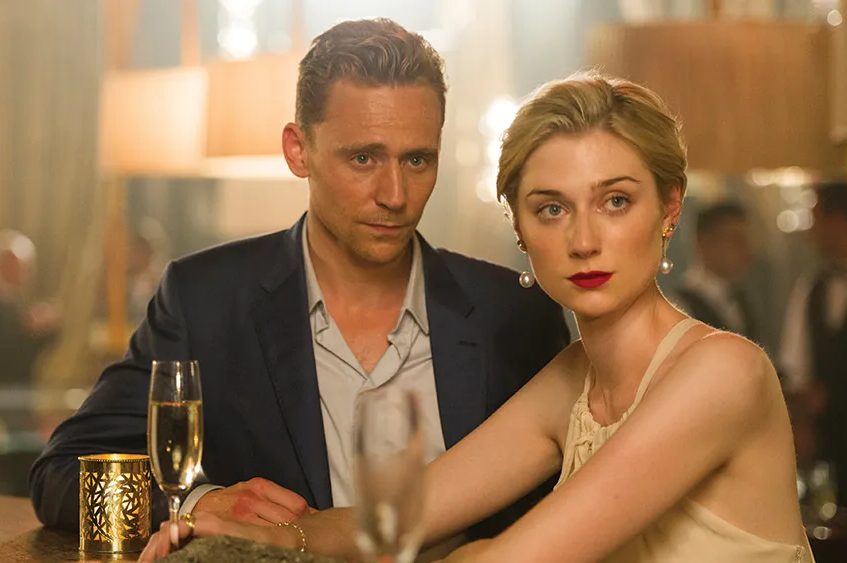
Amazon Prime’s big New Year drama offering is The Night Manager, a sequel series to one of le Carré’s later stories, and simultaneously the BBC has been re-running le Carré’s 1970s masterpiece, the seven-part mole hunt Tinker, Tailor, Soldier, Spy, starring the late, great Alec Guinness as spymaster George Smiley.
Sadly, on two successive nights I found myself falling asleep in front of the dramas. Pinching myself awake, I reached a sad conclusion: the stories of the much praised master of the spy thriller just aren’t very thrilling.

Even the presence of great actors like Guinness and Tom Hiddleston, star of The Night Manager, failed to keep me awake. Analyzing the reason for this, I came to the conclusion that watching a group of middle-aged men in suits stirring tepid tea in shabby offices while shuffling files and discussing absent friends in incomprehensible jargon about lamplighters and cousins is not the stuff to keep me on the edge of my seat.
Too much of le Carré’s work is like this: wordy, complicated, bewilderingly ponderous and just plain dull. Unlike a rival practitioner of the genre, Frederick Forsyth, there is little cliff-hanging action, not much tension, and the old boy’s books, especially latterly, are also shot through and spoiled by his cranky, misguided leftist politics, vitiated as they are by an almost manic hatred of both America and his native land.
To give the old devil his due, his early works, like The Spy Who Came in from the Cold, were informed by his early experience as a low-level MI6 operative in Cold War Germany. They do convincingly convey the authentic gray atmosphere of the era when defections, ideological divisions and superpower rivalry brought the world close to nuclear annihilation.
But the collapse of Soviet communism and the fall of the Berlin Wall robbed le Carré of his favored themes, and for pastures new he turned to such subjects as the sins of big pharma (The Constant Gardener) and the plight of the Palestinians (The Little Drummer Girl). Both novels were inspired by the author’s affairs with women who assisted his research. As we learn from Sisman’s investigations, le Carré was an adulterer on a truly heroic scale.
The Secret Life of John le Carré, which Sisman published in 2023 after his subject’s death, is basically a compilation of all the inconvenient truths about his life that le Carré bullied his biographer into leaving out of his original Life, published in 2016 when the writer was very much alive.
The second book, in the words of the Financial Times, “exposes the great spy writer’s duplicitous and deceitful relationships with the women in his life.” Just how many such illicit paramours were there? Sisman’s research has identified 11, but he admits that there were definitely several more involvements that he has not uncovered. The book, to be blunt, reveals the author as an unpleasant and dishonest shit who treated women like dirt and was continuously unfaithful to Jane, his doggedly loyal second wife. No wonder that the underlying theme of all his fiction is betrayal – he certainly knew whereof he wrote.
Le Carré – real name David Cornwell – inherited at least some of his genius for deception and lying from his father, Ronnie, a conman jailbird and one-time Liberal parliamentary candidate, who left a legacy of unpaid bills and habitual dishonesty for his children to deal with. Le Carré was obsessed with his dear old dad, but never seems to have reflected that Ronnie’s destructive behavior mirrored his own misdeeds.
Watching a group of middle-aged men in suits stirring tepid tea in shabby offices is not the stuff to keep me on the edge of my seat
Of course, we don’t expect the conduct of artists to be saintly, and many far greater writers than le Carré (Shakespeare and Dickens: I’m talking about you) were also adulterers who treated their wives appallingly, but in le Carré’s case, his amorality and inept attempts to cover it up leave a sour taste. He was equally abusive of his own country and the western world more generally. If you are going to castigate those you once served as sinners, you need to make sure that your own behavior is whiter than white.
The whole leitmotif of le Carré’s work and world is a long whining complaint about the wickedness of governments and the foolishness of people when they vote for policies of which he disapproves. In his final years he deeply disapproved of Brexit, to the crazed extent of disavowing his British nationality in protest, and wangling himself an Irish passport on the spurious grounds that one of his grannies was Irish.
Many might see such a wholesale and bad-tempered rejection of the country that bred him and made him a multi-millionaire as a betrayal on a par with that of his fictional traitor Bill Haydon. But le Carré pompously damned democracy and with it the system that the Circus was supposed to defend.
Dealing with le Carré eventually led Adam Sisman to conclude that for all his merits as a writer, he was a nasty piece of work who went to enormous lengths to deceive those whom he professed to love. His secret world really was a wilderness of mirrors, and his own mirror was quite distinctly cracked.


Comments