

The Republican establishment is on the verge of extinction. Donald Trump’s first term wasn’t enough to kill it off: Trump came into office in 2017 with establishment figures such as Mitch McConnell and Paul Ryan leading the party in Congress, and Trump’s own vice president, Mike Pence, had been chosen for that role as a reassurance to the old guard. Trump made some efforts to staff his administration with outsiders, but the likes of Steve Bannon or the ill-fated Rex Tillerson were heavily outnumbered by Republicans who would have been just as happy – or a great deal happier – to serve in another Bush administration.
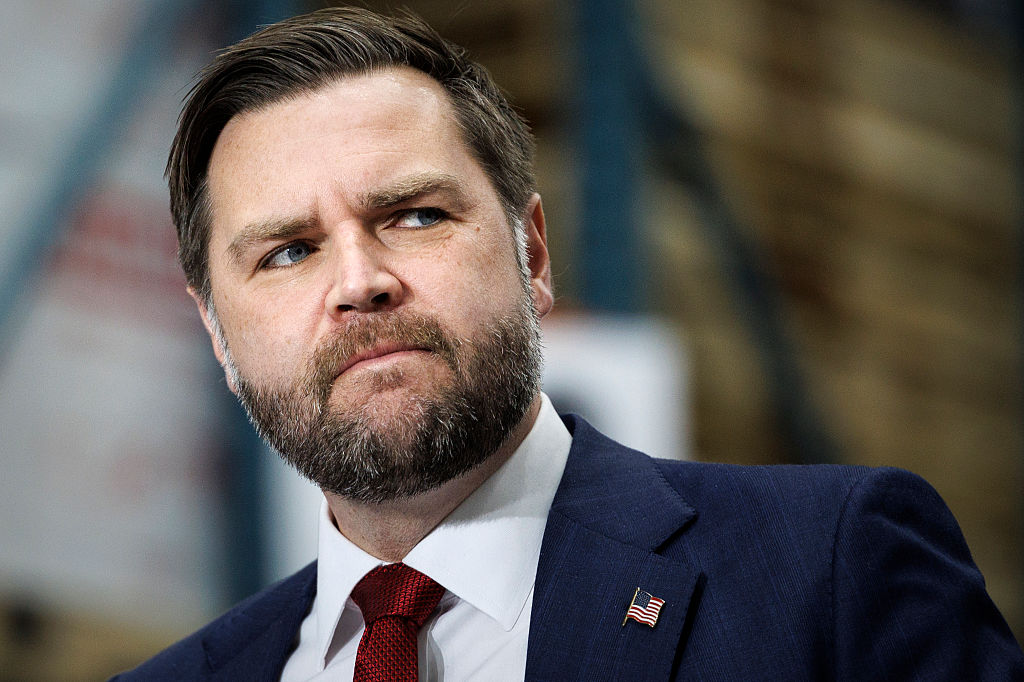
This time, though, things are very different. Though congressional Republicans have yet to become thoroughly MAGA, there’s no longer a sense that GOP leaders in the House or Senate represent a distinct political brand of their own, as McConnell and Ryan did. Trump’s second administration has been rigorous about vetting potential hires for loyalty, and that rigor was applied early and most critically to the selection of Trump’s running mate. Vice President J.D. Vance is everything Pence was not.
And that makes Vance a marked man in the establishment’s eyes. The GOP old guard’s last, desperate hope for defeating MAGA is to deny Trump’s natural successor the White House in 2028, starting – if they get their way – by denying him the Republican nomination.
The end of last year brought the first major offensive against Vance, using Tucker Carlson as a weapon against him. Carlson chose to play with plutonium on his podcast by interviewing in a less-than-unfriendly manner the outright anti-Semite Nick Fuentes. The fallout burned anyone on the right who defended Carlson, although President Trump dismissed the controversy simply by saying the podcaster was free to interview anyone he wanted.
Vance had nothing to do with Carlson’s actions, but he’d been friendly to Carlson in the past, and Carlson’s son worked for him, so the VP’s enemies saw an opportunity. If Vance wouldn’t denounce Carlson, his foes would simply impute Carlson’s views to him. “When did you stop accepting responsibility for Carlson and his guests” became the new “when did you stop beating your wife?” Vance wouldn’t play along. Without accepting the premise that he had a special duty to opine about Carlson, Vance stated that anti-Semitism and other hatreds were unacceptable in the Republican Party. In the first week of this year, he told CNN’s Scott Jennings, “we need to reject all forms of ethnic hatred, whether it’s anti-Semitism, anti-black hatred, anti-white hatred.”
Anti-MAGA Republicans will inflict whatever harm they can
Jennings himself has acknowledged that MAGA is not in the midst of a crack-up over this. “I think some of the civil war talk is a bit of a mirage when you actually look at the results of the polling among the people in the stands,” he said in December.
Vance, in fact, easily won the straw poll on 2028 presidential candidate preferences at Turning Point USA’s AmericaFest convention that month, with 84 percent of the vote. His closest rival was Marco Rubio with just 4.8 percent. Vance is the overwhelming choice of the young activist right.
And if history is any guide, he’ll be the overwhelming choice of Republicans overall when it comes time to pick the next presidential nominee. No sitting vice president since World War II has been denied his party’s nomination, and even ex-VP’s who seek the presidential nod later – Richard Nixon 1968, Walter Mondale in 1984, Joe Biden in 2020 – usually get it. The only two Republican VP’s of modern times who sought the nomination but didn’t get it are exceptions that prove the rule. George H.W. Bush’s ex-VP, Dan Quayle, dropped out of the 2000 race rather than take on George W. Bush, a man with a stronger claim to be the heir to Quayle’s boss. (Not to mention surveys indicated many primary voters early on thought the two George Bushes were the same man.) And of course, in 2024 Donald Trump’s former VP, Mike Pence, got nowhere in a race that was dominated by Trump himself from the very beginning.
There’s a mistaken belief in some quarters that VP is not a good launch pad to the presidency. More governors and senators have been elected president – but then, there are many more governors and senators than there are vice presidents. Proportional to the numbers that run for the White House, VP’s are best prospects.
Parties nominate VPs because parties are loyal to presidents, a feature of American politics established long before Trump came on the scene. VP’s are typically the most natural successors to the presidents they serve, and Vance – unlike, say, Dick Cheney – was chosen with succession in mind. It’s true that if Donald Trump Jr. were to run, the possible confusion of his name with his father’s might create a situation a little like that of 2000, but then, Don Jr. hasn’t been the governor of a major state, or held any office. Hillary Clinton, as an ex-secretary of state (and wife of a former president), might have had an advantage over Biden in 2016, if he had chosen to run that year.
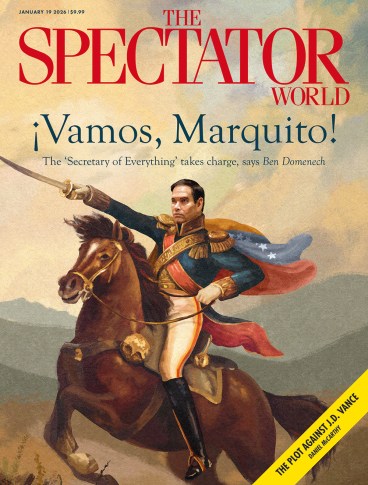
The Republican establishment would prefer Secretary of State Marco Rubio to Vance in 2028, arguably more out of antipathy toward Vance than sympathy for Rubio. Even Ted Cruz, who has already signaled a desire to run in two years’ time, would be eagerly embraced by Bush Republicans – or Pence Republicans – as an alternative to Vance. The economic populism and less interventionist foreign policy that Vance is identified with – core concerns of MAGA – are anathema to the old guard. So Vance has to be vilified. The campaign to brand him as soft on anti-Semitism has little prospect of stopping him from getting the nomination, but anti-MAGA Republicans will inflict whatever harm they can. They’re already locked out of Trump’s second term. If Trump is followed by another populist Republican – if he’s followed by J.D. Vance – the old guard will be routed for good.
This article was originally published in The Spectator’s January 19, 2026 World edition.




Comments