Nigel farage

‘He’s either the Messiah – or the Antichrist’: on the campaign trail with Nigel Farage

From our UK edition

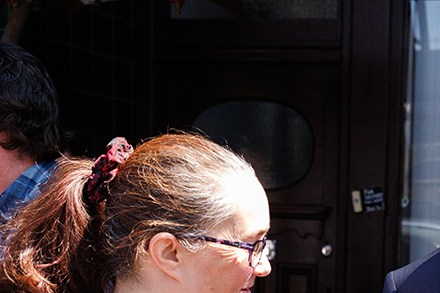
‘We love you, Nigel!’ In Clacton-on-Sea, there is little sign that the Reform leader’s star has waned. Campaigning with Farage here is a burst of cackles, quips, nicotine and selfies: a march through sun-kissed streets with a cast of canvassers, aides and minders. A child clasping a teddy bear dances around, Reform’s rosette pinned to her top; a groaning assistant clutches two dozen poster boards. On the doors in Seawick, there is near-universal support, with variations on the theme which Farage has made his campaign slogan: ‘I’m with Nigel.’ In the middle of silly season, Clacton is hosting one of Britain’s most bizarre by-elections.

I was targeted by a killer – but I’m still against more security for MPs

Reason, David Hume noted, is a slave of the passions. Arguments, especially political crusades, are often rooted in emotional responses, with the evidence assembled to justify a position which is heartfelt but often wrongheaded. So it is with the cry, from politicians, for more steps to be taken to safeguard the personal security of politicians. The killing of Ann Widdecombe, like the deaths of Jo Cox and David Amess, has generated new demands for action, and legislation, to protect those in public life from risk and danger. The transparent nobility of Ann’s life and the grotesque tragedy of her death make it emotionally difficult to resist the call for strengthened perimeters around our politicians.

Does Nigel Farage think he’s above scrutiny?

From our UK edition

If Nigel Farage is so confident that the £5 million donation he received from a friend is entirely kosher, why is he so frightened of being subjected to the official parliamentary code of conduct on the matter, or does he think he is above such scrutiny? That is a dangerous tightrope to tread. In 406 bc, after a naval battle in the long war between Sparta and Athens, a ferocious storm prevented the Athenian generals from picking up their survivors and the dead. In the law-making democratic Assembly, consisting of all Athenian male citizens over 18 (the dêmos), fury was high, and there was a demand from one Callixenos that the six out of the eight generals who had returned to Athens should be tried en bloc.

Letters: bring on devolution

From our UK edition

The right kind of devolution Sir: Your leading article ‘The Burnham Question’ (11 July) suggests that the putative prime minister’s enthusiasm for devolution might be a good thing, provided that it is the right kind of devolution. Although Andy Burnham would never admit it, devolution of the Manchester and Teesside type succeeds because, in both cases, business is given the chance to thrive. By contrast, devolution to the Scottish parliament and Senedd has stifled economic growth, while providing a platform for nationalist politicians to bash the UK. A true believer in effective devolution would scrap these national institutions and transfer power to business-friendly bodies in cities and regions across the UK.

The problem with Farage’s blue suits

From our UK edition

Count Binface has never lacked ambition. Nigel Farage’s only challenger in the Clacton by-election has, over the years, promised to cap the price of croissants at £1.10, nationalise Adele and build at least one affordable house. Admirable though these causes may be, however, the self-proclaimed ‘intergalactic space warrior’ has overlooked one national emergency. If he truly wants to leave Britain – or indeed Earth – in a better place than he found it, he should use this campaign to outlaw the royal blue suit from politics. The royal blue suit has spread through Westminster with the invasiveness of Japanese knotweed. Farage has embraced it with particular enthusiasm.

Prince Harry and Nigel Farage have more in common than they might like to admit

From our UK edition

At about 2 p.m. on Tuesday, two cases with a common characteristic coincided. One was Nigel Farage’s long statement about why he would resign his seat to fight a by-election. The other was the defeat of the privacy action against the Daily Mail brought by Prince Harry and others. The link is not in content, but in attitude. In both cases, the main actors in the drama are paranoid and solipsistic. Mr Farage, trying to deflect questions about the men who give him money, spoke for about 20 minutes of the wrongs done him by the ‘Establishment’ and the media. He was particularly worked up about his security. The Prince’s case was that he had been intruded upon by dark and powerful media forces. It was all mixed up with his resentments against his father the King and his courtiers.

Why doesn’t my daughter enjoy bonking?

From our UK edition

As seen in the Times ‘You young people, I don’t even know where to start!’ My phone call to my daughter Isabel is entering its 40th minute. ‘You’re all too busy donning keffiyehs these days to do any BONKING. ‘When I was your age, it was snogging to Duran Duran all night, then onto the couch for an hour’s kip, then into the office for a full day’s work at the PR agency or Tatler or wherever I was then… the point is there was no whingeing, just working hard and having a bloody good time.’ I then ask about Tom, Izzy’s long-term boyfriend, but interrupt with another harangue: ‘The thing is, Tom is very sweet.

What Farage can learn from the anti-Trump playbook

In January this year Dominic Cummings – once of this parish – warned The Spectator’s editor and assistant editor that Whitehall and the establishment parties would ‘stop at nothing’ to prevent Nigel Farage from becoming prime minister. As Cummings told the Quite right! podcast: ‘The people around [Keir] Starmer and all through the upper echelons of the Whitehall system are looking at Donald Trump. They’re looking across Europe, and they’re saying to themselves: “The lesson is to strike early and strike hard and not let these people in… Let’s smash the absolute living shit out of Farage, and make sure that he doesn’t win, by fair means or foul.

Will the ‘anti-Trump playbook’ work in Britain?

Commentators were so busy fulminating against Trump’s FIFA shenanigans yesterday they mostly missed his intervention in the big story now roiling British politics. "They’re Running the 2024 Anti-Trump Playbook on Nigel Farage," the President posted on Truth Social, linking to an article on the National Pulse, an American media site founded by Farage’s old mucker Raheem Kassam. The point, now being repeated by Reform’s talking heads on TV, is clear. "They" – the SW1 elite – are trying to stop Nigel Farage, just as the Washington establishment mounted a ridiculously elaborate lawfare campaign to try to stop Donald Trump.

Reform is right to fear the return of Boris

From our UK edition

The man from Reform had barely sat down at our table at the French bistro when he leant forward conspiratorially and asked: ‘What’s Boris up to?’ The suspicion that Boris Johnson, Britain’s 55th premier, must be up to something is a familiar one. For the first time in several years, however, the question is interesting. And the fact that Reform is raising it gives a small insight into the current state of politics. The query came just hours after Johnson had taken to Instagram to mark the tenth anniversary of the Brexit referendum, the defining moment of his career and of our politics since. The 17.4 million voters who backed the Leave campaign were right to do so, he said, before going on to hail the freedoms of Brexit.

The death of two-party politics has been greatly exaggerated

Every twist in the winding road of our politics brings a latest thing to say. These wisdoms usually survive a season or two before succumbing to the new thing to say, which often asserts the opposite. This summer we have ‘Britain is moving into an era of multi-party politics’. Allow me, therefore, to leap ahead with my candidate for its successor: ‘Reports of the death of two-party politics are greatly exaggerated.’ I don’t say our current governing party and principal opposition must always be the two parties in question. Labour may be dying. The Tories may be showing signs of life. In both cases I fervently hope so. But whether or not these remain our two options in elections to come, the tendency will always be for the choice to boil down to two.

The rise and rise of Australia’s Nigel Farage

From our UK edition

Sydney For three decades, Australia’s political Establishment has been predicting Pauline Hanson’s demise. But whenever critics tried to administer the kiss of death to the flame-haired firebrand, it somehow functioned as mouth-to-mouth resuscitation. Today her One Nation party is polling at levels once thought unimaginable. In recent polls, it even surpasses support for Australia’s centre-left Labor government and centre-right Liberal-National party opposition. Last month, One Nation won its first lower-house seat. Whatever happens next, Hanson has become one of the most consequential figures in modern Australian politics. To British readers, Hanson is often described as Australia’s answer to Nigel Farage. The reverse is closer to the truth.

‘I identify with Daenerys Targaryen before she went mad’: an interview with Kemi Badenoch

There was a moment backstage, before I interviewed Kemi Badenoch for a Spectator event, when I felt like John Sergeant with Margaret Thatcher bearing down on him as he pronounced her leadership in difficulty. I suggested to Badenoch that she was a rare example of a politician I had changed my mind about. “You mean you were very negative before?” she said, fixing me with the full alpha female glare. I muttered something placatory, but the truth is that a year ago I thought she was rubbish – and that was the mainstream view in her own party. She was arrogant, flat-footed, absenting herself from a stage that was being dominated by Nigel Farage, resistant to advice, convinced she was great at PMQs when even Keir Starmer was wiping the floor with her.

kemi badenoch
restore

Can Reform see off the threat from Restore?

Nigel Farage has always prided himself on being able to see off any threat from his right flank. But now a new force has emerged in the form of his ex-colleague Rupert Lowe. When the two Reform MPs fell out 15 months ago, friends shared memes of Farage’s past fallen rivals ascending to heaven. “Come and join us, Rupert!” they exhorted. Instead, Lowe fought back, setting up his own party, Restore Britain. In the Makerfield by-election on June 18, one poll puts Restore on 7 percent – enough to stop Reform and hand the seat to Labour’s Andy Burnham. Restore’s strategy is simple: use Farage’s playbook against him. Like Farage, Lowe has put his faith in social media, building up a noisy following that can then be turned into a campaigning force.

Britain imported a problem it refuses to name

I get the sense that the political and media class badly miss Katie Hopkins. Back when the reality TV star was still a regular on Britain's screens and in our newspapers, she could be relied upon to be the focus of attention whenever the people in charge didn’t want the public’s attention to be focused where it ought to be. So when a British soldier was decapitated on the streets of London, or a suicide bomber went off at a pop concert packed with teenage girls, Ms. Hopkins could be found saying something that a lot of people were thinking – only in a more colorful or unwise way.

‘Rupert Lowe turns up for work, Nigel Farage doesn’t’: an interview with Kemi Badenoch

There was a moment backstage, before I interviewed Kemi Badenoch for a Spectator event this week, when I felt like John Sergeant with Margaret Thatcher bearing down on him as he pronounced her leadership in difficulty. I suggested to Badenoch that she was a rare example of a politician I had changed my mind about. ‘You mean you were very negative before?’ she said, fixing me with the full alpha female glare. I muttered something placatory, but the truth is that a year ago I thought she was rubbish – and that was the mainstream view in her own party. She was arrogant, flat-footed, absenting herself from a stage that was being dominated by Nigel Farage, resistant to advice, convinced she was great at PMQs when even Keir Starmer was wiping the floor with her.

Why gentlemen relish Kemi

From our UK edition

As seen in the Telegraph Two thoughts on the sad and controversial death of Henry Nowak. The first is about Kemi. Wow. She really is The One. While Nigel Farage has angrily stomped about, demanding certain laws and policies be changed to stop something like that happening again, Mrs Badenoch instead forensically called for people to be mindful of their language. Mummy has done it again. Little do they know that until 2020 there were no racial tensions in this country at all And here is thought two: I despise Americans, and the Americanisation of our culture. Nowak’s death has opened the floodgates to all sorts of barking, ill-informed commentary from the Yanks about this seat of Mars.

Henry Nowak and the politics of deflection

While Britain is still reeling from the horrific murder of 18-year-old student Henry Nowak, an astonishing article has appeared in El País, Spain’s largest national newspaper. Rather than focus on the failures of the police officers, or the institutional bias within the force, the headline steers its readers away from the case and towards the outlet’s own obsessions. The headline translates as "Farage’s far right stirs up hatred in the UK after a young man is stabbed to death by a Sikh man." As Alejo Schapire (an Argentine journalist based in France) has pointed out, this is the first and only article produced by El País on the subject of the Nowak killing. Instead of an image of the victim, the newspaper has opted for a photograph of Nigel Farage.

henry nowak

The secret shame of being ‘Reform-curious’

As a sucker for any melody which relies heavily upon fourth and eighth notes hammered out on a piano, I was always going to fall for Billy Joel’s 1978 hit single "My Life." The lyrics were, as ever with Joel, awful, mixing his cringeworthy ordinary guy New York vernacular shtick with what I dare say he thought were original and profound psychological insights. He is such a hack singer-songwriter. He makes Neil Diamond resemble Wittgenstein. But the tune made me swoon, even its two predictable cod-Beatles middle eights. What to do? Obviously, I couldn’t buy it. There were four record shops in Middlesbrough back then and I was known in all of them.