Zoe Strimpel

Zoe Strimpel

Where to dine in Hackney

From our UK edition

Hackney’s rise in the 2000s from dangerous and affordable to cool, cooler and coolest eventually made it a kind of Chelsea of east London, with the expensive housing – house prices have grown 281 per cent between 2001 – and glamorous dining establishments to match. It may have become a magnet for Fullham exiles but Hackney never quite lost its aura of cool, and its transformation into one of the priciest areas of London has come not with a dumbing down but with the refinement of a distinctive, creative dazzle. The payoff? A proliferation of yummy, interesting restaurants.

Why Venice and little-known Trieste are the perfect holiday pairing

From our UK edition

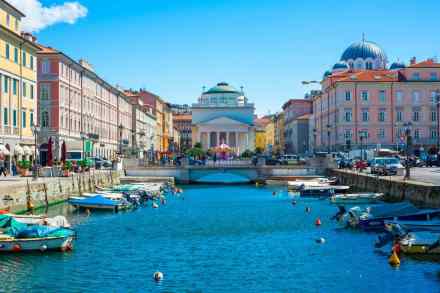
Italy's relaxation of its travel restrictions for double-vaccinated Brits has many of us eyeing up the options for an autumn getaway. And why not? Come September, cities like Venice are no longer tourist traps (Dolce & Gabbana fashion shows aside) and yet the balmy weather remains. Many visitors head to Italy for Venice alone but they miss a trick by foregoing the beautiful nearby port town of Trieste – beloved by Italian holiday makers and yet untouched by Brits. With the Venetian authorities rumoured to be considering turnstiles on the periphery of Venice, Italy's most iconic city increasingly feels like a museum. And so, for those left hankering for a slice of living, breathing Italian culture, Trieste is the perfect tonic.

London’s best Indian restaurants

From our UK edition

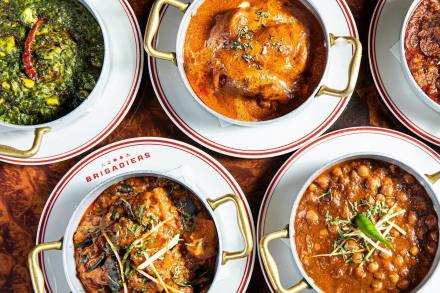
One of the great sorrows of the pandemic has been India. Its own harrowing experience of the virus has been dreadful to see. And less importantly but still poignantly, India’s disappearance from the list of possible destinations for travel for the foreseeable future has created a sense of morose yearning among those itching to get back. So long as we’re barred from going, London is perhaps the best city on earth to recreate some of the finest ambience, tastes and smells of the subcontinent and with that in mind I set out to experience the best of India through a clutch of sophisticated restaurants only a Tube ride away.

Mesmerising and monstrous: @zola reviewed

From our UK edition

The distinction between on and offline life blurred long ago. The greatest spats, sexual self-fashionings and mad soliloquies now unfurl on social media. The splenetic rhythms and fundamental shallowness of this medium make it a questionable source for art, but Janicza Bravo’s @zola — the first film ever released based entirely on a series of viral tweets — makes a tight, original fist of such material. @zola is A’Ziah ‘Zola’ Wells King, who in 2015 as a 19-year-old exotic dancer and stripper living in Detroit unleashed a 148-tweet thread, billed as #thestory, which detailed a chain of nasty but fascinating events during a surreal trip to Tampa.

Why are young men so scared of sex?

This article was originally published in The Spectator’s June 2021 World edition. Subscribe here. I am tired. Men — purportedly single and ready to mingle — have worn me out. Not, sadly, in the way one might hope but in the new, peculiar, nightmarish way of the times. Since becoming single two and a bit years ago, I have romped around a fair bit on the apps: Bumble, Tinder and lately Hinge. Interestingly, the only men who have seemed raring to go — and interesting, educated and good-looking — were under 25. Too young to have become the unwanted dregs, they are also too young to worry that an older woman (I’m 38) will badger them about kids. At first, I was dazzled by the idea of dating younger men. But the reality soon dawned on me.

young men

Armie Hammer and Hollywood’s new moral code

From our UK edition

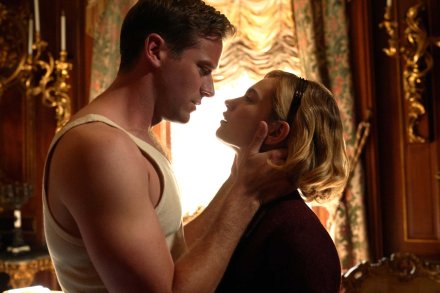
I am always irritated by film versions of classic novels, especially when I’ve recently read them. I needn’t have worried about Death on the Nile. Kenneth Branagh's Agatha Christie adaptation, already subject to no fewer than six delays, has been pushed back yet again to the first quarter of 2022. By the time it comes out – if it does – I’ll have forgotten the original. With that airless sense of ‘here we go again’, Nile’s delay has been caused because its leading man, Armie Hammer, has been accused of sexual assault, including rape, and sundry other unsavoury forms of sexual conduct - allegations which he denies.

Why aren’t we teaching women self-defence?

From our UK edition

Women all know that queasy shock of hyper-awareness when a man on the street or the Tube or bus begins to behave in a threatening way. It is a moment in which an action plan is hatched and, in the vast majority of cases, that action plan is to try and disappear. Walk, do not make eye contact, say not a word and hope for the best. If he has you captive, for instance on a Tube carriage, ignore, ignore, ignore. Grimly stare ahead. The goal, after all, is to escape, not to inflame. But all too often this is not effective. The reality is that women feel afraid because we know three things: we know we don’t know how to fight. We know we are physically weaker than any would-be attacker. And we know that men know all this.

Clubhouse left me with one question: why am I here?

From our UK edition

For my 13th birthday in 1995 I requested — and got — my own ‘line’. This meant that I could jabber all night without taking the phone out of service for everyone else. Getting your own line was a rite of passage for teenage girls in America back then, and everybody just sighed and let us get on with it. Talking on the phone all the time was simply something girls did. Women, meanwhile, at least according to film and TV, spent their time sitting by the phone eagerly awaiting calls from men that usually didn’t come. But then the feminised world of the endless, open-ended voice call dwindled with the arrival of mobile phones and a preference for texting, messaging, tweet-messaging, and the easy WhatsApp voice note.

Bumble’s ‘feminism’ is half-baked

From our UK edition

In 1965, a trio of Harvard undergraduates launched Operation Match, a computer dating service for horny undergraduates at New England’s single-sex colleges. A journalist for Look Magazine came to cover the sensation. ‘Call it dating, call it mating, it flashed out of the minds of …Harvard undergraduates who plotted Operation Match, the dig-it dating system that ties up college couples with magnetic tape,’ he wrote. Dig-it, it may have been, but Operation Match didn’t last out the decade. Dateline, Britain’s premier computer dating service, was soon launched using the same technology, feeding customer questionnaires into a large mainframe computer which would spit out half a dozen matches for a fee.

The Netflix generation has lost its grip on history

From our UK edition

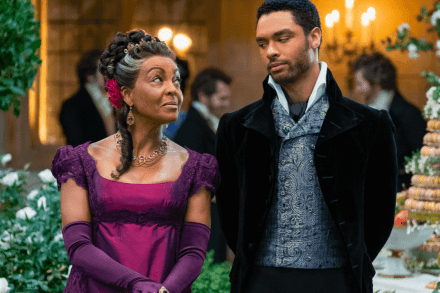
The first thing you notice about Bridgerton, Netflix’s big winter blockbuster set in Regency England, is how bad it is: an expensive assemblage of clichés that smacks of the American’s-eye view of Britain’s aristocratic past. The dialogue is execrable, the ladies’ pouts infuriating. But bad things can be good, especially when it comes to sexy period romps. Bridgerton is no different. The story follows the elder children of the Bridgerton family as they look for love in a utopian sprawl of courtly landscape and sociality.
Black Lives Matter’s anti-Semitism blind spot

From our UK edition

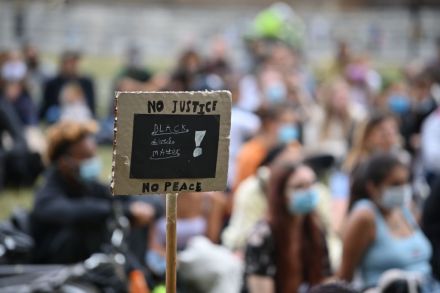
Charles Dickens was not a nice man. He was horrid to his family, remarking on the birth of one of his sons that ‘on the whole I could have dispensed with him.’ When he fell in love with Ellen Ternan, an actress 27 years his junior, he threw his long-suffering wife out, and sent her only three letters in the 12 remaining years of his life. Despite having one of the best imaginations in English literature, his depictions of women alternated between terrible crone (Miss Havisham) to simply prone (Esther in Bleak House). Ah well, we used to say: terrible man, brilliant books. Funny old place, the past. Well, times have changed. Specifically, the cause has changed.

Bad romance | 7 February 2019

From our UK edition

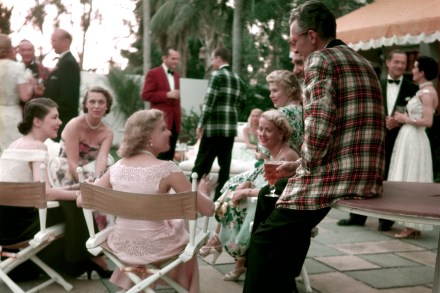
I interviewed a prominent 1970s women’s liberationist recently and ended up discussing the sexual culture of her political heyday. ‘Everyone was sleeping with everyone,’ she said. ‘You had to have a good reason not to sleep with someone.’ I felt a stab of envy, a sharpened version of what I feel browsing black-and-white snaps from back in the day. There is often a dishevelled sexiness. There are the gleefully knowing expressions from women newly unafraid of unwanted pregnancy, and the ‘why not?’ insouciance of slouching shaggy-haired men and their slender sheepskin-coated girlfriends leaning against doorposts. What a dreary distance we’ve travelled to get to the present dating landscape.

Great expectations | 12 April 2018

From our UK edition

In a 1974 interview celebrating the quarter century since the publication of her classic The Second Sex (1949), Simone de Beauvoir recalled a eureka moment in which she saw that ‘to change the value system of society was to destroy the concept of motherhood’. That ‘value system of society’ rested on what she saw as enforced maternity, whereby women — whether through physical, psychological or social pressure — were pressed into humiliating servitude, a world of narrowed horizons and debasing physical shame.

Force Majeure reviewed: meaty and hilarious – but it may wreck your relationship

From our UK edition

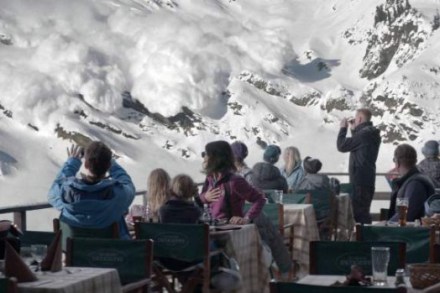
If you’re unsure about the man (or woman) you’re dating, go and see this film. It’ll cause rifts in a weak relationship, and yield powerful debate – or perhaps agreement on the central themes – in a strong one. It asks men to defend or disown the role of hero, and begs us to consider whether motherhood naturally graces its host with more altruistic instincts than fatherhood. Who’s braver: men or women? Or, let’s cut to the chase, you or me? At the core of this slick and sometimes hilarious Swedish film by Ruben Östlund is the non-rhetorical question: when push comes to shove, what would you do? I’ve always been a believer in the universal – and the humorous – springing from the particular.

Like all the best spiritual leaders, this diet theologian will leave you trembling

From our UK edition

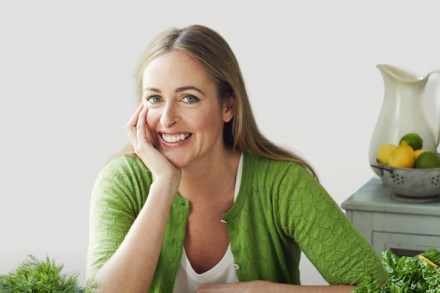
Eat. Nourish. Glow., the healthy eating book currently number one in at least three Amazon categories, came to my attention recently while I was in a stew of self-loathing over an out-of-control cake habit. Realising the time was ripe for a new regime, the feature in The Times spoke to me instantly. One Amelia Freer, pictured smiling and trim-wasted amid strawberries, was advocating a new approach to eating. I had thought, as an armchair nutritionist and sometime dieter since my early teens, that I’d seen every new way of eating under the sun. Especially in recent years, as the mantra of ‘good fats’ has come to drown out all others (apart, of course, from fat-shunning, fruit-courting Weight Watchers, which still enjoys market domination).