Yascha Mounk

Yascha Mounk is a professor at Johns Hopkins University in Washington, D.C. and the author of The Identity Trap.

Trump and Musk was never going to work

From our UK edition

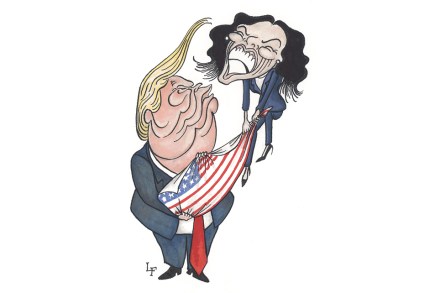
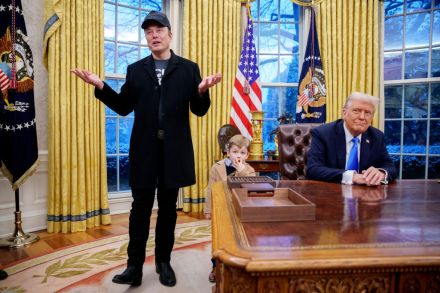
Trump’s public breakup with Elon Musk is symptomatic of his failure to hold together the broad coalition to which he owes his re-election. The ‘HUGEst’ political alliance of the century is breaking apart before the eyes of the world in suitably spectacular fashion. For the last few months, the most powerful man in the world, Donald Trump, and the richest man in the world, Elon Musk, were a political item. Musk donated large sums to Trump’s campaign, lavished the newly re-elected president with praise on his social network, and neglected his companies to pursue his side quest at the helm of the Department of Government Efficiency (DOGE).
The Resistance will be woke

From our UK edition

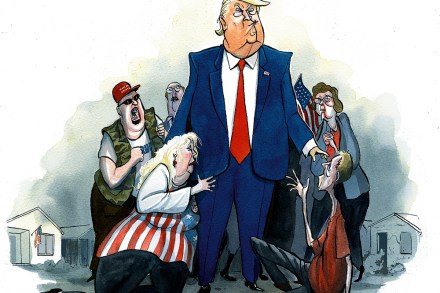
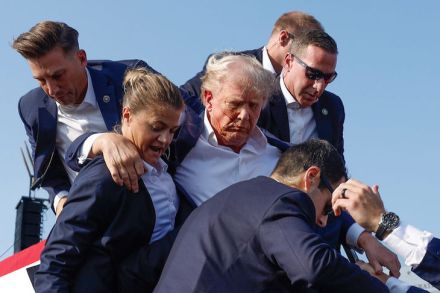
After surviving an assassination attempt and winning reelection with a clear lead in the popular vote, Donald Trump was – briefly, and for the first time in his political career – seen by many pundits as incarnating the future rather than the past. In his first months back in the White House, the radicalism and vindictiveness of the administration have given jitters to a lot of independents who were key in helping him win and hardened opposition among his longtime critics. Any fleeting sense that the MAGA movement was culturally ascendent appears, at least for now, to be gone. And yet, the conventional wisdom holds that a broader ‘vibe shift’ is here to stay.

Drama students: how universities raised a generation of activists

From our UK edition

39 min listen

This week: On Monday, tents sprung up at Oxford and Cambridge as part of a global, pro-Palestinian student protest which began at Columbia University. In his cover piece, Yascha Mounk, a professor at Johns Hopkins University, explains how universities in both the US and the UK have misguidedly harboured and actively encouraged absurdist activism on campuses. Yascha joined the podcast to discuss further. (01:57) Next: Bugs, biscuits, trench foot: a dispatch from the front line of the protests. The Spectator’s Angus Colwell joined students at tent encampments this week at UCL, Oxford and Cambridge. He found academics joining in with the carnival atmosphere. At Cambridge one don even attended with their baby in tow. ‘Peaceful protest?

How universities raised a generation of activists

From our UK edition

It was only a matter of time before America’s student protests spread to the UK. In Oxford, tents have been pitched on grass that, in ordinary times, no student is allowed to walk on. The ground outside King’s College in Cambridge looks like Glastonbury, complete with an ‘emergency toilet’ tent. Similar camps can be found at UCL, Manchester University and more. There have been no clashes with police, but that may yet come. In Leeds, for example, pro-Palestinian students tried to storm a university building, leading to bloody clashes with security guards. From the Sorbonne to Sydney University, the movement has gone global. Its ostensible cause is hardly ignoble. It’s possible to be appalled both by the 7 October attacks and the tens of thousands of Palestinian deaths.

The World Happiness Report is a sham

From our UK edition

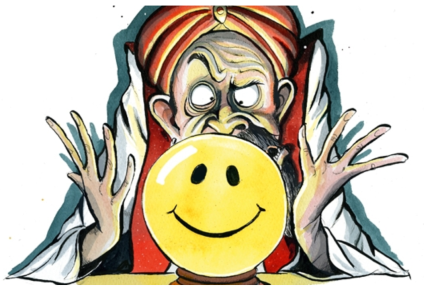
Today is World Happiness Day. So, like every year on 20 March, you are likely to see a lot of headlines reporting on the publication of the annual World Happiness Report. ‘Finland is again ranked the happiest country in the world [while] the US falls to its lowest-ever position’, a headline in the Associated Press ran this morning. Forbes even got philosophical, promising ‘5 Life Lessons From Finland, Once Again the World’s Happiest Country’. Published by the United Nations Sustainable Development Solutions Network and the Wellbeing Research Centre at Oxford University, the basic message of the report has remained the same since its launch in 2012. The happiest countries in the world are in Scandinavia; this year, Finland is followed by Denmark, Iceland and Sweden.

Europe must be stronger, or it will die

From our UK edition

Over the last weeks, the words and actions of the Trump administration have caused the biggest rift between the United States and Europe since the end of the Cold War. Relations between the longstanding partners are more strained now than they were in the run-up to George W. Bush’s invasion of Iraq or in the aftermath of Trump’s 2018 joint press conference with Vladimir Putin in Helsinki. Over the last few weeks, European officials were horrified that Trump pressured the prime minister of Denmark, a longtime ally, to cede parts of its national territory to the United States. They took umbrage at a speech at the Munich Security Conference in which J. D. Vance, Trump’s vice president, seemed to ally himself with the continent’s right-wing populists.

Reality check: why the Democrats lost

From our UK edition

For the past decade, Donald Trump has been the most famous and influential man on the planet. But he had too many failures and electoral defeats to his name to be able to claim he dominated a whole political era. That changed on Tuesday night. Trump will be remembered as both the 45th and the 47th President of the United States. At the time of going to press, he is very likely to win full control of Congress. He is even likely to win the popular vote – making him the first Republican to do so in 20 years. All of this will allow him to impose his will on the nation to a much greater extent than he did during his first term in office. Every country is vulnerable to this form of political appeal Back in 2016, the whiff of aberration hung over Trump’s success.

Can America keep being the world’s policeman?

From our UK edition

America is retreating from the world stage. The country’s senile president appears absent from the dramatic events unfolding in the Middle East. Joe Biden urged Israel not to go into Rafah; to abstain from taking on Hezbollah; and to forgo retaliatory strikes against Iran. At every stage, the Israeli government followed its own counsel and is now reportedly ignoring his administration ahead of next month’s election. Biden’s term in office has been marked by similar haplessness elsewhere in the region. He will be remembered above all for America’s ignoble and chaotic retreat from Afghanistan, which left local contractors and translators in the lurch and allowed the Taliban to reimpose their theocracy.

How supporting Trump became cool

From our UK edition

For the past decade, the basic lines of conflict in American public life seemed clear. Donald Trump was pitted against the establishment, the ‘basket of deplorables’ who supported him against the elites. The reality was more complicated. Yes, plenty of rich and powerful Americans supported Trump and plenty of poorer Americans on the fringes of society were against him. But in a certain section of society the disdain for Trump was unequivocal. Among the country’s elite – at Harvard and Stanford, at Google and Goldman, near the beaches of the Hamptons and the mountains around Aspen – anyone who defied the anti-Trump consensus could expect swift consequences for their social standing. There have been constant melodramas over this form of social ostracism.

After Biden: what the Democrats should do now

From our UK edition

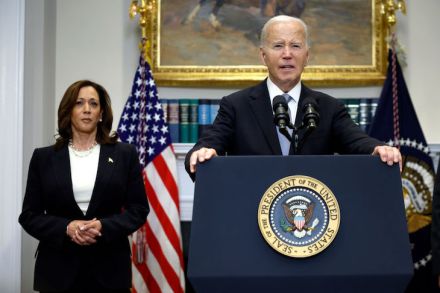
President Joe Biden – who has announced that he will not run for re-election – has served the United States honourably for five decades, as a senator, as Barack Obama’s vice president, and finally in the highest office in the land. Biden has endorsed Kamala Harris, his Vice President, to be the new Democratic nominee. The best thing for Democrats to do now is to stage a genuinely open competition for who should oppose Donald Trump in the presidential race. Voters deserve a say in who represents them, and Harris was not on primary ballots in either 2020 or 2024. And the competition, even if messy, is likely to strengthen Democrats: Either they find a candidate whom voters prefer to Harris; or Harris will go into November strengthened by a democratic show of support for her.

What the Trump assassination attempt reveals about America

From our UK edition

It has now been about 48 hours since Thomas Matthew Crooks, a socially isolated 20-year-old, attempted to assassinate Donald Trump, lightly injuring the former president, and fatally wounding an attendee at his rally. A lot has already been said: about the danger of an escalatory spiral that will take this country ever closer to the brink, for example, and about the need to abjure all forms of political violence. A lot, for now, remains in the realm of speculation: the effect that this event – and Trump’s defiant reaction to it – may have on the upcoming election and, more pressingly, how someone like Crooks could have come within a literal inch of killing the most famous and controversial man in America.

Democrats have led America to the brink of the abyss

From our UK edition

Before Thursday’s debate, the leading contender to win the upcoming presidential election was already Donald Trump, a man whose first stint in the White House provided all the necessary evidence that he is spectacularly ill-suited for the job. During that term in office, Trump ruled rashly and selfishly. He lavished praise on his appointees before firing scores of them for incompetence or insubordination. He picked constant fights with the independent institutions that preserve the separation of powers. And when he lost a hard-fought race, he refused to concede defeat, inspiring a mob to assault Congress, and breaking the key norm that has sustained the American Republic for the past centuries.

The youth vote is turning right

From our UK edition

Young people are supposed to drink a ton, have a lot of sex, hang out with their friends at every opportunity and vote for the left. Today’s young don’t live up to the stereotype. According to polls, they are one of the most responsible generations on record. Across the West, the share of young adults who binge-drink or who are sexually active has fallen to a new low. Teenagers spend far less time hanging out with their friends than their parents or grandparents did. They even seem to be defying political expectations – though their recent drift to the right has, in its own way, succeeded just as well in horrifying their elders.

Why the British think differently from Americans

From our UK edition

When I first started teaching undergraduates at Harvard, the grading system the university employed struck me as very odd. Even ambitious students at top colleges in the United States see it as their job to answer any essay question in the most thorough and reasonable way. They regurgitate the dominant view in scholarly literature in a competent manner. If they pull this off without making major errors, they fully expect to get an A. And with grade inflation rampant in the Ivy League, they usually do. This attitude has had a significant influence on American public life. If you read an opinion piece in the New York Times or the Washington Post, its basic thesis is often utterly unsurprising.

Why we should worry about progressive AI

From our UK edition

Google recently launched its AI image generator, Gemini. Users could type in a description and then, in seconds, the algorithm would create the requested painting or photograph. There was just one hitch: Gemini, more neatly than any previous AI, showcased the extent to which the political sensibilities of the Silicon Valley elite are shaping this technology’s future. When I told Gemini that I hoped the Nazis were having a bad birthday, Google couldn’t hide its disappointment When asked to generate images of residents of contemporary Nigeria, Gemini pictured black Africans. When users asked for images of historical Chinese kings, it displayed Asian men in royal regalia.

The case for photo-bombing

From our UK edition

A few months ago, I visited Angkor Wat, the majestic temple in present-day Cambodia that once stood at the centre of a vast empire. As the five towers of the palace came into view, I was, despite the intense heat, fully immersed in the beauty of the place. I imagined how excited a visitor from a faraway land in the 12th century, full of anticipation for a meeting at court, would have felt arriving at what was then the largest settlement on Earth. And like that imaginary visitor, I felt propelled forward, impatient to cross the moat that separated me from the edifice, to get a closer look. At that moment, I heard a confident American voice. ‘Excuse me,’ the man shouted, as he crouched on the floor, phone in hand. ‘I’m taking a picture.

Identity crisis

From our UK edition

28 min listen

On the podcast: In his cover piece for the mag this week, political scientist, Yascha Mounk has written about why identity politics has polarised our understanding of race. And why the left has come to divide groups into oversimplified categories of ‘the oppressors’ and ‘the oppressed’.  Also this week:  Can we trust photographs to paint a true picture of a story? The Israel-Palestine conflict has been one of the most documented wars to date. But with AI manipulation and staged imagery, is there a way of differentiating between real and fake news? Bryan Appleyard CBE and Eliot Higgins from Bellingcat discuss.

Identity Crisis: why doesn’t the West know who to back in the Israel-Hamas war?

From our UK edition

When two planes flew into the World Trade Center on 11 September 2001, the world stood in solidarity with the United States. In London, ‘The Star-Spangled Banner’ was played at Buckingham Palace. ‘We are all Americans,’ declared Le Monde. In Berlin, 200,000 people took to the streets to express their sorrow. This makes it all the more striking how different – and how morally obtuse – the reaction to Hamas’s slaughter of around 1,400 Israelis has been. Major news outlets were strangely reluctant to dwell on the horror before jumping straight to the Israeli response. Instead of declaring that we are all Israelis, Le Monde editorials fulminated against Israel’s ‘desire for vengeance’.

Coronomics: how surreal is this economic crash?

From our UK edition

40 min listen

On the podcast this week, we take a look at the exceptional nature of 'coronomics' and what comes after (00:55), how the Swedish are dealing with coronavirus differently (18:50), and lessons in solitude from a polar explorer (31:15).