William Cook

The Vienna attack is a bitter blow for Sebastian Kurz

From our UK edition

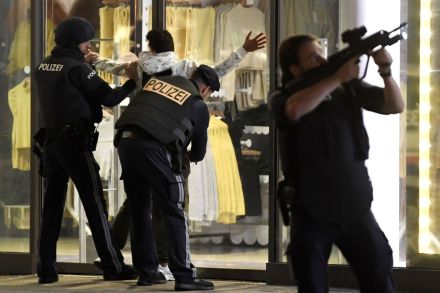
With Austria’s latest Covid lockdown due to begin at midnight, Viennese citizens were enjoying a final night of freedom. And then the shooting started. The temperature was warm for this time of year, and people were sitting at pavement tables outside the bars and cafes, enjoying the balmy weather and obeying the coronavirus guidelines. What followed was what the Austrian Chancellor, Sebastian Kurz, called a ‘repulsive terror attack.’ So far, four civilians are reported dead – two men and two women. Seventeen more are in hospital with serious injuries, including one policeman. Seven of these injuries are reported as critical. An attacker was shot dead by police. At least one other gunman is believed to still be at large.

Prussian blues

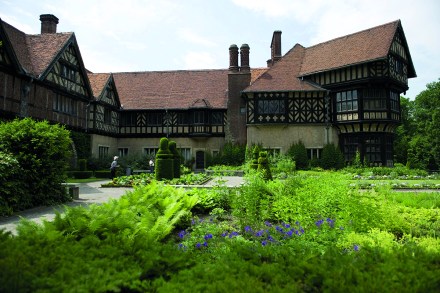
My grandfather Werner von Biel was born in a huge white house on the Baltic coast of eastern Germany, a few years before World War One. I never met him. He died when I was a child. My grandmother didn’t like to talk about him. She’d left him for an English soldier at the end of World War Two. Growing up in England during the Cold War, I often wondered what had become of his Junker family, the Schloss (castle) they lived in and the land they farmed. When the Berlin Wall came down I went east, in search of the fatherland my grandmother had forsaken. Thirty years later, I’m still searching. I’ve found a few curios along the way. The Schloss is still there, though my grandfather’s family no longer owns it (the Communists turned it into a school).

prussia

Berlin’s underground is the latest battleground in Germany’s culture war

From our UK edition

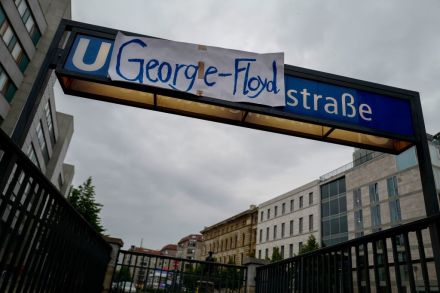
By the time I got to Mohrenstrasse, the protesters and their BLM placards were long gone. The only thing they’d left behind was some red paint, splattered on the sign above the subway station. I guess this was meant to imply that by naming this U-Bahn station Mohrenstrasse, Berlin’s public transport bigwigs had blood on their hands, or something. But today, in the pale autumn sunlight, it actually looked rather attractive and artistic. I hope they keep it there. For this subway sign to remain here, albeit with a light splattering of red paint upon it, would, to my mind, be a good solution to a problem that’s dogged Berlin’s U-Bahn network for years: namely, how to tackle the protestors who claim that the name Mohrenstrasse (Street of the Moors) is racist.

Terry O’Neill: ‘Hollywood is lonely’

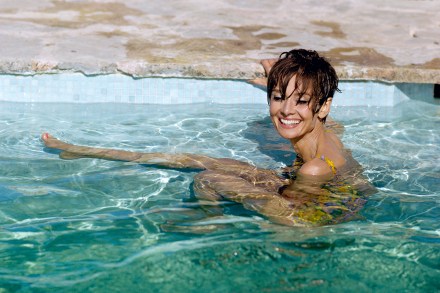
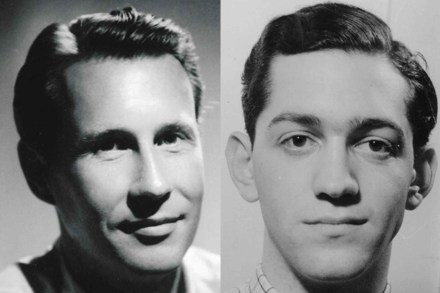
At the Maddox Gallery in Gstaad, that strange, swanky village on the roof of Switzerland, Jay Rutland is showing me the latest exhibition by photographer to the stars Terry O’Neill. It’s a lovely summer day, clear sunlight streaming in through the windows, and the high peaks on the horizon have never looked more inviting, but the Alpine view pales beside the photos on the walls. O’Neill photographed the world’s biggest rock stars and movie stars, the most famous people on the planet, yet these portraits are so fresh and intimate you almost feel you know them — not as aloof superstars but as fragile, familiar friends. Here’s Audrey Hepburn playing beach cricket with a piece of driftwood, grinning like a kid on holiday.

Never a dull sentence: the journalism of Harry Perry Robinson

From our UK edition

Is Boris Johnson a fan of Harry Perry Robinson? If he isn’t, he really ought to be. Reading this absorbing biography, I was struck by how much they have in common — especially in their early lives. Both men went to public school, then on to Oxford, then into journalism, where they proved incapable of writing a dull sentence. They both divorced and remarried — and were also American citizens, for a while. Both dipped a toe into politics, but while Boris took the plunge, Harry stepped back and remained a jobbing hack until his dying day, the finest journalist of his generation. The biggest difference, however, is that Harry was born in 1859, which is why you’ve probably never heard of him. I certainly hadn’t until I read Joseph McAleer’s fascinating book.

The battle over a German town’s black patron saint

From our UK edition

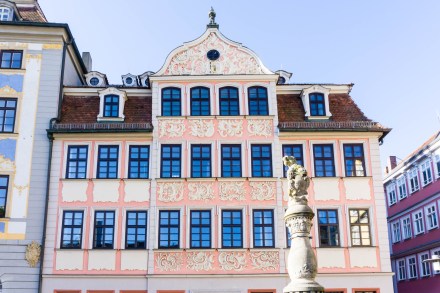
At first glance, the pretty German town of Coburg seems an unlikely arena for the latest skirmish in the culture wars. The birthplace of Prince Albert (and one of Queen Victoria’s favourite holiday spots), it’s a quaint and tranquil place which miraculously came through the last century virtually unscathed. Yet now this historic backwater finds itself at the centre of controversy, on account of its patron saint, St Maurice, aka the Coburg Moor. St Maurice is a ubiquitous presence in Coburg. His profile adorns the town’s coat of arms, and numerous public buildings. It’s even on the manhole covers. Now Alisha Archie and Juliane Reuther (who live in Berlin but come from the region) have started a petition calling for this symbol to be redesigned.

A ticket to Rye

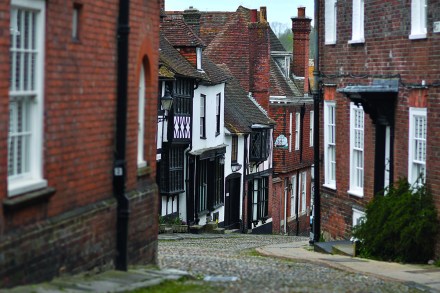
Earlier this year, before we went into lockdown, my wife and I set off on our final, farewell trip to Rye. I may go again, one day, but I know she never will. This quaint, archaic seaside town where we’d spent so many happy holidays had become a painful place for her. She was glad to say goodbye. I wanted to make a weekend of it, like we always used to, but she didn’t want to stick around. Her dad had died and her mom was in a nursing home. We’d come to clear out their house before the new owners moved in. It was her parents who had introduced me to Rye, 24 years ago. They’d just retired and needed a new adventure. The National Trust needed some new tenants for Lamb House, a grand old house in Rye where Henry James used to live.

rye

Online chess is the ultimate lockdown sport

From our UK edition

How have you been filling these listless homebound hours we’ve been given by the government? I’ve been frittering them away playing online chess, and it seems I’m not alone. The Economist reports that traffic on chess.com, the leading chess website, has more than doubled during lockdown. Log on at any time and you’ll find tens of thousands of games in progress. Once upon a time, in that lost age before the world wide web, chess players had to get dressed and leave the house to feed their habit. Now, in our brave new virtual world, those days are long gone. Today anyone with an internet connection can play ad infinitum, against an endless array of players from all around the world. Simply fire up your computer and away you go.

Germans can laugh at Fawlty Towers, so why can’t Brits?

From our UK edition

Now UKTV (owned by the BBC) has removed the classic ‘Germans’ episode of Fawlty Towers from its playlist, this sorry no-platform saga has tipped over from tragedy into farce. Is there really anyone in British broadcasting who doesn’t understand that this comic meisterwerk actually makes a mockery of xenophobia? Surely everyone can see it’s satirising and lampooning pathetic Little Englanders, personified by John Cleese’s Basil Fawlty? Apparently not. First broadcast 45 years ago, this episode, more than any other, has become part of British cultural history, spawning the familiar catchphrase, ‘Don’t mention the war.

This crisis could be the catalyst for a golden age of British theatre

From our UK edition

The arts are in a state of crisis. How often have you heard that before? Well, this time around it happens to be true. In the age of coronavirus, it’s clear that the old way of doing things won’t work any more. Theatres, in particular, have been quick to grasp the bleeding obvious: cramming lots of people into crowded spaces has suddenly become extremely difficult. How do you fill a theatre in an era of social distancing? Short answer: you can’t. The response from theatre practitioners has been fairly predictable. What the theatre needs, they tell us, is more public cash. West End producer Sonia Friedman says that 70 per cent of performing arts companies will close by Christmas if there is no government rescue package, reports the Telegraph.

Czar quality

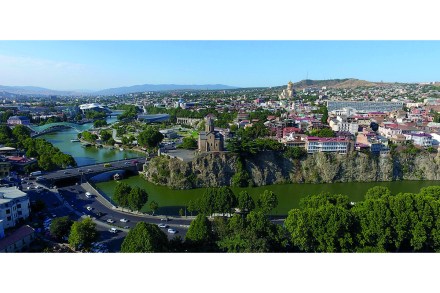
‘These regions are not under the control of the central government,’ reads a warning on a map in the bustling center of Georgia’s capital, Tbilisi. ‘Traveling to these regions is not advisable.’ One of these regions is Abkhazia, only a few hours’ drive away. The other is South Ossetia, barely an hour from here. Since 2008 both have been occupied by Russian troops, in defiance of the Georgian government. Yet here in Tbilisi, tourism is booming, and many of the tourists are Russians. This neat irony encapsulates what makes Tbilisi such a fascinating city, a looking-glass metropolis in which nothing is quite what it seems.

tbilisi georgia

Welder, banjo player, comedian, actor, and now artist – Billy Connolly interviewed

From our UK edition

We are in a basement gallery in London’s West End, and Britain’s greatest comedian is doing what he does best — sharing his delight at the daft absurdities of daily life. He remembers seeing a little boy wading into the freezing waters at Aberdeen. ‘You make a certain noise when the wave comes up. It’s a noise that you can only repeat by shoving a hot potato up a donkey’s arse.’ He is making this empty gallery feel as though it’s full of people — and a bunch of strangers laugh like old friends. ‘A lot of my stuff doesn’t have punchlines’. He doesn’t need them. ‘It’s lovely just making a big picture, and saying, “I was there, and I’d like to invite you to share it with me.

I’m walking round Britain – in my back garden

From our UK edition

What’s the best way to keep in shape during the lockdown? That’s the First World problem I’ve been using to distract me during these strange, distressing times. My wife and teenage children are doing online workouts, but that looks far too tiring. Instead, I’m walking round Britain — in my back garden. I got the idea from a walking trail called Walk the Planets, in Ruislip Woods, not far from where I live. It’s a round trip of about two miles, which doubles as a tour of the solar system. At a scale of five billion to one, Mercury, Venus, Earth and Mars are barely a hundred yards apart (on the same scale the nearest star system, Alpha Centauri, would be in San Francisco).

Isolation forces us to work out what really matters

From our UK edition

When times are hard it helps to remember those who’ve endured far harder times. I remember my friend Manfred Alexander, who escaped from a concentration camp and hid in my grandfather’s flat in Berlin during the second world war. The month he spent alone in that apartment was far harder than any self-isolation I’ll ever face, yet he survived and prospered. Manfred Alexander was born in 1920, into a bourgeois German-Jewish family, and became friends with my Gentile German grandfather in Berlin in the 1930s. Growing up in Berlin, Judaism wasn’t a big part of Manfred’s identity. It was only when he was expelled from school for being Jewish that he learnt who his Jewish classmates were.

Is there any better place for an EU-subsidised arts festival than Galway?

From our UK edition

I was still digesting my delicious breakfast (kippers, poached eggs and soda bread — all local) when the sad news reached our party of freeloaders (sorry, I mean distinguished international journalists): a force ten gale was blowing in, so tonight’s opening ceremony on the headland by the harbour had been cancelled. ‘Ah well, let’s go and get drunk,’ said my new friend Shane. So we did. Galway is this year’s European Capital of Culture and, while Brexiteers may welcome their liberation from this perennial EU shindig, if you’re going to stage a state--subsidised arts festival anywhere then Ireland’s liveliest little city is probably the best place, despite the frequently filthy weather.

Why Europhiles should welcome Brexit day

From our UK edition

As Big Ben fails to bong tonight, and Brexiteers toast a famous victory, will those who voted for Remain be ranting or sulking, or simply crying into their beer? If so, they should perhaps stop feeling so sorry for themselves. Of course, if you’re a Europhile, today is hardly a day of celebration – but neither is it a day for misery. Because if you believe in the EU, as I do, you should welcome Brexit Day. Brexit isn’t just a fresh start for Britain – it’s also a fresh start for the EU. For nearly 30 years, ever since Maastricht, Britain has been a constant drag on the development of the European Union. De Gaulle was right: Britain was never temperamentally cut out to be a member of this club of nations.

Nicholas Parsons: 1923 – 2020

From our UK edition

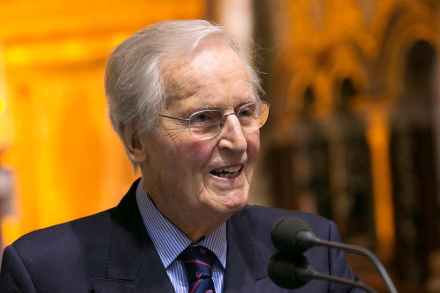
Nicholas Parsons died this morning at the age of 96. In 2011, he was interviewed by William Cook for The Spectator, who noted that Parsons’ enduring success lay in his ability to laugh at himself: When I was a kid, watching Sale of the Century on my grandma’s colour telly, Nicholas Parsons used to seem like the smartest man in show business. Meeting him half a lifetime later, in a rooftop restaurant in Kensington, I’m pleased to find that he still looks just as dapper. His blue blazer is neatly pressed, his white shirt is crisply ironed and his bright eyes sparkle like a schoolboy’s. You’d never guess he was in his eighties, with more than 60 years in showbiz behind him.

Tsar quality: the charm of Tbilisi

From our UK edition

‘These regions are not under the control of the central government,’ reads a warning on a map of Georgia in the bustling centre of Tbilisi. ‘Travelling to these regions is not advisable.’ One of these regions is Abkhazia, only a few hours’ drive away. The other is South Ossetia, barely an hour from here. Since 2008 both have been occupied by Russian troops, in defiance of the Georgian government, yet here in the Georgian capital tourism is booming, and many of these tourists are Russians. This neat irony encapsulates what makes Tbilisi such a fascinating city, a looking-glass metropolis in which nothing is quite what it seems.

Is St Edmund’s body buried beneath a Suffolk tennis court?

From our UK edition

Here in St Edmundsbury cathedral, a bunch of clerics and local bigwigs are preparing for a most unusual anniversary. Throughout 2020 the inhabitants of this historic market town will be celebrating the 1,000th birthday of a building that ceased to exist nearly 500 years ago. The Benedictine Abbey of Bury St Edmunds was founded by King Canute in 1020 to house the body of King Edmund, England’s original patron saint. Traditionally said to have been born in 841 and crowned King of East Anglia in 855, Edmund was captured in 869 by the Danes, who told him he could be their puppet king if he renounced Christianity. He refused, so the Danes tied him to a tree, shot arrows at him and chopped his head off.

The Grand Union Canal, a serene sanctuary amid the urban sprawl

From our UK edition

It was a Saturday afternoon in September, the end of summer, and I was feeling sorry for myself. I’d gone to see my son play football in Slough. He was on the bench, his team had lost, and now I had to carry his kitbag home while he went out with his teammates. I’d missed my bus back to Uxbridge and it was an hour until the next one. I was trudging back into town when I saw a signpost for the Grand Union Canal. Along the towpath, I reckoned it was about eight miles to Uxbridge. Sod it: I decided to walk home. When I finally reached Uxbridge dusk was falling and I was feeling happier than I’d felt in ages. I’d hardly seen a soul (a lone fisherman drinking beer, two blokes dredging for scrap metal) but I’d seen swans, herons, cormorants and my first kingfisher.