William Cook

In defence of Brussels, Europe’s most underrated city break

From our UK edition

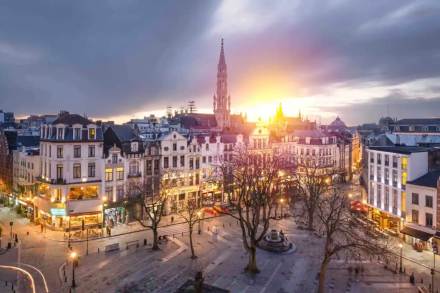
Strolling around the Belgian Comic Strip Center, admiring the elegant artwork of Hergé (creator of Tintin), I wonder for the umpteenth time why so many of my British friends are so disparaging about Brussels. It's one of my favourite cities, but most Britons I know wouldn’t dream of planning a break here. They don’t know what they’re missing. I’ve been here countless times, yet on each visit I discover something new. It’s full of quirky shops and exquisite restaurants, and there are some excellent museums too. If your idea of fun (like mine) is nosing around art galleries and antique shops, with plenty of pitstops en route, you’ll have a terrific time. I’ve never eaten better than in Brussels – and the beer (and the coffee) is superb.

Dresden’s Rumpelstiltskin and the strange tale of European porcelain

From our UK edition

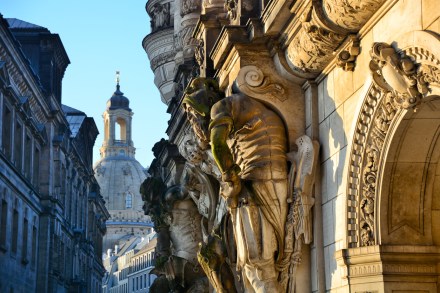
Strolling along Dresden’s Brühlsche Terrasse, an elegant promenade above the River Elbe known as ‘the balcony of Europe’, the wartime destruction of Germany’s most beautiful city seems like the echo of a bygone age. Since reunification, the reconstruction of its baroque Altstadt has been meticulous – the panorama Canaletto painted has been painstakingly restored. Reduced to ruins in February 1945, Dresden can once more be called ‘the Florence on the Elbe.’ Much ink has been spilt over the rights or wrongs of the Allied bombardment of my father’s birthplace (he was born here in 1942 and survived the bombing as a small boy), obscuring the far more interesting story of what made Dresden so attractive in the first place.

How Dickens invented Christmas

From our UK edition

Time was, the Christmas shopping season used to last a week or two. Now it drags on for months. Never mind wage inflation – what about present inflation? The whole thing is like a gigantic poker game, where the stakes are raised remorselessly every year. How did Christmas mutate into this orgy of rampant consumerism? Step forward the man who invented Christmas: Charles John Huffam Dickens Esquire. The story of how Scrooge recovers his lost innocence speaks to something deep in all of us, a yearning for lost childhood It’s a bit of an exaggeration to say that Dickens invented Christmas – but like the exaggerations of his novels, it articulates a basic truth.

Why Germany shouldn’t cancel Bismarck

From our UK edition

What’s in a name? On the face of it, the Bismarck-Zimmer in Berlin’s Foreign Ministry building looks like just another boring conference room: functional office furniture, bland bureaucratic décor – an ideal forum for those tedious, conscientious meetings at which German politicians and diplomats excel. However, that nondescript committee room has now become headline news in Germany, after the Bundesrepublik’s Foreign Ministry announced it would henceforth be renamed the Saal der Deutschen Einheit, or the Hall of German Unity (the ‘Tag der Deutschen Einheit’, the Day of German Unity, on 3October, is the day when Germans celebrate the Reunification of 1990).

Why Munich is the ideal Advent destination

From our UK edition

Ambling through the Christkindlmarkt, Munich’s biggest Christmas market, feeling distinctly tipsy after my third (or maybe my fourth?) mug of Glühwein, I experienced a strange sensation, something I hadn’t felt in ages. For the first time in a long while, I realised I was feeling rather festive. Back in Britain, I’m the archetypal Christmas grouch – but leave me in a German Christmas market for a few hours and I become a big kid again. This is the first year since Covid that Munich has been able to mount a proper Christmas market season. That might not sound like such a big deal to Brits, but it’s headline news in Bavaria.

What will be the legacy of the Qatar World Cup?

From our UK edition

In the glitzy Fifa museum, in squeaky-clean downtown Zurich, there is a new exhibition which sums up the upbeat, inclusive image which football’s world governing body is so eager to portray. It’s called ‘211 Cultures – One Game’, and it consists of 211 items of football ephemera, one from each of Fifa’s member associations all around the world. Most of these items are fairly anodyne: trophies, fan regalia, football shirts and suchlike – curios you tend to find in any sports museum. A few are items of genuine historical interest: the Spanish contribution is a table football set, invented during the Spanish Civil War by a Spaniard called Alejandro Finisterre, after a bomb blast in Madrid left him lame and unable to play the game he loved.

North star: Berwick-upon-Tweed is the ideal winter weekend away

From our UK edition

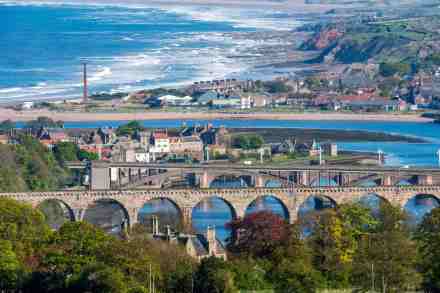
What’s your favourite railway journey? Mine is the journey from London to Edinburgh, and my favourite moment on that journey is when you cross the Royal Border Bridge, which straddles the historic frontier between England and Scotland. As the train glides across this graceful viaduct, high above the River Tweed, you look down upon my favourite seaside town. Despite its stunning maritime location, where the Tweed meets the North Sea, Berwick-upon-Tweed is hardly a typical seaside holiday destination. The town has been knocked about a bit, the high street has seen better days, the weather is unforgiving and there are none of the Kiss-Me-Quick amusements you find in Blackpool or Skegness. So what’s the big appeal?

Why Antwerp should be your next city break

From our UK edition

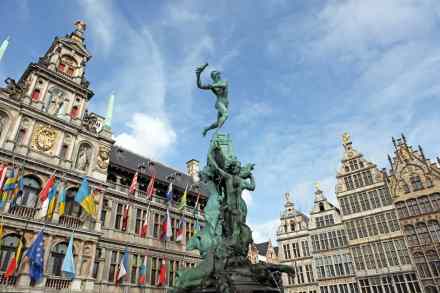
In a sleepy side street around the corner from Centraal Station, there’s a restaurant I return to whenever I’m in Antwerp. From the outside it doesn’t look like much – a perfunctory shopfront, more like a takeaway café – but inside it’s charming, like eating in someone’s home. Welcome to Hoffy’s, a cosy Yiddish enclave renowned for comforting, nourishing cuisine in the centre of this flamboyant, unruly city. For me, this kosher restaurant sums up the spirit of Antwerp, a cultural crossroads since the Middle Ages, a refuge for outsiders of every sort.

How to spend a weekend in Riga

From our UK edition

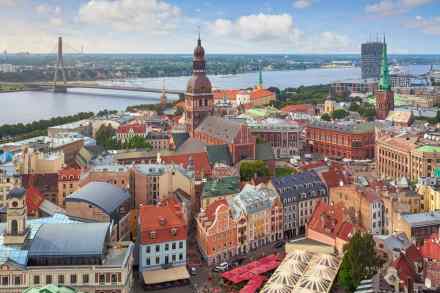
In Ratslaukums, Riga’s central square, there is an ugly brutalist building which encapsulates the contested history of Latvia’s beautiful, battered capital. This modernist eyesore was erected in 1970, when Latvia was part of the Soviet Union. It was built as a museum dedicated to Lenin’s crack troops, the Red Latvian Riflemen, who helped him overthrow the Tsar and win the resultant civil war. Without them, the Russian Revolution might have been stillborn. Today the content of this museum is completely different. The only relic of the Latvian Riflemen is the Soviet statue in the street outside.

Why the Baltics fear Russia

From our UK edition

In the historic heart of Riga, Latvia’s lively capital, there is a building that reveals why the Baltic States remain so wary of the Russian Bear. From the street, it doesn’t look like much – just another apartment block on a busy boulevard full of shops and cafes. Only the discreet sign outside gives the game away: ‘During the Soviet occupation the KGB imprisoned, tortured, killed and morally humiliated its victims in this building.’ Most passers-by barely give it a second glance. They know this story all too well. The KGB vacated this apartment block in 1991 when Latvia regained her independence, but over 30 years later the memories remain raw. As we step inside my Latvian guide, Edgars, tells me his father was summoned here twice for interrogation.

The halcyon days of Anglo-German relations

From our UK edition

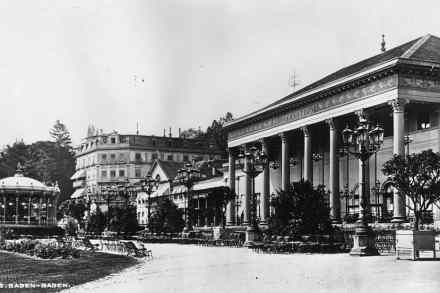
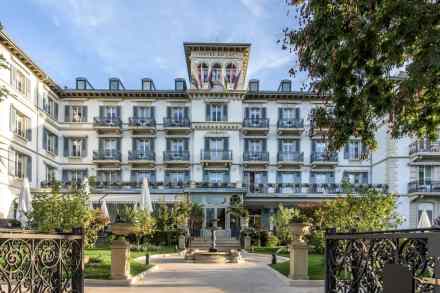
In Brenners, Germany’s grandest grand hotel, in Baden-Baden, Germany’s smartest spa town, there’s a corner of a foreign drawing room that is forever England. Above the fireplace hangs a portrait by Sir Joshua Reynolds of the Honourable Mrs Beresford – a quintessential English Rose in a quintessential German Kaminhalle. At first sight it seems incongruous but in fact it’s rather fitting, for this hotel and this spa town epitomises the close relationship between the British and German upper classes, a relationship only slightly sullied by the awkward happenstance of two world wars. Brenners has always been a home from home for the British aristocracy: its guest book boasts the signatures of Edward VII, Edward VIII and the late lamented Duke of Edinburgh.

How to read Ulysses

From our UK edition

In the labyrinthine basement studio of Dublin’s Abbey Theatre, Irish actor Barry McGovern is doing something that would be inconceivable in any other country. Remarkably, he’s reading the whole of James Joyce’s Ulysses out loud. Even more remarkably, a substantial audience are paying good money to sit and watch him. He’s been hard at it for five days, and he still has two days to go: 33 hours (plus toilet breaks) spread over an entire week. Like a lot of people, I’ve always found Ulysses a dreadful struggle, so why do I persevere with it? Partly snobbery, of course.

There’s more to Salzburg than The Sound of Music

From our UK edition

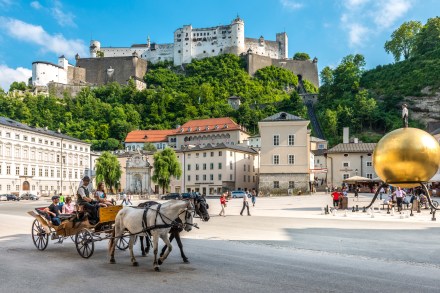
Returning to Salzburg last week, for the first time since Covid, I’d almost forgotten what a beautiful city this is. I’ve been here umpteen times, but each new arrival takes my breath away. An ornate cluster of domes and spires, set against a backdrop of snowcapped peaks, it’s implausibly picturesque, like the setting for a movie – which is apt, because for most Britons it’s still synonymous with that kitsch classic, The Sound of Music. Salzburg does have its schmaltzy side, but it’s also a highly sophisticated place, a city of classical music and antiquities, and it’s this blend of highbrow and lowbrow which makes it so appealing.

Sitges: the idyllic beach town down the road from Barcelona

From our UK edition

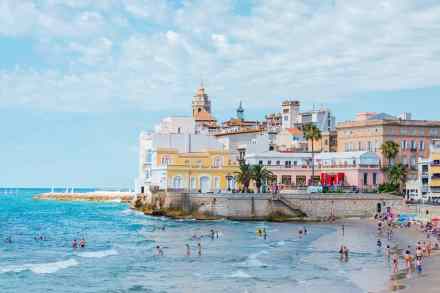
About sixty years ago, before my wife was born, her parents set off on a driving holiday to the Continent. They drove down through France and into Spain and ended up in Sitges. They went no further. They’d found the perfect holiday resort, a historic town with a sandy beach and a few bars and cafes, somewhere to sit back and enjoy the sunshine, with a bit of local culture thrown in. Sixty years later, Sitges is a lot busier, but British tourists are still relatively rare. Most visitors are Spaniards, mainly daytrippers from Barcelona. There are some modern buildings, and a lot more bars and cafes, but the town still looks much the same. Compared to most Spanish beach resorts, it’s remarkably unchanged. My wife Sophie and I first went to Sitges in 1999.

The timeless mystery of Charlie Chaplin

From our UK edition

Eleven years ago, I was summoned to the Manoir de Ban, a huge white house overlooking Lake Geneva, to meet Michael Chaplin, Charlie Chaplin’s oldest surviving son. Charlie Chaplin had lived here for the last 24 years of his life. Now the house was empty, and the family wanted to turn it into a museum. I doubted it would ever happen, but I was keen to look around the house and I was eager to meet Michael. Chaplin’s biographer, Simon Louvish, had called him ‘the family rebel’. Michael had written a frank teenage memoir called I Couldn’t Smoke the Grass on My Father’s Lawn. The house was all shut up, but Chaplin’s looming presence was everywhere.

Why you should stay in a Spanish Parador

From our UK edition

After all the frustrations and restrictions of the last few years, Spain is finally back on the map for British travellers. So where to go and where to stay? If you just want to drop and flop, a week or two in a resort hotel is fine, I guess. But after we’ve been cooped up in Britain for so long, it seems a shame not to see a bit more of the country – and the best way to do that is by splitting your trip between several of Spain’s splendid paradores. Spain’s paradores date back to the 1920s, when the government came up with the bright idea of converting redundant historic buildings into high quality hotels.

Europe’s finest grand hotels

From our UK edition

Most of life’s guilty pleasures eventually lose their lustre, but one decadent delight that never fades is spending a long weekend with a significant other in one of Europe’s grand hotels. For a few days you’re living a different life, a more glamorous existence, like characters in a Continental film noir. You’re bound to have your own favourites, places you love to revisit, but if you’re looking for somewhere new to stay, here’s my top ten. They’re not the most opulent hotels, or even the most expensive. What sets them apart is their understated elegance. Naturally they’re not cheap, but if your travel dates are flexible you can often find a bargain.

The stately homes with stunning art collections

From our UK edition

Britain's ancestral piles have had to move with the times. Nowadays it’s simply not enough to merely open up the state rooms. Today’s grand old houses have to offer something else to pull in the punters, and for the best of them that means focusing on fine art. Our stately homes have always boasted a wonderful array of artworks, but they were often hard to find. Today these treasures are properly curated, and, increasingly, they’re supplemented by first class contemporary art. Our country seats are now go-to places to see today’s leading artists, rather than sleepy repositories for rusty armour and dusty antiques. Seeing modern art in a stately home is far more fun than seeing it in a trendy gallery.

The crowd-free European city breaks to try this year

From our UK edition

Finally, it looks like we might actually be able to go on holiday in Europe again. I’ve been overseas a few times since this pesky covid business began, but it’s always been for work, not leisure, and it’s always been a nuisance: tests on the way out, tests on the way back and yet more tests when you get home… However now travel restrictions are loosening up, a trip to the Continent no longer feels quite so fraught, and that magnificent indulgence – a short-haul city-break – seems like a practical option once more. So where to go? Well, you’re bound to have your own favourite destinations - but if you fancy trying somewhere new, here are a few of mine. They’re all popular with locals, but they’re not overrun with sightseers.

In search of Sisi

From my plush bedroom in the Beau Rivage, Geneva’s most historic grand hotel, I look down on the lakeside promenade where one of the most remarkable women of the nineteenth century met her dark, dramatic end. On September 10, 1898, Empress Elisabeth of Austria (commonly known as Sisi) was stabbed in the chest by an Italian anarchist as she was about to board a paddle steamer to Montreux. She was carried back into the Beau Rivage and up to the suite where she’d spent the previous night. Within half an hour she was dead. Today, the hotel’s palatial Sisi Suite still looks much as she would have found it.

sisi