Will Heaven

No, the suffragettes should not be pardoned

From our UK edition

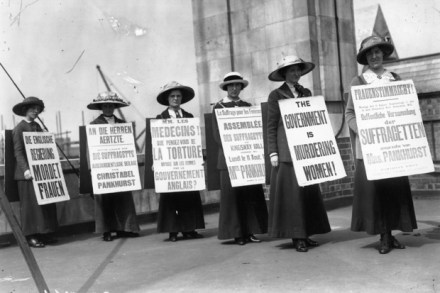
Exactly 100 years after (some) women won the right to vote, Ruth Davidson has joined calls for a posthumous pardon for jailed suffragettes – the militants who violently fought for that right. ‘Voting was a value judgement, not an intrinsic right,’ says Davidson. And that historic inequality is why she supports the pardon, no questions asked. Jeremy Corbyn agrees, vowing that his government would pardon the suffragettes. It’s a nice idea on the surface – it has #MeToo written all over it, doesn't it? – but there are a few reasons it should be resisted.
A special NHS tax would be bonkers or a total fraud

From our UK edition

Some very clever people are rallying around the idea of a specific NHS tax partly because of what has been called a 'winter crisis' in hospitals. It’s an idea that has been around for yonks, but Nick Boles’s book, Square Deal, has kick-started the debate again. He argues for National Insurance to be repackaged as National Health Insurance. This would ‘give the NHS what it needs while removing it from running financial battles in Whitehall,’ he says. Boles makes a strong case, not least as someone who has survived two bouts of cancer thanks to NHS treatment. The key to his piece, I think, is this bit: Currently, we spend 7.

For his links to slavery, Edward Colston has become he-who-must-not-be-named

From our UK edition

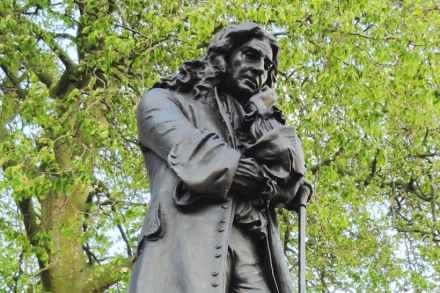
Next month, as they have done for more than a century, the pupils of Colston's Girls' School will troop into Bristol cathedral for a special service in honour of the man who gave their school its name. There's just a little snag: Edward Colston (1636-1721) will not be named, not even once, because of a heated controversy over his involvement in the transatlantic slave trade. It will be a commemoration service for... well, it's not entirely clear. A letter from the headmaster John Whitehead – curiously, signed by his PA – explains: After consultation with students from all year groups we have decided to remove all reference to Edward Colston from the service and we will no longer be asking the students to wear a chrysanthemum in his memory.

George Osborne: the politically homeless ex-chancellor

From our UK edition

Did the 2007-08 financial crisis cause Brexit, the election of Donald Trump, the rise of Jeremy Corbyn? George Osborne's answer, 10 years on from it all, echoed Zhou Enlai on the French revolution: it’s too early to say. But at a Spectator event at Cadogan Hall, in conversation with Andrew Neil, Osborne defended not only his policies as chancellor, but also – by implication, and rather unexpectedly – Gordon Brown's. Looking back, he said, even if Britain wasn't particularly well prepared for the collapse of Northern Rock and all that followed that autumn a decade ago, there was nothing ‘radically different’ that could have been done to respond to the crash, either by him or his predecessor.

Theresa May’s staff broke all of Machiavelli’s rules

From our UK edition

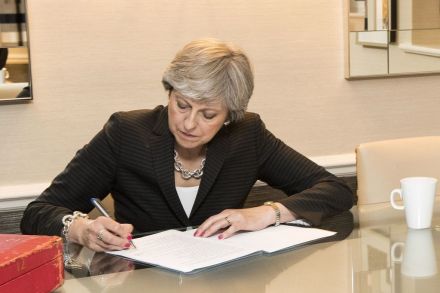
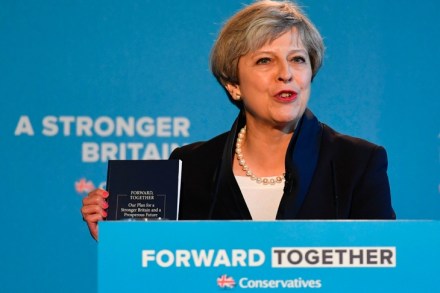
Theresa May must have woken up this morning wondering, for a split second, if yesterday was all just a very bad dream. The front pages will hammer home the reality of her situation – she was 'luckless', says one of the kinder headlines. But I wonder: how much did yesterday's shambolic performance have to do with bad luck, and how much to do with woeful preparation? May's ordeal, and especially her excruciating coughing fits, reminded me of a passage in Jonathan Powell's The New Machiavelli, a sort-of memoir about his time as Tony Blair's chief of staff.

Michael Gove’s agenda lives on in prisons

From our UK edition

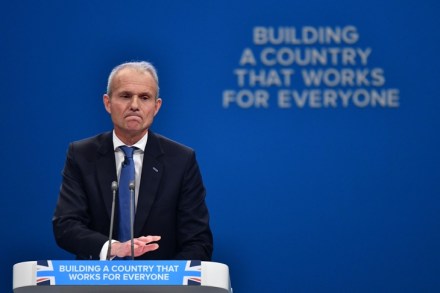
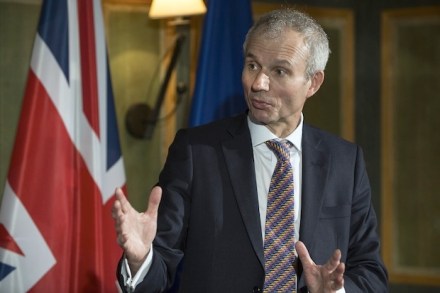
There's a good reason ministerial conference speeches are often so achingly dull. Because such occasions are inevitably party political – featuring punchy attacks on Labour and so on – civil service policy experts and departmental speechwriters aren’t allowed anywhere near them, for fear of breaking various Whitehall codes. So the speeches are stitched together by the minister, his or her special advisers, and nervous party apparatchiks who are mainly focused not on policy announcements or the department’s agenda, but on making sure the Prime Minister’s team is kept happy. But though there was a faint whiff of that about David Lidington's speech earlier today, the justice secretary made a few points that are worth picking up on.

‘I like making things’

From our UK edition

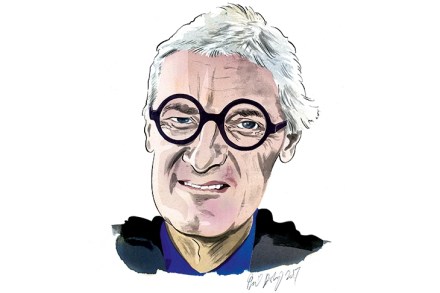
Sir James Dyson would make a good therapist for anxious Brexiteers. Everything about him is comfortingly precise — his manner and way of speaking, his owlish round glasses and blow-dried white hair. He exudes a Zen-like calm. What he has to say is reassuring, too. He is as sunnily optimistic about leaving the EU as he was before the referendum last year. ‘I am very confident,’ he says, ‘in our ability to negotiate trade deals outside Europe — with Japan, Australia, China, America and so on — because it’s very easy. It’s just us negotiating with them. It’s very, very straightforward and you don’t have to satisfy 27 other people.’ The implication is that a deal with the EU will be harder.

Must Colston fall?

From our UK edition

Edward Colston, mega-rich philanthropist around the year 1700, is the nearest thing Bristol has to a patron saint. The largest stained glass window in the cathedral there is dedicated to him. Go and do thou likewise, it commands. There’s no doubt Bristol owes Colston. He funded almshouses and schools here; made countless donations to churches and charities, some of which work wonders to this day. And many signs of Victorian civic gratitude to him litter the place. There are half a dozen Colston roads and three Colston schools, for instance — including one which churns out more England rugby players than Eton creates prime ministers.

David Lidington resets relations with the judges – but can it last?

From our UK edition

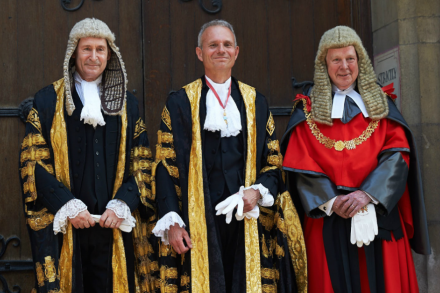
As the Brexit negotiations kicked off in Brussels yesterday, an equally delicate act of diplomacy took place in London at the Royal Courts of Justice, where David Lidington was sworn in as the new Lord Chancellor. Ceremony aside, this was a big political moment, involving one of the most important speeches of Mr Lidington's career so far. He faced a tough audience. Relations between the judiciary and the government had completely broken down before the general election, with the Lord Chief Justice going on the record to criticise ministers in brutally clear terms. So as I suggested last week, Lidington urgently needed to butter up the judges and reset relations with them.

Why didn’t Theresa May meet Grenfell Tower survivors?

From our UK edition

We can't yet be sure what caused the devastating fire at Grenfell Tower. Early speculation, some of it expert, some of it not but based on eyewitness testimony, points to the cladding on the outside of the building, which was added during a recent £8.6m makeover. This, it seems, may have turned an ugly but safe concrete tower into a death trap. Nor do we have any idea how many people were killed in the blaze. Commander Stuart Cundy of the Metropolitan Police said at 11 a.m. today: 'Sadly I can confirm the number of people that have died is now 17. We do believe that that number will increase.' There are still 37 people receiving treatment, of which 17 are in critical care. Many people are missing, as all papers reported this morning.

Grenfell Tower: It is far too soon for political finger-pointing

From our UK edition

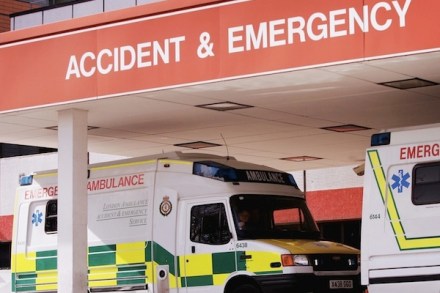
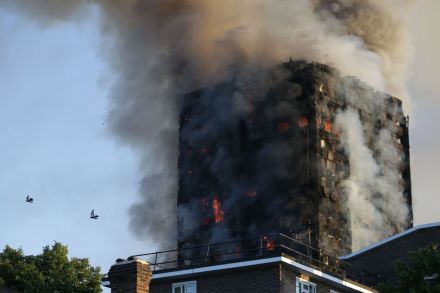
It is hard to overstate the scale and intensity of the fire that engulfed Grenfell Tower, a 24-storey west London block of flats, shortly before 1 a.m. this morning. Pictures and video from the scene look like something out of a disaster movie. 'Inferno' is the Evening Standard's headline. At this early stage, six people have been confirmed dead – but the Metropolitan Police have said that 'we do expect that figure to rise'. At least seventy-four more are injured and have been taken to six London hospitals, with 20 'in critical care'. More than 100 families have been made homeless. The emergency services responded quickly and in large numbers last night – arriving on the scene within six minutes of the first 999 call, the Guardian reports.

Butter up the judges, release some prisoners: how David Lidington can survive as Justice Secretary

From our UK edition

Liz Truss, I think it's fair to say, was miscast as justice secretary. She was appointed only last July by Theresa May and demoted rather cruelly on Sunday night to be Chief Secretary to the Treasury. Truss is far more capable than her critics allow; but I would still argue that the job wasn't right for her. Before her move to 102 Petty France, she had been an impressive education minister under Michael Gove and – bar one excruciating speech – was said to be a very capable environment secretary. But justice was a bad fit. There are a few reasons for this. Whitehall whispers suggest that Sir Jeremy Heywood, the Cabinet Secretary, didn't think she was ready to run such a big department.

How the dementia tax – a ‘nasty party’ policy – lost Theresa May her majority

From our UK edition

Pundits and pollsters have spent the last year trying to explain what the Brexit vote meant. Was it right-wing or left-wing? Was it about immigration or sovereignty? Was it a bit racist? They'll do the same for this election – trying to pinpoint where it all went so humiliatingly wrong for Theresa May. But to me one answer, even so soon after shock result – and before we've been able fully to analyse the results – stands out by a mile: the dementia tax.  There are five reasons, I'd argue, why it ruined Theresa May's election campaign and may have been the key factor in destroying her parliamentary majority. 1.

To catch a jihadi

From our UK edition

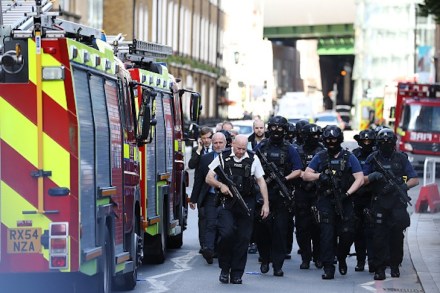
My taxi was about 90 seconds behind the murderers who struck on London Bridge last week. My wife and I saw their victims on the road. It made no sense until we stopped and got out. Then with horror we realised what we were witnessing. As everyone has already said, the emergency services’ response was flawless. A police 4x4 screeched up behind and two officers jumped out with submachine-guns. Within minutes, we learnt afterwards, the jihadis had been shot dead — but only after they had killed eight people, and injured scores more. Hundreds of others will have been on that bridge or in Borough Market. I suspect all of us will be thanking the police, but also wondering how it came to this.

Britain has armed police, but only where necessary. As I saw last night, our system works

From our UK edition

Until last night, I always felt uncomfortable seeing police with guns on the UK’s streets. It’s just not very British, I used to think. But after I had the misfortune to be on London Bridge in the immediate aftermath of the terrorist attack, I’ve changed my mind. I was in an Uber with my wife heading south over the Thames. We saw one victim on the pavement, another in the road; the driver pointed out yet another up ahead. Soon people started running across from the Borough Market end of the bridge talking about ‘stabbings’. A black cab driver shouted at us: ‘It’s Westminster all over again.

What I saw on London Bridge

From our UK edition

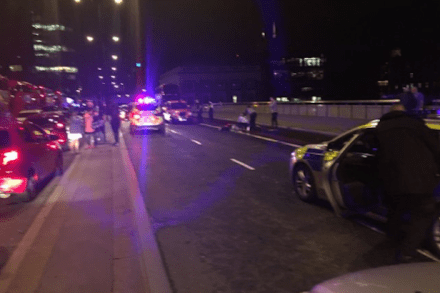
Just after 10pm on Saturday night, I was in an Uber minicab with my wife, heading south over London Bridge. We’d been out for a tapas dinner and were on our way home. It had been a lovely evening. Suddenly I noticed something odd on the pavement on our side of the road. It looked like a woman had collapsed. There were a few people around her and they had draped their coats over her. It was troubling, but at least she was being looked after. Then a shock. On the right-hand side of the bridge, a few yards on, we saw a man, also prostrate on the ground, with passers-by desperately trying to administer first aid. And our taxi driver shouted that yet another person lay injured ahead. It was now blindingly obvious: this was the aftermath of a terrorist attack.

Should there be troops on the streets?

From our UK edition

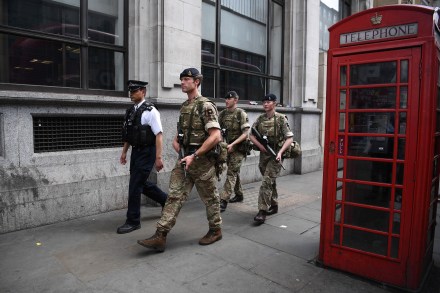
In the wake of terrorist outrages such as Monday's bombing, the British public tends to keep calm and carry on. We saw it in London after the Westminster attack in March; we saw it yesterday on the streets of Manchester – a stirring sight. That calmness in the face of evil is an attitude that has almost always been reflected by those who govern and lead us. Think of Margaret Thatcher’s steely response to the Brighton bombing. It’s the British way. But it has, until now, also been the British way not to put troops on the streets unless absolutely necessary. It’s a delicate balance: a prime minister has a duty to reinforce the police, and after a terrorist attack it’s also natural that any democracy would be put on the highest form of alert.

Five reasons why the ‘dementia tax’ U-turn was inevitable

From our UK edition

'The Tory "dementia tax" could backfire for Theresa May' was the Coffee House take last Thursday, perhaps the first mention of that phrase in the media last week. It took a few days for the announcement to sink in, and for the 'dementia tax' tag to stick. But it most certainly has backfired now. Jeremy Hunt tells the Evening Standard that the government wants to 'make sure that people who have worked hard and saved up all their lifetimes do not have to worry about losing all their assets'. It seems there will, after all, be a cap on what an individual has to spend on care. Theresa May has separately promised a consultation that will at least look at a cap. https://twitter.

The Tory ‘dementia tax’ could backfire for Theresa May

From our UK edition

The Prime Minister says there is no such thing as ‘Mayism’, only ‘good, solid Conservatism’. Fine. But let’s examine just how ‘good’ and ‘Conservative’ her party’s new policy on social care is, unveiled earlier today. The Tory manifesto says, in effect, that people who need care in old age will have to pay for every penny of it – no matter how big the costs – if they have more than £100,000 in assets, which will be protected. Payment can be deferred until after death, but there’s no escaping it. If you have a home worth, say, £216,000 (the national average), own it outright, and need to be looked after for a long time, you may have to cough up £116,000.

Five times Theresa May ruled out a snap general election

From our UK edition

Theresa May's snap election, scheduled for 8 June, was unlikely for three big reasons. Holding off until 2020 would allow the Tories to take advantage of boundary changes that come into force in 2018. There's a fixed-term parliament act, which is a major complicating factor (Labour will probably have to back a vote in the Commons to allow this election to take place at all). Most of all, she staked a large chunk of her credibility on not U-turning on her decision that there wouldn't be one. Until this morning, her reputation for unwavering unflappability looked justified. Here are five occasions on which the Prime Minister personally, or her staff, denied that there were plans for an election.