Tony Curzon-Price

The new economy

From our UK edition

Minsky’s moment has arrived There is a big political prize dangling over the economic crisis. Whoever now devises a coherent economic programme will mould British society for a generation. Labour won the post-Great Depression prize in 1945 by creating the paternalistic welfare state and won again in 1966 — a short-lived victory — with Harold Wilson’s modernising ‘white heat of technology’. In 1979, Margaret Thatcher won the prize that arose from the failures of the preceding paternalism and technocratic modernism with her vision of free-market individualism. From then until Northern Rock was nationalised, all economic policy was recognisably some shade of Thatcherism.
Wishful thinking at the Economist

From our UK edition

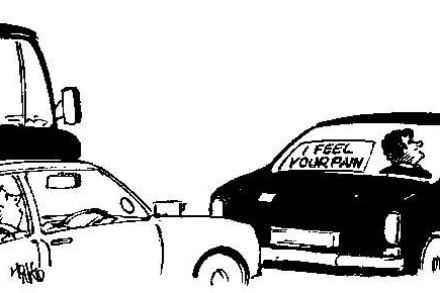
In 1990, the former Wall Street trader Jim Rogers (interviewed here by Jonathan Davis, 15 March) set off to circumscribe the globe astride a large motorcycle. He returned in 1992 having pondered the meaning of life — and the answer was ‘commodities’. As a player of markets, he did not have to do anything so practical as to go out and drill or mine. He just kept buying more commodity futures — a gigantic bet that commodity prices would rise. He was right, and became hugely wealthier as a result. But as the price of oil, the world’s most essential commodity, continues to rise, listen for the sound of market ideologies creaking under a weight they cannot bear: for example, in the Economist’s editorial last week. ‘Speculators do not own real oil...

Painful birth of a new epoch of simplicity

From our UK edition

An unpopular, costly war; a sliding dollar; high levels of US government debt; behind us, 20 years of growth; oil and commodity prices out of control... Remember the first oil shock of 1973? Or are we looking at 2008? Just as 1973 was the harbinger of a new political epoch — of individualism ascendant over social democracy — so 2008 will be. But this time, we’ll be trading failed liberal individualism for an epoch of restraint, regulation and simplicity. The seeds of each economic epoch spring from the understanding of the crisis that precipitates it. Social democracy came out of the Crash of 1929 because the Great Depression led us to understand the interdependencies of our economic lives.

Say farewell to gentlemanly capitalism

From our UK edition

Ever since social arrangements became complex enough to write into laws, we have regulated the behaviours that have the potential to mess up our common lives. Look at the Book of Deuteronomy. It’s all there: health and safety (diet and hygiene), taxation, bankruptcy, neighbourly envy, sexual conduct... and finance too. The Old Testament is pretty draconian: no lending for interest within the tribe — but as much as you like outside the tribe. Lawmakers understood even then that easy credit, with its potential to exploit gullible optimism and generate bubbles, could rock a society to its core. The 21st century’s first credit crisis is not over, but the acute phase is now understood.