Tom Goodenough

Tom Goodenough

Tom Goodenough is online editor of The Spectator.

The key battlegrounds to watch in the 2018 local elections

From our UK edition

The Tories are in for a torrid time in today's local elections if the polls are anything to go on. Results are expected to be particularly bad for the party in the capital, with the Conservatives trailing Labour by 22 points in London, according to YouGov. But can the polls be trusted? Or could Tory gains in the Midlands undermine Labour’s success in the south? Here are the key battlegrounds to watch overnight: 1am: Basildon: Ukip was the only party to make gains in Basildon in 2016; two years on, their prospects are rather bleaker. The Tories – who have 19 seats on the council – will be hoping to snatch away some of the ten seats Ukip are defending in order to take back overall control of the council.
Can May’s Brexit stance survive its latest Lords defeat?

From our UK edition

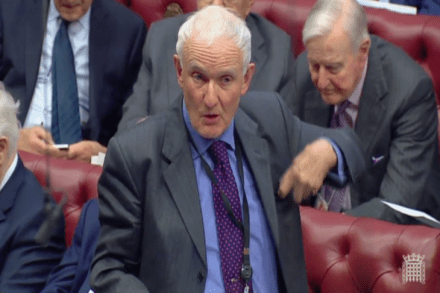
Another day, another Brexit defeat in the House of Lords for the Government. This time around, peers have voted to back an amendment to the Brexit bill which would hand Parliament, rather than ministers, the power to decide what to do if MPs reject the final deal agreed with Brussels. The margin in today’s vote was considerable: 335 to 224. But more worrying for the Government is the number of times it has been now been defeated in the Lords on Brexit, with this afternoon's vote marking the seventh time peers have gone against the Government on the issue. Among those who backed the amendment were 19 Tory lords, including 11 former ministers. The names of those who rebelled are no surprise. But make no mistake: this vote will worry ministers.

Trump’s critics should give him the credit he deserves for Korea

From our UK edition

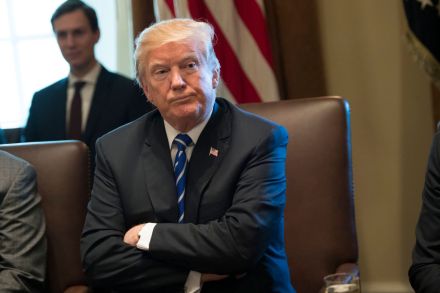
Donald Trump’s critics waste little time in condemning him. Whether it’s an ill-judged gaffe or a spelling mistake in a tweet, pointing the finger at a president some love to hate is a popular exercise in virtue signalling. But those who shout the loudest about Trump’s misdemeanours seem to be curiously quiet when The Donald does actually get things right – not least when it comes to North Korea. After all, it’s no coincidence that today's historic summit on the Korean peninsula has happened on Trump’s watch.

David Davis tries to calm fears over a customs union reversal

From our UK edition

For those Brexiteers worried the government may change its mind on leaving the customs union, David Davis’s appearance in front of a select committee gave reasons for reassurance – but also possibly some cause to worry. The Brexit secretary was clear that he is sticking firmly to his guns on the issue. But can he – and the government – continue to do so under pressure from MPs who are seeking to keep Britain inside the customs union? Hilary Benn asked Davis what would happen if the vote in Parliament on the Brexit trade bill went against the government.

Why can’t Diane Abbott be honest about Labour’s Syria stance?

From our UK edition

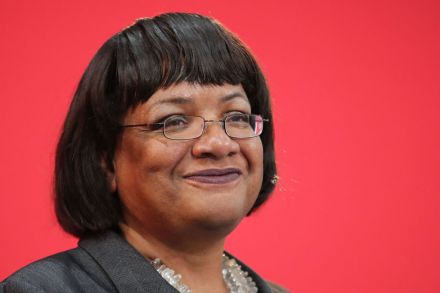
Why can’t Diane Abbott and Jeremy Corbyn be honest about Labour’s real stance on Syria? The shadow home secretary is demanding an ‘independent, UN-led investigation’ into what happened in Douma to determine whether chemical weapons were used in the attack this week. This is the line parroted by the Labour leader, who has said: “Britain should press for an independent U.N.-led investigation of last weekend’s horrific chemical weapons attack so that those responsible can be held to account.” But as Abbott and Corbyn know (or should know) only too well, an independent UN-led investigation is for the birds; it won’t happen. So Abbott and Corbyn would be more honest if they were to say Britain should stay out of the conflict altogether.

What will Trump do about the ‘Animal Assad’?

From our UK edition

Donald Trump’s response to the alleged chemical attack in Syria which left dozens dead has so far been entirely typical: he has sent a series of angry tweets. But now that the president has finished typing will he go one further and press any red buttons? More than a day on since the bombing, the United States has held back on retaliating, leaving another western ally – believed to be Israel – to target the Syrian military airport from which it is thought the attack was launched. Trump has certainly piled pressure on himself to act, and there are several reasons to think military action will be imminent. Firstly, the president didn't hold back on pinning the blame on 'animal Assad', even if, officially, the US is still waiting to see who was actually responsible.

Brexit’s progress is defying the doom-mongers’ predictions

From our UK edition

That EU leaders have agreed to move to the next stage of Brexit talks and rubber stamp the transition period is no great surprise. It took just a matter of minutes this morning for them to wave through guidelines on the negotiations for a future trade deal between Britain and the EU. But while the announcement was something of a foregone conclusion, today's news is still significant for a simple reason: Brexit talks are progressing in a way some of the doom-mongers said would never happen. Of course, Britain – and the EU, for that matter – isn’t there yet. And a year on from the triggering of Article 50, there is plenty still to do.

What the papers say: The verdict on the Brexit transition deal

From our UK edition

It wouldn't be Brexit if everyone was happy, so it is no surprise that not everyone is pleased with the latest developments in negotiations. Britain’s Brexit transition deal has been called a betrayal, while Jacob Rees-Mogg said the government had given away too much in a 'very unsatisfactory' agreement. But the Sun says it won’t join in those criticising the deal. After all, the paper points out, ‘no one gets everything they want from a negotiation’. Of course, it is right to ‘sympathise’ with Scottish fisherman who will be disappointed that the EU will, for now, continue to set fishing quotas. Yet it is clear that ‘the agreement could not be struck without giving way’ on this issue.

What the papers say: May’s ‘spot on’ response to Putin

From our UK edition

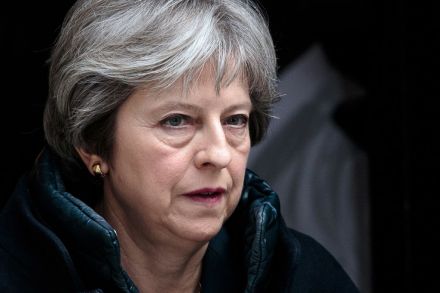
Vladimir Putin’s re-election was never in doubt. And following last night’s result in which the Russian president won 76 per cent of the vote, Russia is now facing the prospect of six more years of Putin in charge – making Putin the longest serving Russian leader since Stalin. The Russian president’s ‘gangster state is an affront to democracy’, says the Sun, which urges Theresa May to continue her ‘hardline stance’ against the country. The PM’s reaction to the Salisbury poisoning has been ‘spot on’ so far, says the paper, which says it is high time that we ‘take the threat’ of Putin’s regime ‘very seriously’.

What the papers say: Jeremy Corbyn has been unmasked

From our UK edition

Jeremy Corbyn’s response to the Salisbury poisoning has been widely criticised, with many of his own MPs siding with the PM rather than their leader. In spite of the backlash, Corbyn has doubled down on his refusal to point the finger at the Russian government, suggesting that the Russian mafia could be to blame. The Daily Telegraph says that Corbyn has finally been unmasked, arguing that his refusal ‘to condemn Russia straightforwardly’ now risks ‘undermining efforts to forge a collective international response to the Salisbury poison attack’. So why is Corbyn so reluctant to point the finger at Putin?

The Special Relationship still trumps Putin

For a president who usually tweets first and asks questions later, Donald Trump’s initial reaction to the Salisbury attack has been curiously slow. Eleven days on from the poisoning of a former Russian agent, Trump’s Twitter account remains silent on the subject. But now that Theresa May is ramping up the rhetoric against Russia – ordering 23 Russian spies to leave Britain – the Trump administration is finally riding firmly behind May, and pointing the finger at Putin in a way it never has before. The White House issued a statement last night saying it ‘stands in solidarity with its closest ally, the United Kingdom’.

Bercow’s ‘bollocks to Brexit’ sticker disgraces his office

From our UK edition

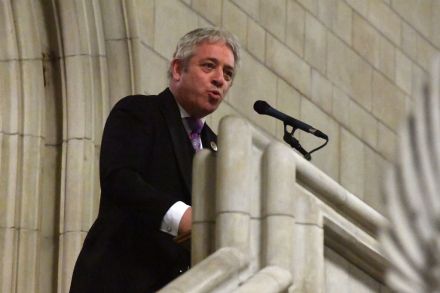
‘I have neither eyes to see, nor tongue to speak, in this place, but as the house is pleased to direct me, whose servant I am here,’ said speaker William Lenthall, the idea being that it was parliament’s views – not his own – that mattered. John Bercow has a message to his predecessor: bollocks to that. Or more specifically: bollocks to Brexit. That is the message printed on a sticker emblazoned on a car parked in the speaker’s personal parking spot outside parliament, as revealed by Guido Fawkes. [caption id="attachment_10054292" align="aligncenter" width="620"] Credit: Guido Fawkes[/caption] If Bercow’s choice of number plate – B13 RC0 – is bad enough, the sticker itself is unforgivable.

What the papers say: Corbyn’s foolish response to the Salisbury attack

From our UK edition

Theresa May did not hold back in her Commons statement on the Salisbury spy attack, warning Russia it has until midnight tonight to explain why a Russian nerve agent was used in the incident. The Sun praises her reaction as ‘admirably tough’. But there is criticism for the Labour leader: ‘Never has the gulf between her and Jeremy Corbyn seemed wider’, according to the Sun. While Theresa May was right to rebuke Russia and ‘trust (that) the civilised world will unite behind us’, Corbyn misjudged the mood ‘hideously’. Instead, the Labour leader chose this 'sombre national moment to advance Labour’s interests’.

What the papers say: A Brexit transition deadline is essential

From our UK edition

Theresa May and her Cabinet are meeting at Chequers today to try and finally thrash out an agreement on what kind of Brexit the Tories want. Six hundred days have now passed since the referendum vote, and ministerial discussions on Brexit have so far failed to deliver any ‘white smoke’ moments, says the Daily Telegraph. The problem for the Government until now, says the paper, is that the clear aims Theresa May set out in her Lancaster House speech were ‘bisected’ by a general election which undermined her statement of intent. We were promised a ‘tough negotiation’; but in the wake of the Tories’ lost majority, Brexit talks have, instead, ‘turned into something resembling a capitulation’.

Oxfam is – still – struggling to learn its lesson

From our UK edition

Oxfam’s boss has learned his lesson – or has he? In the wake of the revelations over the Haiti sex scandal, the charity’s chief executive Mark Goldring adopted the rather unwise decision to come out fighting: ‘The intensity and the ferocity of the attack makes you wonder, what did we do? We murdered babies in their cots? Certainly, the scale and the intensity of the attacks feels out of proportion to the level of culpability. I struggle to understand it.’ Three days on since that disastrous interview in the Guardian, Goldring’s struggle to understand is over. I’m sorry, he told a Commons select committee this morning, not once but repeatedly. It’s welcome news that Goldring has backed down. Yet in his apology he also fell short. Why?

What the papers say: Theresa May has her priorities wrong

From our UK edition

Theresa May’s launch of a review into university funding shows she has her priorities all wrong, says the Sun. It is true that the funding system for higher education ‘is broken’. 'But it is nowhere near a priority for Britain, Theresa May or the Tories,’ according to the paper. Yes, ‘some fees should be slashed’. And yes, ‘many courses are pointless’. But the Prime Minister is merely ‘tinkering’ in a bid to match Corbyn’s ‘economically insane’ promise of free tuition. She should stop doing so now, says the Sun, which calls her promised shake-up ‘a distraction from what really matters to millennials’: the ‘dire shortage’ of homes.

What the papers say: The questions Corbyn must answer

From our UK edition

The row over Jeremy Corbyn’s alleged contact with a Czech spy rumbles on. In its editorial, the Sun condemns the Labour leader, who it says has questions to answer over his ‘dealings with foreign spies and diplomats’. Labour is no stranger to ‘dodging basic questions’, the paper argues. But while it can get away with refusing to answer on issues such as the ‘economy or defence…this is a different kettle of fish’. Some have dismissed the allegations as unimportant given that they happened so long ago; others have said the stories were are simply ‘fake news’ – yet this ignores the documents suggesting there was contact between Corbyn and a foreign diplomat.

What the papers say: Why Corbyn cannot be allowed the key to No10

From our UK edition

Jeremy Cobyn has been condemned by a former head of MI6 for reportedly meeting a Communist spy in the House of Commons. Richard Dearlove says that the Labour leader – who denies the accusations as a ‘ridiculous smear’ – was either ‘incredibly naive or complicit’. The Sun condemns Corbyn in its editorial this morning, saying that it is clear the Labour leader undoubtedly has ‘questions to answer’ over the alleged contact. His reported meeting is further evidence of Corbyn’s ‘shocking judgement’, according to the Sun, which says there is no doubt he was ‘wrong’ to meet with a Czech diplomat at the height of the Cold War, whatever was being discussed.

What the papers say: Boris has been rumbled

From our UK edition

Boris Johnson painted Brexit as a source of ‘hope not fear’ in his speech yesterday. The Foreign Secretary said that Britain’s departure from the EU was not a ‘great V-sign from the cliffs of Dover’. ‘That’s how you do it!,’ says the Sun in its editorial in which it urges other members of the Cabinet to follow Boris’s lead. His barnstorming speech ‘laid out the exciting case for a truly global Britain’ and was the same ‘vision’ which persuaded 17.4million Brits to back Brexit in the first place. ‘Too often’ other Ministers ‘treat our exit like a problem to be managed rather than an opportunity to be seized’.

What the papers say: It’s time to bin the foreign aid target

From our UK edition

The Oxfam sex abuse scandal rumbles on, with the Times reporting that the charity knew about the questionable conduct of two men before they were posted to work in Haiti. The paper says it is time for a serious shake-up in the way in which international aid is meted out to avoid a repeat of this story. It is clear that there ‘is now a serious disconnect between the priorities set by the foreign secretary and the policies which flow from the wealthier international development department’s ability to effect change’, says the paper. This is because of DFID’s ‘much bigger budget’ – a result of the government’s ring-fenced commitment to spend 0.7 per cent on foreign aid.