Tom Goodenough

Tom Goodenough

Tom Goodenough is online editor of The Spectator.

The Spectator podcast: Brexit, and the return of political lying

From our UK edition

To subscribe to The Spectator’s weekly podcast, for free, visit the iTunes store or click here for our RSS feed. Alternatively, you can follow us on SoundCloud. Are David Cameron and George Osborne using the same techniques of deceit deployed by New Labour in the run-up to the Iraq war? In his cover piece this week, Peter Oborne argues that's just what is happening. He says that in their EU campaign, the Chancellor and Prime Minister have put dirty tricks back at the heart of government. But Matthew Parris in his column says that in politics there’s no point complaining about being lied to. That’s the cry of the bad loser. Both Peter and Matthew join Fraser Nelson on the podcast.

The ‘Trump Train’ rolls on – can anyone stop it?

From our UK edition

Donald Trump has won the Washington primary - setting the stage for him to wrap up the Republican nomination on June 7th. The Donald won at least 40 delegates overnight, giving him 1,229 of the 1,237 delegates he needs to win. His opponents may have dropped out the race but the win is still important as a sign of his consolidating support within his party. With Ted Cruz's name still on the ballot paper, despite his main rival having officially withdrawn, it was a chance for Republicans in Washington to voice their opposition to Trump. But that's not what happened. Instead, Trump picked up 70 per cent of the vote and Cruz got just 10 per cent. It seems less and less likely that Trump can now be opposed and the billionaire businessman knows it.

Today in audio: Fallon says Putin would ‘Vote leave’

From our UK edition

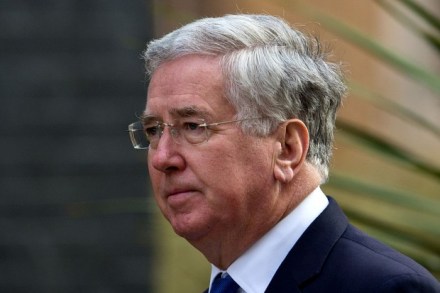
Vladimir Putin's name has popped up again in the Brexit debate. This time, however, it wasn't the Prime Minister suggesting that the Russian president would favour Britain leaving the EU, but the Defence Secretary. Michael Fallon said Putin would 'Vote Leave' and he also told a Commons select committee that 'there is absolutely no doubt in my mind that a British exit from the European Union would be applauded in Moscow'. He added that it would be a 'payday for Putin': Michael Fallon went on to say that being in the EU ensured that Russia had 'paid the price' for its intervention in Ukraine. Meanwhile, the Prime Minister gave a speech in which he said Brexit could ramp up the cost of a family holiday. But where was he planning on heading off to on his own summer trip?

So what if Brexit briefly raises the cost of a family holiday, Prime Minister?

From our UK edition

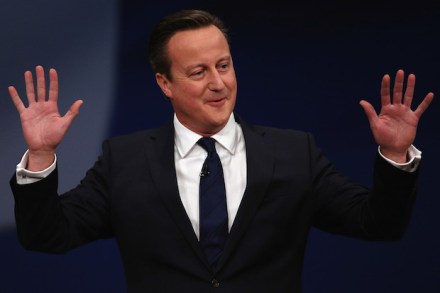
Nicola Sturgeon urged the Government yesterday to lay off the ‘Project Fear’ strategy and instead focus on spelling out the positive reasons for remaining in the EU. Unfortunately, it seems it’ll take the Prime Minister some time to heed that advice. Cameron will warn today that Brexit would ramp up the price of a holiday. He’ll argue later that: ‘The choice facing the British people on 23 June is increasingly clear: the certainty and economic security of remaining in the EU, or a leap in the dark that would raise prices – including the cost of a family holiday. All the evidence points to the value of the pound falling after a vote to leave the EU. A weaker pound means people’s hard-earned savings won’t go as far on holidays overseas.

Boris hits back in Brussels banana row. But has he got his facts right this time?

From our UK edition

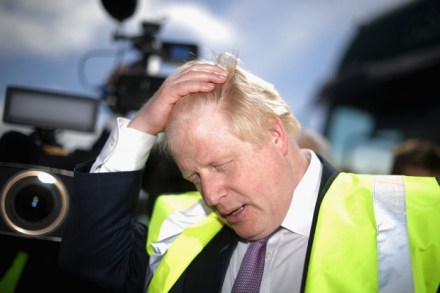
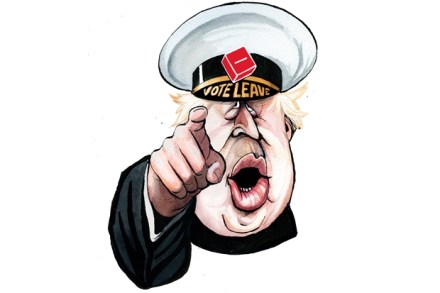
Boris has hit back in the row over whether Brussels tells Brits what types of bananas we can eat. Last week, he was accused of 'making it up as he went along' after claiming that the European Union prevented the fruit from being sold in bunches of more than 'two or three'. But instead of being quiet about them today, Boris has used his Brexit battlebus stop in York to insist that Brussels does meddle with our bananas. As Isabel Hardman reports, the former Mayor decided to take on those who had ridiculed him about his claims regarding EU control over bananas. He said he had looked into it and there were actually ‘four directives on bananas, including a directive on the curvature of bananas.’ So, is he telling the truth?

The Treasury dishes up more Brexit fearmongering. Will it work?

From our UK edition

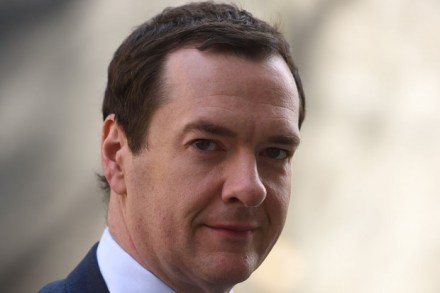
It’s now exactly one month until the EU referendum and the Treasury has marked the moment with another economic warning about the consequences of Brexit. The analysis out today claims that walking away from the European Union would kick-start a year-long recession. Brexit would also lower the country’s economic growth down by 3.6 per cent, according to the analysis. Although George Osborne must be nearing the point of running out of words to describe the economic ramifications of Brexit, in an article in the Daily Telegraph, Osborne and Cameron had this to say: ‘It is clear that there would be an immediate and profound shock to our economy. The analysis produced by the Treasury today shows that a vote to leave will push our economy into a recession that would knock 3.

The Spectator podcast: Hillary’s America | 21 May 2016

From our UK edition

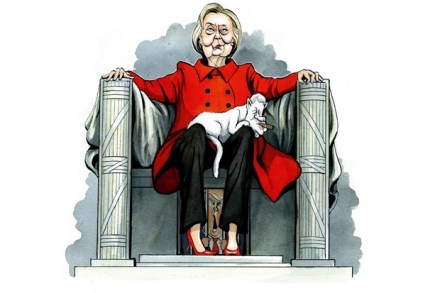
To subscribe to The Spectator’s weekly podcast, for free, visit the iTunes store or click here for our RSS feed. Alternatively, you can follow us on SoundCloud. What should we expect from a Hillary Clinton presidency? The Democrat frontrunner is now the firm favourite to win the White House, assuming that she can defeat her Republican rival Donald Trump. But what would her victory mean for America? In his Spectator cover piece this week, Christopher Buckley says one of Hillary's prevailing characteristics is her ability to bore. He also argues that Clinton's politic shapeshifting over the years may have enabled her to stand the test of time, but it's also won her many enemies.

This luvvies’ letter warning against Brexit isn’t worth the paper it’s written on

From our UK edition

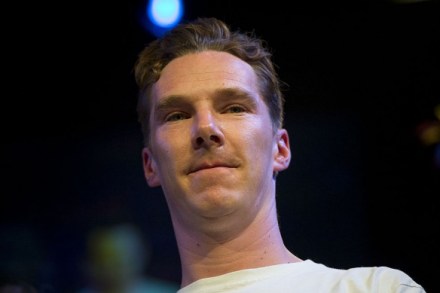
Politicians from across the spectrum have had their say on Brexit. So, too, have various business leaders. Spy chiefs have spoken out. And even Ian Botham has chipped in to spell out his opinion on the EU referendum. So it was probably just a matter of time before the luvvies did the same. And today they’ve done just that: Jude Law, Keira Knightley and Benedict Cumberbatch are amongst some 300 actors and musicians who have backed the call for Britain to stay in the EU. In a letter, put together by Britain Stronger in Europe, they urged Britain not to become ‘an outsider shouting from the wings’.

What now for Jeremy Hunt?

From our UK edition

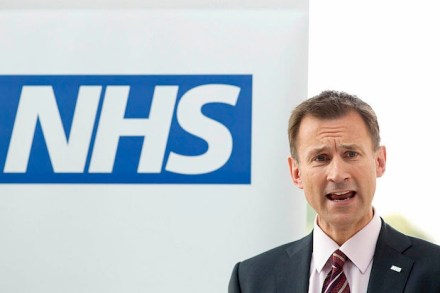
The junior doctors strike will be remembered not only as the first time in NHS history that a complete walk out took place, but also for its viciousness. Both the British Medical Association and the Government can share their blame in this. Jeremy Hunt's threat to 'impose' contracts on junior doctors was unhelpful in its forcefulness, even if his frustration was understandable. Whilst the rhetoric used by the BMA has also scarcely painted the association in a good light. Junior doctors may have had their concerns about patient safety but this was also a dispute about pay and to suggest otherwise was disingenuous. It seems, at last however, that an agreement has been reached. The BMA's Dr Johann Malawana said the terms offered a 'good deal' for junior doctors.

The Spectator podcast: Hillary’s America

From our UK edition

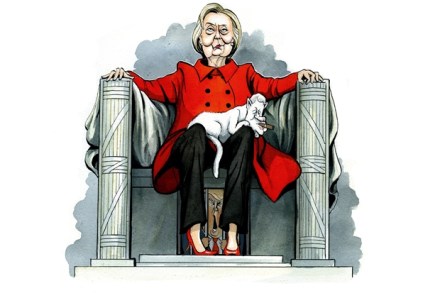
To subscribe to The Spectator’s weekly podcast, for free, visit the iTunes store or click here for our RSS feed. Alternatively, you can follow us on SoundCloud. What should we expect from a Hillary Clinton presidency? The Democrat frontrunner is now the firm favourite to win the White House, assuming that she can defeat her Republican rival Donald Trump. But what would her victory mean for America? In his Spectator cover piece this week, Christopher Buckley says one of Hillary's prevailing characteristics is her ability to bore. He also argues that Clinton's politic shapeshifting over the years may have enabled her to stand the test of time, but it's also won her many enemies.

Today’s inflation figures tell us nothing about Brexit. Why does the Treasury pretend otherwise?

From our UK edition

We’re now at the stage in the EU referendum debate where every announcement is explained in terms of its relationship to Brexit - whether relevant of not. So today we learn that inflation is still flat, dropping to 0.3pc in April. As per usual. But bizarrely, the Treasury is pretending that this tell us about the misery coming our way if Britain walks away from Europe. Here’s what a Treasury spokesman had to say about the figures: ‘Today’s inflation figure continues the trend we’ve seen over the past year. Pay is growing faster than prices, boosting families’ spending power.

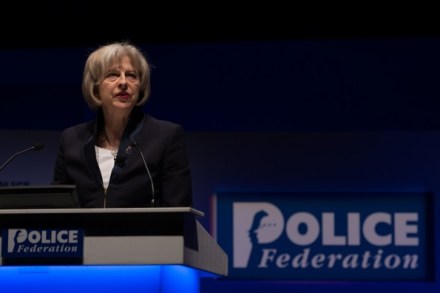
Why today is crucial for determining Theresa May’s chances in the next Tory leadership race

From our UK edition

Theresa May knows all about the pitfalls of speaking at the Police Federation but she is also well aware of how the conference can provide the perfect platform for underlining her leadership credentials. Back in 2012, the Home Secretary was booed, laughed at and made to speak in front of a sign which described government budget cuts as ‘criminal’. Last year, she accused the Federation of ‘crying wolf’ about finances. But her most memorable address to officers gathered at the annual Police Federation came in 2014, when she left the stage in silence – having stunned those gathered with her criticism of the police.

The Spectator podcast: Boris needs you! | 14 May 2016

From our UK edition

To subscribe to The Spectator’s weekly podcast, for free, visit the iTunes store or click here for our RSS feed. Alternatively, you can follow us on SoundCloud. Boris Johnson has kickstarted his battle bus tour of Britain which he hopes will convince people to vote out of the EU. But before he hit the road, he made a direct pitch to Spectator readers in an exclusive interview. The former mayor of London set out his Brexit battle lines, as he spoke to James Forsyth and Fraser Nelson, saying: ‘It is unquestionably true that I’ve changed. But so has the EU. And of the two of us, it’s the EU that has changed more than me.’ Speaking on the podcast, James Forsyth tells Isabel Hardman that: ‘He knows that he is in the fight of his political life.

The IMF serves up more Project Fear – and it’s working

From our UK edition

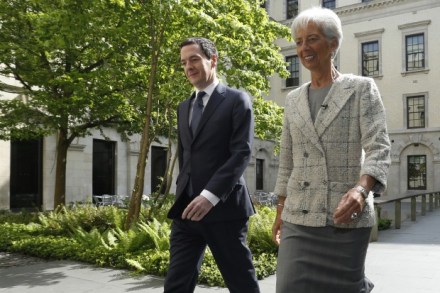
Another day, another warning about the economic bombshell which would follow Brexit. This time it's the turn of the IMF. In a press conference at the Treasury, Christine Lagarde spoke of the outcome of a vote to leave the EU ranging from 'bad to very bad'. Whilst the IMF's report said: 'A vote to leave the EU would create uncertainty about the nature of the UK’s long-term economic relationship with the EU and the rest of the world. A vote for exit would precipitate a protracted period of heightened uncertainty, leading to financial market volatility and a hit to output.' George Osborne was clearly grateful for the support of the IMF in the severity of their warning against Brexit.

Is the Brexit campaign ‘morphing into Ukip’?

From our UK edition

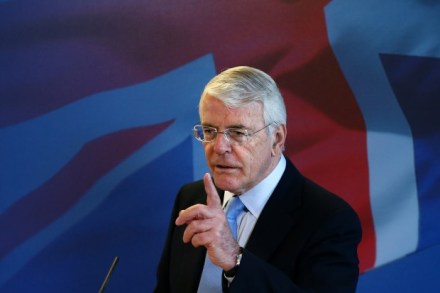
Is the Brexit campaign 'morphing into Ukip'? That's what Sir John Major will say he fears is happening later. In a speech at Oxford University, he'll argue that those calling for Britain to leave the EU are 'fuelling prejudice on immigration'. He'll also say that: 'As the leave arguments implode one by one, some of the Brexit leaders morph into Ukip and turn to their default position - immigration. I urge them to take care, this is dangerous territory that - if handled carelessly can open up long-term divisions in our society'. So does he have a point? It's definitely credible to see how some elements of the leave camp are focusing their positions around the immigration debate.

Mark Carney isn’t butting out of the Brexit debate any time soon

From our UK edition

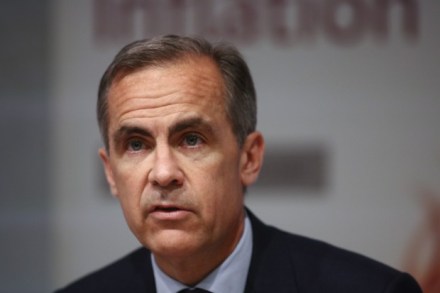
The Bank of England isn’t going to butt out of the Brexit debate any time soon it seems. Today’s interest rate decision produced few surprises with the Bank sticking at 0.5%. But the headlines are focusing instead on its warning about the consequences of a vote to leave the EU. The wording about the dangers of Brexit was the starkest yet. The Bank of England said: ‘A vote to leave the EU could materially alter the outlook for output and inflation and therefore the appropriate setting of monetary policy. Households could defer consumption and firms delay investment, lowering labour demand and causing unemployment to rise’ As doomsday scenarios go, excluding the Prime Minister’s warning about World War three, they don’t come much darker than this.

In the EU debate about control, today’s NI migrant stats are particularly toxic

From our UK edition

Statistics revealing the number of foreign workers in the UK are an age-old headache for the Government of the day. But with only six weeks to go until the EU referendum, today's publication of National Insurance figures showing how many people from Europe are working here could prove particularly toxic. We now know that last year 626,000 EU migrant workers registered for NI numbers. But whilst there was a small drop from the last set of stats, the Brexit campaign will be keen to capitalise on the apparent gulf between that figure and the overall net migration to the UK last year, which had been estimated at only 323,000. In fact, there's nothing fishy about the discrepancy between the figures, which are showing two different things.

The Spectator podcast: Boris needs you!

From our UK edition

To subscribe to The Spectator’s weekly podcast, for free, visit the iTunes store or click here for our RSS feed. Alternatively, you can follow us on SoundCloud. Boris Johnson has kickstarted his battle bus tour of Britain which he hopes will convince people to vote out of the EU. But before he hit the road, he made a direct pitch to Spectator readers in an exclusive interview. The former mayor of London set out his Brexit battle lines, as he spoke to James Forsyth and Fraser Nelson, saying: ‘It is unquestionably true that I’ve changed. But so has the EU. And of the two of us, it’s the EU that has changed more than me.’ Speaking on the podcast, James Forsyth tells Isabel Hardman that: 'He knows that he is in the fight of his political life.

Bernie Sanders’ win in West Virginia shows why a Trump presidency is possible

From our UK edition

Just when it looked like the US primaries couldn't throw up any more surprises, Hillary Clinton has been defeated overnight in West Virginia. Bernie Sanders took 51.4 per cent of the vote to Hillary's 36 per cent - handing the Vermont senator an extra 16 delegates. The result from West Virginia probably won't be enough to change the course of the race and it still looks as though Clinton will be the Democrats' nominee. As frontrunner, she has some 2,239 delegates backing her compared to Sanders' 1469. But what her defeat does do is act as an unwelcome delay in the Democrat party coming together. After all, Donald Trump has wasted no time in turning his fire on Clinton. Last week, having won in Indiana, he had this to say about her: 'She should not be allowed to run in the election.

Britain is selling less to Europe but the EU is still hugely important

From our UK edition

Britain’s trade deficit - the gap between what the UK imports and exports - is now at its biggest since the financial crash in 2008. The latest figures out today show that the difference between the two is now £13.3bn for the first four months of 2016. That’s a jump from £12.2bn at the end of 2015. So what do the figures actually mean? City analysts have described the trade deficit as ‘truly horrible’. The British Chambers of Commerce said the gap between imports and exports was ‘unacceptably large’. It’s not only those from the business world having their say on the latest figures though. As ever, these statistics are also being interpreted through the lens of the upcoming EU referendum.