Tom Goodenough

Tom Goodenough

Tom Goodenough is online editor of The Spectator.

What the papers say: Labour’s ‘new low’, ‘meddling’ EU courts & ‘Merry Brexmas’

From our UK edition

The hunt continues for the man thought to be responsible for the attack on Berlin’s Christmas market. But despite the urgency of the situation, the Sun says Germany - and the EU - continue to get their priorities all wrong. After all, the paper says, their ‘first duty’ should be keeping ‘their people safe’. Instead, the Sun says, they have released a photo of the wanted man with his eyes censored to protect his privacy. And the European Court isn’t doing much more to help keep people safe, according to the paper. Its ruling against the so-called 'snoopers’ charter' yesterday means that security services will lose out on a vital weapon in the fight against terror.

What the papers say: Thin-skinned Theresa May and the merits of Sturgeon’s Brexit plan

From our UK edition

If any one still doubts the merits of Britain controlling its own borders, look to Germany, says the Daily Telegraph. While it’s true that we still don't know who was responsible for this week’s devastating attack on a Berlin Christmas market, ‘Germany has already suffered fatal terrorism facilitated by the EU’s failure to control its borders,’ the paper says. The Telegraph goes on to say that, after Brexit, Britain will be able to renew its commitment to the ‘first duty of a state’ - ensuring ‘people’s security’. And all the signs of Theresa May’s leadership so far suggests the country is in good hands.

Twelve killed after lorry ploughs into Berlin Christmas market

From our UK edition

Twelve people have been killed after a truck ploughed into shoppers at a Christmas market in Berlin. Dozens more were injured, some seriously. Police were initially cautious about the motives behind the incident, describing what took place as a 'probable terrorist attack'. But at a press conference this morning, Angela Merkel said 'we must assume it was an act of terrorism'. The German chancellor also said that: This is a very difficult day. I, like millions in Germany, am outraged, shocked and deeply saddened by what happened yesterday in Berlin. Twelve people who were still with us yesterday, who were looking forward to Christmas and had plans for the holiday, are no longer among us. A horrific and incomprehensible act has robbed them of their lives.

What the papers say: ‘Power-mad’ unions, strike ‘dinosaurs’ and ‘misguided’ aid spending

From our UK edition

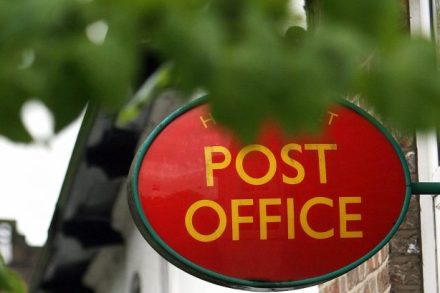
Thousands of workers are walking out this week in a series of strikes affecting post offices, railways and airports - but who is to blame for this wave of industrial action? The answer is obvious, says the Daily Mail: ‘union dinosaurs’. The paper says the RMT president Sean Hoyle’s remarks that he wanted to bring down the Tory government finally revealed the ‘key aim’ of the strikes, and in doing so pushed away the ‘pretence that the vicious campaign of action which has crippled Southern rail has anything to do with safety’.

What the papers say: Trump’s top team, and ‘spurious’ Southern strikes

From our UK edition

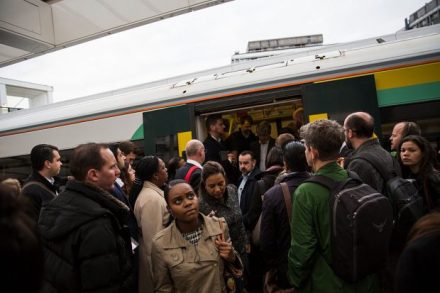
Southern’s strike continues for a second day today - spelling more misery for commuters. And the Sun knows who is to blame for the disruption: the ‘hard-left’ who are willing to ‘inflict misery on the public for political ends with impunity’. The Sun says that it’s time for a crackdown on strikes. It says the proposal apparently being put forward by some ministers - to block walkouts only backed by a small number of union members - doesn’t go far enough. Instead, the paper says, it’s time to force unions to ‘prove a dispute’s legitimacy in court or face ruin over a strike’s consequences’.

What the papers say: Southern strikes, pig-headed militants and what Brexit means for Ireland

From our UK edition

Social care was notable by its absence from the Chancellor’s Autumn Statement. But the care system is now firmly back on the agenda following reports yesterday that Theresa May was set to allow councils to raise bills to plug the social care funding gap. The Daily Mail agrees that this is an issue that needs to be fixed urgently, saying that the UK is in ’severe danger of failing to meet’ the moral test of how well a society looks after the elderly. And for all the problems we’re seeing today, ‘things are about to get much worse’, the paper warns, with the introduction of the living wage, for one, likely to send care home fees soaring. So is the Government right to suggest upping council tax bills to stave off this crisis?

What the papers say: Theresa May’s wrong trousers and why Boris is ‘bang on the money’

From our UK edition

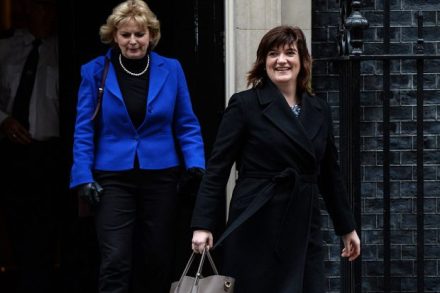
It would be ‘wrong’ to dwell on the subject of Theresa May’s £1,000 leather trousers, says the Times in its editorial this morning. But equally it’s a mistake to pretend those trousers don’t exist when Tory backbenchers think the cost of them brings the PM’s judgement into question, the paper argues. The Times criticises Theresa May’s adviser, Fiona Hill, for the manner in which she hit out at the PM’s trouser critic, Nicky Morgan. The Mail on Sunday revealed yesterday that Hill sent a text to Morgan's colleague, Alistair Burt, saying: ‘Don’t bring that woman to Downing Street again’, after the former education secretary criticised May's sartorial choice. So what does this all tell us?

What the papers say: The trouble with Boris, and McDonald’s Brexit boon

From our UK edition

Boris Johnson was slapped down by Theresa May yesterday for his comments about Saudi Arabia. And the Foreign Secretary earns himself a similar rebuke in the Guardian this morning. The paper describes his remarks as ‘plain speaking without a purpose’ and says that ‘he frequently shoots from the hip or goes off half-cocked’. It warns that while speaking out of turn as a columnist could be ‘embarrassing’, now the ‘potential consequences are far graver’. But if so, why is Theresa May still tolerating Boris? In the eyes of the Guardian’s editorial, it’s because the PM thinks that ‘a cannon that misfires so often is less dangerous in front of her than on the benches behind her’. But how long will the PM's patience persist?

Spectator live blog: The Supreme Court’s Brexit hearing, day four

From our UK edition

The Supreme Court's landmark case on triggering Article 50 has now finished. We'll have to wait until January to hear the verdict of the 11 judges involved. But for now you can follow all the main events as they unfolded on our Spectator live blog: 4.20pm: It's all over at the Supreme Court. Lord Neuberger rounds off proceedings by making it clear that the judges are 'not being asked to overturn the referendum'. Before his comments, Eadie attempted to knock down Pannick's view that the 2015 referendum act had political, rather than legal, significance. Not so, said Eadie, who insisted that the Government thought the act 'speaks volumes about the intention of Parliament' and that 'it left the royal prerogative power to give notice' with ministers rather than MPs. 3.

What the papers say: Article 50 debate, Brexit ‘fog’ and ‘looney Labourites’

From our UK edition

After MPs voted last night to back the Government’s plan to invoke Article 50 by the end of March, the Guardian says it’s good news that Parliament is now finally using its powers to shape the Brexit process. The paper says it’s ‘extraordinary’ that so much time has passed since the referendum, given how there is still no ‘real clarity about the government’s general aims’ in upcoming negotiations. It says yesterday, however, ‘some fog began to lift’: ‘At last, the great issue of the UK’s future relations with Europe was finally being discussed where it matters most of all, in our elected parliament,’ the paper says.

Spectator live blog: The Supreme Court’s Brexit hearing, day three

From our UK edition

It's day three of the Supreme Court's landmark case on the triggering of Article 50. Here's how the day unfolded:  4.15pm: The Supreme Court hearing has now finished for the day. The Lord Advocate, Lord Wolffe has been putting forward the Scottish Government's case. So far, he has told the court that using prerogative powers to trigger Article 50 would be an 'unconstitutional' step. But he makes it clear that the Scottish Parliament does not have the power to veto Brexit. You can read the Scottish Government's full submission to the Supreme Court here. 3.30pm: Ronan Lavery now takes up the argument on behalf of Northern Ireland.

What the papers say: Brexit, political pygmies and repentant Remainers

From our UK edition

MPs will vote for the first time today on the Government’s Article 50 timeline. While Labour have said the decision to spell out the plan for Brexit is a ‘welcome climbdown’ by ministers, is this afternoon’s debate merely delaying the actual process of Britain leaving the EU? That’s the Sun’s verdict on today’s proceedings, with the paper saying a ‘coalition of political pygmies’ are ‘stringing out the process in Parliament’. It goes on to say that Theresa May’s opponents ‘should stop pretending’ they are worried about democracy and Parliamentary sovereignty and instead own up to ‘their true aim’ - ‘reversing the referendum result’.

What the papers say: Is time up for the EU?

From our UK edition

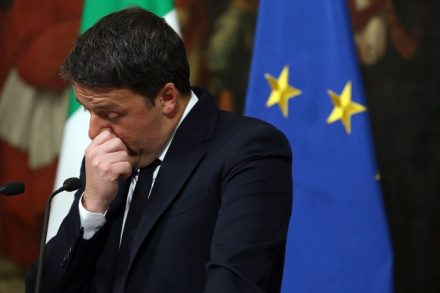
Something is happening across Europe, says the Sun - but EU leaders are still intent on burying their heads in the sand. Following Matteo Renzi’s defeat in the Italian referendum on Sunday and far-right Eurosceptic candidate Norbert Hofer’s good showing in the Austrian election, it’s clear that ‘voters across Europe are increasingly rejecting the EU’s self-interested ruling consensus,’ the paper says. But while the outcome for the continent does not look good, the signs of instability in Europe can arguably be only a good omen for Theresa May as she looks to negotiate Britain’s Brexit deal.

Spectator live blog: The Supreme Court’s Brexit hearing, day one

From our UK edition

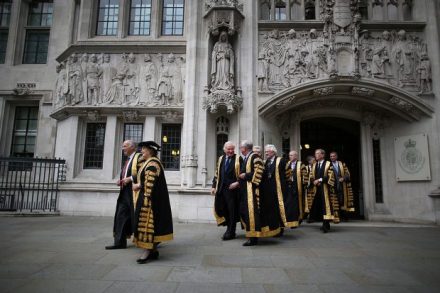
Today's Supreme Court hearing did, for once, live up to its billing as being a 'landmark case'. The court's 11 judges - sitting together for the first time - will hear four days of evidence before ruling next month on the government's appeal against the decision that Parliament must be given a say on triggering Article 50. Here's the full coverage from today's Supreme Court case: 4.30pm: Eadie finishes off his argument with a simple point. He urges the Supreme Court judges to measure their decision based on a test of asking the 'man in the street'. Would the average person think that the referendum outcome gave the Government the right to kick start Brexit? Eadie argues that they would.

What the papers say: The Supreme Court’s Brexit case

From our UK edition

Today's Supreme Court hearing on Brexit is undoubtedly the most controversial in the court's seven year history, says the Times. The case will examine the Government's appeal against the earlier High Court ruling that Article 50 cannot be triggered without the say-so of Parliament. But what's most remarkable about today's hearing is the fact Theresa May allowed it to get to this position in the first place, the paper says. The Times suggests that 'at any point since Theresa May entered Downing Street in July she could have called and easily won a parliamentary vote mandating her to deliver Brexit' - but in choosing not to it shows 'an early and inauspicious mark' against her Downing Street record.

Labour is heading for electoral wipeout – even without a Ukip resurgence

From our UK edition

Another day, another miserable bit of news for the Labour party. This time it’s in the form of an ICM/ Guardian poll, which puts Jeremy Corbyn’s party 16 points behind the Conservatives. While the Tories are riding high on 44 per cent - their highest share of the vote in more than seven years - Labour’s share sits stagnant on 28 per cent. Admittedly, Labour hasn’t lost any support. But the stasis makes it clear that the party is doing little to close a chasm which is widening further and further.

What the papers say: Labour’s Ukip nightmare

From our UK edition

After being made Ukip leader yesterday, Paul Nuttall wasted no time in making it clear who he had in his sights: the Labour party. Nuttall said he wanted Ukip to ‘replace Labour’ within five years. And in its editorial, the Times says this threat spells a ‘nightmare’ scenario for Labour. The paper says that while ‘healing’ Ukip’s own ‘wounds’ won’t be easy following a fractious and divisive few months, ‘the rewards could be historic’; it says that a two per cent swing towards Ukip would lose Labour 13 seats, while Labour 'would lose 19 more’ seats if one in five Labour voters sided with Nuttall's party. But can Ukip pull it off?

Paul Nuttall wins Ukip’s leadership race

From our UK edition

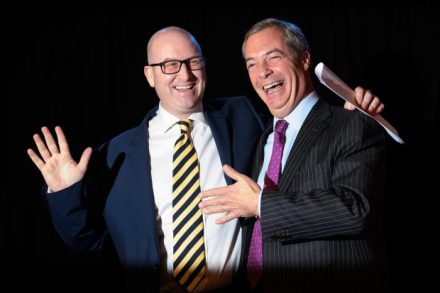
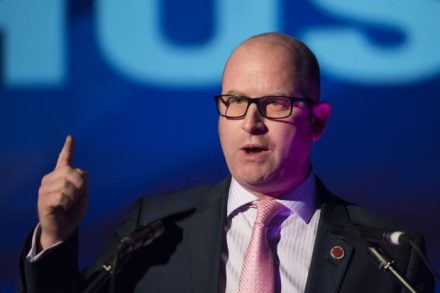
Paul Nuttall has won the race to replace Nigel Farage as Ukip leader. Nuttall's victory was decisive: he picked up 62.6 per cent of the vote, compared to Suzanne Evans on 19.3 per cent and John Rees-Evans on 18.1 per cent. For Nuttall, the hard work starts now. His win today puts an end to the party's second leadership contest in five months, following Diane James's short-lived 18-day reign. He inherits a party in a troubled state - and he admitted as much in his leadership speech. 'Today is the day we put the Ukip jigsaw back together,' he said. And while Nuttall was keen to continue the unity message he parroted during his campaign, he also fired a warning at those within Ukip who want to carry on fighting.

What the papers say: Castro, Carney and Brexit

From our UK edition

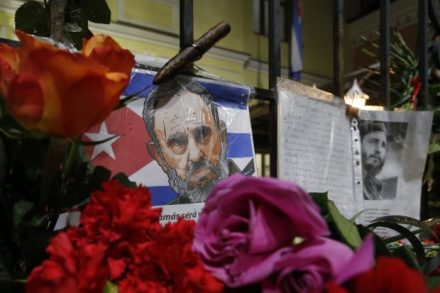
The Daily Mail calls those who ‘heaped adulation’ on Fidel Castro over the weekend - including the likes of Jeremy Corbyn and John McDonnell - ‘useful idiots’. The paper says after Castro’s death on Saturday, the Cuban leader's supporters are ignoring the 'poverty he inflicted on his people' as well as his torturing of political opponents and the fact that he ‘failed his people abysmally’. So why, the Mail asks, do those like the Labour leader have such a different view of the former Cuban leader? The paper suggests in its editorial that there is a simple answer: ‘Messrs Corbyn, McDonnell and Co have never grown up since their student days’. Meanwhile, the Mail also takes a pop at Mark Carney.

The Autumn Statement as it happened

From our UK edition

Philip Hammond offered up few surprises in his Autumn Statement. As predicted, he said the minimum wage will go up (slightly), fuel duty will be frozen, letting agency fees will be banned and George Osborne's welfare reforms will be partly softened, with the 'taper rate' for Universal Credit slowed down. But he did save room for one rabbit in the hat: this year's Autumn Statement will be the last, the Chancellor announced. Instead, from 2018 there will be a 'Spring Statement, Hammond said - and the main budget will take place in the Autumn. It was also revealed that the OBR's updated forecast for next year suggests Britain's economy will grow by 1.4 per cent - a fall from the 2.2 per cent predicted before the referendum.