Toby Young

Toby Young

Toby Young is associate editor of The Spectator.

Even the Chinese can’t teach Kevin the Teenager

From our UK edition

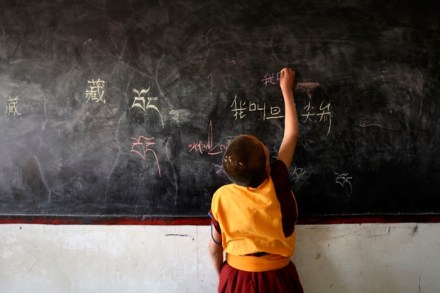
Watching a group of unruly children make mincemeat out of a well-meaning teacher has become a television staple and Are Our Kids Tough Enough? Chinese School, a factual entertainment series that debuted on BBC2 on Tuesday, is a case in point. We look on aghast as five teachers from China struggle to manage a class of ordinary 14-year-olds in England. They quickly discover that the techniques that have made Chinese schoolchildren the envy of the world don’t work with Kevin the Teenager. On the face of it, the Chinese educational model has much to recommend it. Shanghai is at the top of the Pisa international education league tables in maths, while the UK is in 26th place.

Trouble withthe neighbours

From our UK edition

A few years ago, I got a bit fed up with receiving Christmas cards from my friends designed to show off just how well they were doing. A typical card consisted of five or six blond children on ponies or quad bikes with a massive country house in the background. The caption would be something like: ‘Greetings from Shropshire.’ So I came up with an idea. Why not create my own version? I’d get my four children to strike a variety of delinquent poses. One would be outside QPR stadium, fag in mouth and can of beer in hand. Another would be doing an impression of Lord Coke with a rolled-up £10 note sticking out of his nose. My daughter would be pushing a double buggy containing two snotty babies and sporting a Croydon facelift.

Why I voted for Jeremy Corbyn

From our UK edition

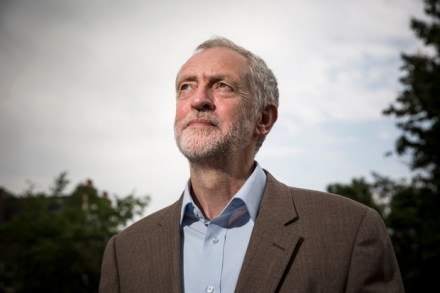
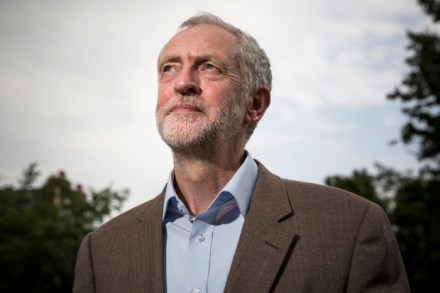
Is the ‘Tories for Corbyn’ campaign politics at its most infantile? As one of the few conservative commentators willing to defend it in the media, I’ve been doing my best to rebut that charge. The most frequent line of attack is that there’s something dishonest about it. The Labour leadership election isn’t an open primary. It’s restricted to members, registered supporters and affiliated supporters. OK, you can register as a supporter for £3 — a change brought in by Ed Miliband to reduce union influence — but only if you pretend to be a Labour sympathiser. And that’s just wrong. The short answer to this is that no such pretence is necessary — at least, it wasn’t when I signed up via the party’s website.

‘Tories for Corbyn’ isn’t just a bit of fun. It’s an effective political weapon

From our UK edition

Is the #ToriesForCorbyn campaign politics at its most infantile? As one of the few conservative commentators willing to defend it in the media, I’ve been doing my best to rebut that charge. The most frequent line of attack is that there’s something dishonest about it. The Labour leadership election isn’t an open primary. It’s restricted to members, registered supporters and affiliated supporters. OK, you can register as a supporter for £3 — a change brought in by Ed Miliband to reduce union influence — but only if you pretend to be a Labour sympathiser. And that’s just wrong. The short answer to this is that no such pretence is necessary — at least, it wasn’t when I signed up via the party’s website.

Urban foxes, the ginger menace

From our UK edition

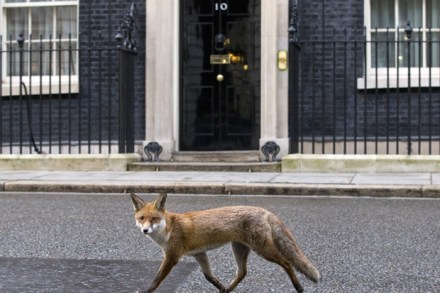
Forget about the countryside. When is the government going to do something about the vulpine creatures wreaking havoc in central London? The situation is now so out of control, it’s time the Prime Minister convened a meeting of Cobra to discuss the ginger menace. I’m talking, of course, about the horde of SNP MPs who’ve invaded Westminster. Actually, I’m not, but I couldn’t resist that gag. No, foxes are the problem. I don’t actually keep a chicken coop in my back garden in Acton — and, for that reason, I’m spared the sight of my beloved poultry lying in a pool of blood with their heads bitten off. But I still have a long list of complaints. First, there’s the appalling sound they make, particularly during the mating season.

An independent Scotland could easily have been the next Greece

From our UK edition

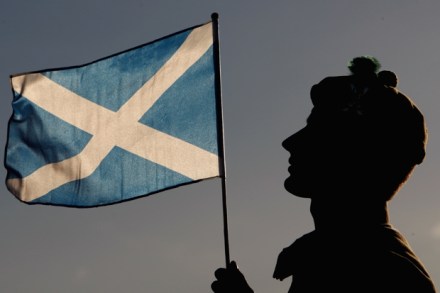
I wonder how many Scots who voted 'Yes' in last year’s referendum are watching events unfold in Greece and having second thoughts? It’s not quite a 'there, but for the grace of God' moment, but it’s not far off. This analogy depends upon two big assumptions, both of which will be disputed by the nationalists. The first is that Scotland would not have automatically been allowed to remain in the EU following a 'Yes' vote, but, as a new state, would have had to apply for membership and, as a condition of joining, would have been forced to join the euro. How questionable is this assumption?

True grit and pushy parents

From our UK edition

I took my three boys for a cycle ride in Richmond Park on Sunday. Under normal circumstances, this would have been a good way to relax, but I had to be back home in Acton by 2.15 p.m. for my daughter’s 12th birthday party. Given that we didn’t leave the house until 11 a.m., and were relying on public transport, we were slightly up against it. We got to the park at noon, which gave us about 75 minutes to complete a seven-mile circuit, allowing for an hour to get home. Just about doable, but only if all three boys went flat out and resisted the urge to get off and push when we were going uphill. The weakest link was seven-year-old Charlie, who still has the same bike he had when he was five. No gears and tiny wheels, so he has to pedal twice as quickly to keep up.

Giving up alcohol is not as much fun as I’d hoped

From our UK edition

Two months ago, I set myself the target of losing 11 pounds in time for the Spectator’s summer party on 1 July. To help achieve that, I swore off alcohol and, had I succeeded, my plan was to start drinking again at the party. I managed the weight loss, but didn’t make it to the party because it clashed with a board meeting of the educational charity I set up five years ago. The upshot is that I haven’t started drinking again and I’m debating whether to remain teetotal in perpetuity. Temperance has its advantages. I’ve experienced almost no headaches or stomach aches since I gave up the booze, although that may also be connected with my diet.

In defence of Gove’s grammar

From our UK edition

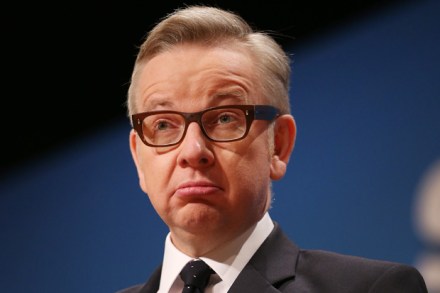
[audioplayer src="http://rss.acast.com/viewfrom22/angelamerkel-sburden/media.mp3" title="Toby Young and Oliver Kamm debate Gove's grammar" startat=1394] Listen [/audioplayer]Few things are more likely to provoke the disapproval of the bien-pensant left than criticising someone’s grammar. The very idea that one way of speaking is more ‘correct’ than another is anathema to them. Under the guise of being helpful, it asserts the supremacy of the white educated bourgeoisie and seeks to rob the working class and ethnic minorities of any pride in their own culture. It’s a form of ‘linguistic imperialism’.

The best way to end the ‘poshness test’

From our UK edition

There’s a warning buried in the detail of the new report by the Social Mobility and Child Poverty Commission on why top companies employ so few applicants from comprehensive schools: ‘Though this study provides valuable insights into barriers to the elite professions, there are nevertheless some limitations associated with the chosen research methodology. As a small-scale qualitative study, the aim is to explore issues and generalisability is limited.’ But most pundits who’ve commented so far missed this caveat. ‘New research… reveals the privileged choose and look after their own,’ wrote Owen Jones in the Guardian. ‘They don’t like accents that sound a bit, well, “common”.

The best way to end the ‘poshness test’

From our UK edition

Here is a preview of Toby Young's column in this week's Spectator, out tomorrow. Subscribe from just £1. There’s a warning buried in the detail of the new report by the Social Mobility and Child Poverty Commission on why top companies employ so few applicants from comprehensive schools: ‘Though this study provides valuable insights into barriers to the elite professions, there are nevertheless some limitations associated with the chosen research methodology. As a small-scale qualitative study, the aim is to explore issues and generalisability is limited.’ But most pundits who’ve commented so far missed this caveat. ‘New research… reveals the privileged choose and look after their own,’ wrote Owen Jones in the Guardian.

The Canadian Ed Miliband

From our UK edition

I’ve been reading Fire and Ashes, Michael Ignatieff’s account of his disastrous foray into politics, in an attempt to understand where it all went wrong for Ed Miliband. In combination with the election postmortems and interviews with the people in Miliband’s inner circle, it’s extremely illuminating. For those unfamiliar with his story, Ignatieff is a left-wing Harvard professor who in 2004 received a surprise visit by three ‘men in black’ — high-ups in the Liberal party of Canada who sounded him out about making a run for the leadership.

Are the cultural Marxists in retreat, or lying low?

From our UK edition

In his Memoirs, Kingsley Amis includes a story about meeting Roald Dahl at a party in the 1970s. Dahl advises him to write a children’s book — ‘That’s where the money is’ — and brushes aside his objection that he doesn’t think it would be any good. ‘Never mind, the little bastards’d swallow it,’ he says. Then, a few minutes later, Dahl raises himself to his full height and, with the air of a man asserting his integrity in the face of an outrageous slur, says: ‘If you do decide to have a crack, let me give you one word of warning. Unless you put everything you’ve got into it, unless you write it from the heart, the kids’ll have no use for it.

Sturgeon doth protest too much, me thinks

From our UK edition

I couldn’t believe it when Nicola Sturgeon called for the resignation of Alistair Carmichael, the former Scottish Secretary, over his role in the leaked memo affair. As readers will recall, the Daily Telegraph published a confidential document during the election campaign that purported to be an account of a conversation between Sturgeon and Sylvie Bermann, the French ambassador, in which Sturgeon said she’d prefer David Cameron to Ed Miliband as Prime Minister. Carmichael has now owned up to leaking the document, which originated in the Scottish Office, but this isn’t the cause of Sturgeon’s outrage. No, Carmichael’s sin was denying all knowledge of the leak when asked about it at the time. For this, apparently, he should ‘consider his position’.

Freedom for free schools

From our UK edition

I was disappointed to hear Andy Burnham on Marr last Sunday declare his opposition to free schools. He put plenty of distance between himself and Ed Miliband, even admitting Labour spent too much in the run-up to the recession, which is quite something given that he was the Chief Secretary to the Treasury at the time. But Miliband was spot on, apparently, when it came to free schools. He then reeled off all the usual guff about ‘experimenting with children’s education’, ‘surplus places’, ‘unqualified teachers’, etc. It’s tempting to take Burnham to task over this, since he’s the favourite to become the next Labour leader. What could be clearer evidence that he’s in the pocket of Len McCluskey than siding with the teaching unions?

You’ll regret not having a Human Rights Act when a left-wing government returns

From our UK edition

In today’s Guardian, Matthew D’Ancona warns that David Cameron may face a successful rebellion from the 'Runnymede Tories' if he tries to repeal the Human Rights Act, led by David Davis. Not only would that be a major blow to his authority, it would make remaining in the EU a less attractive option in the forthcoming referendum. Human Rights experts insist that the two issues are wholly separate, although that’s open to debate. But there’s no doubt they’re politically linked.

Why I still have a deep attachment to the BBC

From our UK edition

After I failed my O-levels and decided to leave school, my father suggested I go to Israel to work on a kibbutz. I’m not sure why he thought this would cure me of my self-righteous adolescent narcissism, but it worked. I returned to England determined to go back to school and make something of myself. I very nearly didn’t come back. The first kibbutz I went to was on the Israeli-Lebanese border and about a week after I arrived it was targeted by a group of Palestinian rebels. Katyusha rockets rained down from all sides and the other guest workers and I were ushered into a special air-raid shelter reserved for ‘volunteers’. It was a particularly dank and mouldy affair, with no mod cons save for an ancient, battery-operated radio.

Is satire a dying art?

From our UK edition

I appeared on Radio 4 a couple of weeks ago to discuss the age-old question of whether political satire is dead. I don’t think it is, but it has lost a good deal of vitality in recent years and the role of satire in the general election campaign is a case in point. There has been no shortage of ‘satirical’ television programmes, but none of them have cut through. The only sign of life has been the flurry of photoshopped images on Twitter that have followed each misstep of the parties’ campaigns, such as Ed Miliband’s decision to carve Labour’s election pledges on to an eight-foot stone slab. If Stanley Kubrick was still alive he’d be suing people for illegally reproducing images from the opening scene of 2001: A Space Odyssey.

Reuniondues

From our UK edition

A couple of weeks ago I returned to my old Oxford college for a ‘gaudy’ — posh, Oxford-speak for a reunion. This one was for those of us who came up to Brasenose in 1983, 1984 and 1985. That group includes the Prime Minister but, not surprisingly, he wasn’t there. I imagine he didn’t want to risk being photographed at a black-tie dinner with a bunch of his Oxford pals in the middle of a general election campaign — or maybe he just finds these occasions a bit of a bore. When I attended my first gaudy about 15 years ago, I assumed that the only people who’d bother to turn up would be those who’d made a success of their lives and they’d spend the entire time bragging about it. In fact, it was much more random than that.

The hazards of being a good sport

From our UK edition

Not a day passes when I don’t look on my father’s record with shock and awe. I’m not talking about his authorship of Labour’s 1945 manifesto, his invention of the word ‘meritocracy’ or his creation of the Open University. I’m talking about the fact that he fathered a child at the age of 80. How on earth did he cope? My eldest was born when I was 40, with three more following in quick succession, and I already think of myself as an old dad. The problem is, they want to play with me all the time — rough, competitive, physical games — and it’s completely debilitating. The boys, aged six, seven and ten, are particularly demanding. I’m just not up to it. God knows how my father managed to stay alive until he was 86.