Toby Young

Toby Young

Toby Young is associate editor of The Spectator.

Ghent university shouldn’t have suspended Nathan Cofnas

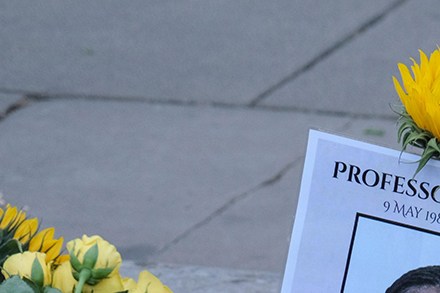
It is ironic that the ‘be kind’ brigade beating their breasts and wailing about the 'lynching' and 'assassination' of Jason Arday think the appropriate response is to whip up hatred against Nathan Cofnas, the scholar who exposed Arday's academic misconduct. At the vigil for Arday at Trafalgar Square on Sunday, several speakers singled out Cofnas for blame, including Diane Abbott MP, who described him as a ‘racist’. Nathan contacted me shortly afterwards worried that he risked being murdered if he set foot in London.

The horror of when your own side turns on you

Should I regret writing a satirical piece for this magazine about Jason Arday? Yes, according to those who blame the ‘right-wing media’ for his death. A petition started by Jolyon Maugham this week calling for a public inquiry into the ‘press harassment’ of Arday has gained more than 100,000 signatures. A letter from Dawn Butler MP to Ipso urges the independent press regulator to use ‘every available lever’ to take ‘decisive action’ against the Times, Telegraph, Mail and Spectator. Alan Rusbridger, the former editor of the Guardian, has named me as a particularly egregious offender, while the novelist Will Self has called for the journalists who exposed Arday’s wrongdoing to be prosecuted.

‘It’s a cesspool!’ — What’s going wrong in Britain’s universities?

52 min listen

William Moore is joined by The Spectator’s associate editor Toby Young, commissioning editor Lara Brown and newsletter editor and restaurant critic Angus Colwell. This week: What has gone wrong with British universities? Lara unpacks the wider academic crisis in the wake of the Jason Arday scandal, from ‘surviving the apocalypse’ courses at Warwick to maths departments promising to ‘decolonise’ the subject. Has the sector lost its nerve? Also: Balding. Toby explains why he’s trying to talk his three sons out of hair transplants, while Angus and Lara weigh in on whether men vastly overestimate the importance of their hair on the dating market. Plus: is Indian the best cuisine?

‘It’s a cesspool!’ – Jason Arday & the death of Britain’s universities

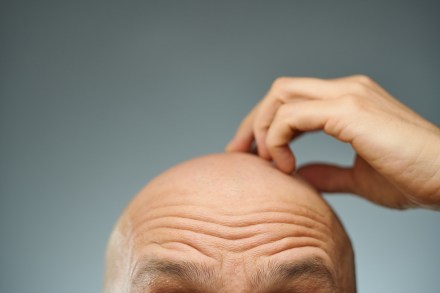
Is it time for a hair transplant?

My father, Michael, who was a sociologist among other things, was once asked by a drug company to do some market research into a pill it was developing that could change skin colour from black to white. The company hoped it might go some way to tackling racial prejudice. After Michael interviewed some prospective customers in south London, he concluded there wouldn’t be much demand. The problem, they told him, was that it would leave their features unchanged so they’d end up looking like albinos – and there was no reason to think they’d experience any less racism. On balance, they’d prefer to remain as they were. As a bald man, I’ve always felt the same way about hair transplants.

Lucy Powell is comically misinformed about education

Lucy Powell was reportedly Andy Burnham’s third choice for Education Secretary after Rachel Reeves and David Miliband turned it down – and judging from her recent intervention in the education debate, it’s not hard to see why. Her claim that a million young people are not in education, employment or training (Neets) as a result of Michael Gove’s ‘one-size-fits-all’ education reforms is almost comically misinformed. To begin with, the reforms she’s referring to – turning the majority of English state schools into academies, increasing their autonomy and, at the same time, making them more accountable – began with the Education Reform Act 1988, which ushered in City Technology Colleges, a forerunner to academies.

I could never dislike Rod – even when he threatened to punch me 

I remember being in The Spectator’s offices on a Tuesday afternoon not long ago when I noticed a group of staffers clustered round a computer screen. One let out a guffaw of laughter, followed by another, then another. People sitting nearby demanded to know what was so funny and someone started reading it out. Before long, the entire room was roaring with laughter – proper, hysterical, uncontrollable laughter. Rod Liddle had filed his column. I was envious, obviously, but also laughing with everybody else. Rod was one of those writers it was impossible to dislike, however successful he became, because reading him gave you so much pleasure. That was true even if you didn’t share his politics, provided you had a sense of humour.

Professor Arday is the gift that keeps on giving

Are congratulations in order for Sacha Baron Cohen? The more I read about Jason Arday, the Cambridge sociology professor and DEI poster boy caught up in a plagiarism row, the more convinced I am he’s the comedian's greatest creation.  Arday’s academic career, like his athletic achievements, reads like a fairy tale First, there's the over-the-top back story. He claimed to have been totally mute until the age of 11 – having been diagnosed with autism – and unable to read or write until he was 18. Yet in spite of these disadvantages, he earned a PhD by the time he was 30 – which he managed to complete while suffering from a brain tumour! On the face of it, utterly incredible.

Won’t someone please think of the French wine?

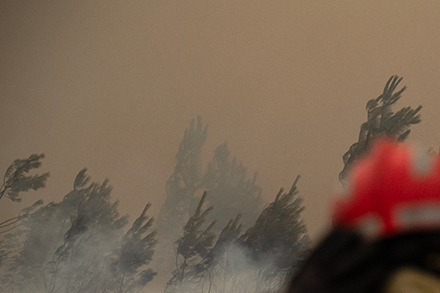
There was something surreal about my visit to La Cité du Vin, Bordeaux’s wine museum, last Saturday. From the top floor, with its panoramic view of the city, you could see the smoke from the Gironde wildfire turning the sky yellow, yet none of the staff seemed remotely concerned. This was in spite of the fact that the conflagration had already triggered France’s largest evacuation since the second world war and was getting closer to Bordeaux every hour. OK, maybe they thought it unlikely they’d be asked to leave their homes, but weren’t they worried about the region’s vineyards? These people worked at a museum dedicated to celebrating wine, for Christ’s sake.

The dangers of policing misinformation

When Steve Reed, the now ex-communities secretary, unveiled his social cohesion ‘action plan’ earlier this year, he promised to publish an ‘evidence review’ on ‘the impacts of misinformation’. Commissioned by the government’s chief scientific adviser, it would focus on ‘how to measure the problem, assess harms and counter and mitigate these harms’. That report has now been published and the headline finding is that ‘anti-LGBTQ+ narratives’ – such as claiming that state schools and other public authorities have been captured by gender ideology, and questioning whether biological males should be allowed to compete in women’s sports – are examples of misleading and false information that cause harm, alongside climate denial and deepfake images.

I’m sick of ‘plastic’ football fans

Last week I watched a clip of Ian Wright explaining why it meant so much to him, as a black former player, that Jude Bellingham is uninhibited about revelling in his achievements. In the past, he said, some black players had been criticised for being too cocky, as though they’d forgotten their place. So he was pleased that it is now completely acceptable for a black player to strut around with a bit of swagger. I can see his point, but I also thought: why do you have to racialise this remarkable young player? Can’t we just celebrate him as an Englishman? England’s progress in the World Cup is one of those moments in which we’re supposed to set our differences aside and come together.

Confronting the climate Jeremiahs

The problem with being a well-known climate sceptic is that whenever there’s a heatwave, you get buttonholed by eco-zealots who think it ‘proves’ they’re right and you’re wrong. The first person to confront me during the current sunny spell was a Guardian journalist at a right-wing conference, which the newspaper had clearly identified as a hotbed of ‘denialism’. It didn’t help that the air conditioning wasn’t working and it was approaching 40°C in the main auditorium. ‘I see you’re sweating profusely,’ he began, shoving a microphone in my face. ‘Still think climate change is a hoax?’ I had to patiently explain that few people on my side of this debate deny that climate change is real.

The World Cup has revived American soft power

Not only where the England fans outnumbered by 30 to one inside the Azteca stadium, but on their way to and from the game they had to run a gauntlet of Mexico fans, including the Anti-Globalist Assembly, a far left group that promised to target England supporters because of Britain’s history of colonial rule.  The local police advised the visiting fans not to hang around the area after the game – and with good reason. After Mexico beat Ecuador last week, over a million people gathered outside the Azteca to celebrate and four fans died in the crush. Contrast that with the experience of football supporters attending games in the United States.

World Cup

Labour’s mad media protectionism

Just when you think this government cannot get any madder, it publishes a truly mental green paper. Called ‘Watch this Space’ and produced by the Department for Culture, Media and Sport, it suggests forcing social media platforms to make content produced by public-service media providers, like the BBC, ITV and Channel 4, ‘prominent and easily discoverable’. So, if you search for an instructional video on YouTube about how to do the foxtrot, it would steer you towards an episode of Strictly Come Dancing. And the content recommended for you by a platform’s algorithm wouldn’t be based on your personal preferences, but on what DCMS – or possibly Ofcom, the details are vague – thinks you ought to be consuming.

Farewell to the school I founded

My son Charlie sat his final A-level paper last week and the significance of this has only just sunk in. It’s not simply that he has finished his schooling; he’s the last of my children to do so. No more PTA meetings, no more parents’ evenings, no more school runs. My kids are all grown up. I’ve fulfilled my biological duty, raising four of them to adulthood, and can now disappear over the horizon into the sunset – or, rather, the Sunset Care Home. This is particularly poignant as I helped set up the school my children went to. Between 2009 and 2011, I led a small group of parents and volunteers who founded the first free school to sign a funding agreement with Michael Gove, then the education secretary.

Whoops, I’ve given my children a gambling problem

The problem with my gambling, Caroline has always maintained, is not the fact that I nearly always lose. I only ever bet on QPR, so that’s inevitable. No, the issue is that I might pass on the habit to my children, particularly the boys. My bets rarely exceed £25, but my sons might have less self control. What if they become addicts, she wants to know? It will ruin their lives. In her eyes, gambling in front of them is like snorting heroin off the kitchen table. Well, it pains me to say it, but she was right. My youngest recently celebrated his 18th birthday and the first thing he did, at one minute after midnight, was open a bet365 account. The fact that his becoming an adult coincided with the start of the World Cup didn’t help.

Was I too right-wing for MI6?

Like many people, I’ve been bemoaning the woke capture of our security services for some time. In 2024, Sir Richard Moore, then the head of MI6, resigned from the Garrick Club during the row over the admission of women, and earlier this year it emerged MI5 was excluding white people from registering interest for administrative roles due to the ‘under-representation’ of black, Asian and minority ethnic people. You would hope the recruitment of spies would be based on merit, given the vital role they play in protecting the national interest, but apparently diversity targets are more important.

Lisa Haseldine, Michael Simmons, Patrick Smith & Toby Young – with Nigel Farage

29 min listen

On this week’s Spectator Out Loud: Lisa Haseldine reports from Armenia; Michael Simmons argues neoliberalism has never really been tried; Patrick Smith explains why he takes frog poison; and finally, Toby Young wonders why Nigel Farage cares if he has been banned from Desert Island Discs. Plus: the Reform UK leader reveals – exclusively to James Heale – what he would choose if he went on the show. Produced and presented by Patrick Gibbons.

Lisa Haseldine, Michael Simmons, Patrick Smith & Toby Young – with Nigel Farage

Why does Farage care if he’s on Desert Island Discs?

The big revelation in Lord Ashcroft’s forthcoming biography of Nigel Farage is that he’s been banned from Desert Island Discs. According to Ashcroft’s sources, an appearance by the Reform UK leader would make some BBC employees feel ‘unsafe’ and might lead to other high-profile figures boycotting the long-running show. ‘I have come to expect nothing less from the BBC,’ Farage told the Mail on Sunday. ‘Their blatant bias has been obvious for years.’ The BBC has categorically denied the story and, in fairness, its ‘blatant bias’ doesn’t extend to Question Time, which Farage has appeared on about 40 times in the past 26 years.

Labour is secretly desperate to keep children on social media

I’ve spent the last few days composing a response to the government’s consultation on whether to introduce a statutory minimum age for sites like TikTok, Instagram and Facebook. The consultation, announced on 19 January, was intended to spike the guns of Lord Nash, a Conservative peer who’d proposed an amendment to the Schools Bill banning under-16s from social media. It didn’t work and his amendment was carried two days later, although he was later persuaded to withdraw it after the government tabled its own amendment pledging to impose some kind of ban regardless.