Tim Stanley

Tim Stanley is a leader writer at the Daily Telegraph and a contributing editor at the Catholic Herald. Tim Stanley’s Whatever Happened to Tradition? History, Belonging and the Future of the West is out now.

The banal presidency is back

From our UK edition

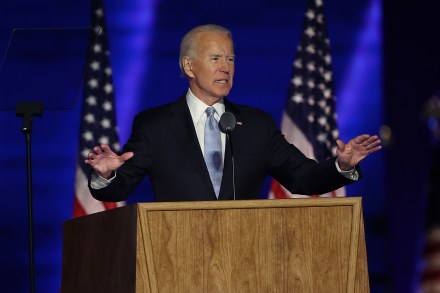
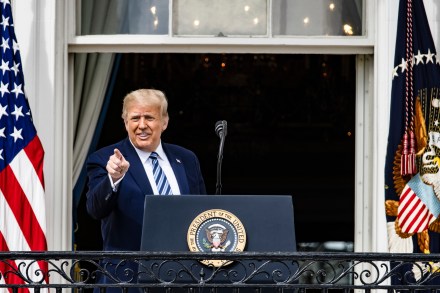
One era ends; another begins. As J-Lo sang her patriotic wine bar set at Joe Biden's inaugural in Washington DC, the outgoing president and his outgoing wife landed in Florida, Melania looking happy for the first time in four years because it was finally all over. Donald Trump's refusal to attend the inauguration reminded me of Gore Vidal's description of Richard Nixon's sulk after Watergate: 'He was simply acting out his Big Loser nature, and, in the process, he turned being a Big Loser into a perfect triumph by managing to lose the presidency in a way bigger and more original than anyone else had ever lost it before.' For the record, I enjoyed Joe's speech; particularly when he realised the microphone was on and he could stop shouting.


Should Trump be impeached?

From our UK edition

32 min listen

Freddy Gray talks to historian and Telegraph columnist Tim Stanley about the crazy week in US politics that has just happened - they discuss whether there's any point in impeaching Trump now; the importance of understanding exactly what happened on Wednesday; and what will happen to the Republican party after Trump.

Has Donald Trump already lost the election?

From our UK edition

17 min listen

Joe Biden is well ahead of Donald Trump in the polls, but few are willing to say that the three-time presidential hopeful will win November's election. Are commentators underplaying the Democrat's chances? Freddy Gray speaks to Tim Stanley, historian and leader writer at The Telegraph.

After liberalism

We’re entering the post-liberal moment. From Trump to Brexit, Ireland to Brazil, we’ve seen a number of revolts at the ballot box that point to a mass vote of no-confidence in the economic and cultural status quo — in other words, in 21st-century liberalism. The liberals aren’t taking it lying down. They’re doing their best to define post-liberalism in language they are most comfortable with, calling it ‘fascist’ or ‘communist’ — and sometimes the criticism is spot-on. But other times it is wholly inaccurate. One of the glaring paradoxes of the post-liberal moment is that many of the people involved in it want to rescue liberalism from itself.

liberalism post-liberal

How Republicans became the anti-Islam party

From our UK edition

Ilhan Omar will come up a lot in the 2020 US election. She’s part of the ‘Democratic Squad’ of congresswomen that Republicans hate, along with Alexandria Ocasio-Cortez, Ayanna Pressley and Rashida Tlaib — but she outshines them all by being a foreign-born hijabi who supports boycotting Israel and is accused of immigration fraud. If Donald Trump goes after Omar, it’ll polarise Democrats around her and conservatives around him, which is the role that Islam seems condemned to play in American politics: a trigger word to whip up the base. It prompts the question, why are Trump supporters so scared of Islam? And are their fears justified?

Capitalism in America: A History

From our UK edition

Donald J. Trump has sparked some soul- searching among US historians: has this happened before? Does it mean America has changed? Cue the self-laceration, cue the book deals. Two impressive volumes illustrate both agreement and disagreement, both concurring that America represents the search for something — but the jury’s out as to precisely what. Capitalism in America: A History is by an Economist writer (Adrian Wooldridge) and a former chair of the Federal Reserve (Alan Greenspan), so you can guess where they’re coming from. The book celebrates the American thirst for self-improvement and argues that the country has long benefited from a ‘creative destruction’ driven by the market and entrepreneurs. Here’s the story.

Father of the nation

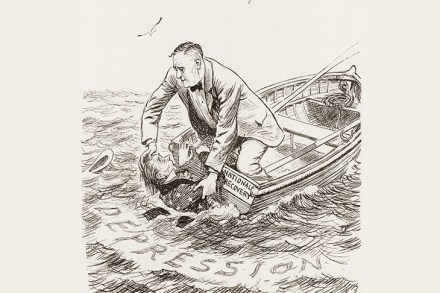
Franklin D. Roosevelt isn’t as popular as he once was. When Barack Obama won the 2008 election, he let it be known that he was reading a book about FDR, and tumbleweed blew through the newsrooms. Which is odd because for many decades FDR was every bit the model liberal as Ronald Reagan was the model conservative. Roosevelt was credited with ending the Great Depression, laying the foundations of a welfare state and leading America through the second world war — achievements for which he was rewarded with not one, not two but four election victories. And he did all of this despite being an elitist East Coaster with a wife who was very probably a lesbian.

Why I’m voting Tory for the first time ever

From our UK edition

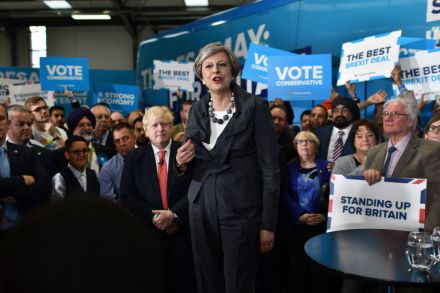
This is the first election in my life in which I shall vote Conservative. I voted Labour in the last local elections as a sort of last fling at the ballot box. But not this time. This time I’m going to go all the way with Theresa May. Like a lot of Eurosceptic Labour voters, I was drawn to May by her declaration that Brexit would mean Brexit. But Brexit has hardly come up in this campaign, and while the PM is said to have floundered, Labour has supposedly surged. Nevertheless, for me, and countless voters like me, the issues might have changed but the dynamic hasn’t. I don’t like Labour anymore. I do like Theresa May. This is the hardest thing to write. You see, I was born Labour and when you’re born Labour you’re supposed to bloody stay that way.

Another Scottish independence referendum? The Union can win it

From our UK edition

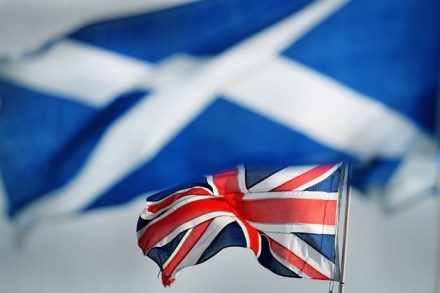
Fraser Nelson is joined by Alex Massie and James Forsyth to discuss IndyRef2: When will the politics ever end? Now Nicola Sturgeon says she wants a second Scottish independence referendum, and so we plunge ourselves – wearily but no less determined – into yet another fight to save our country. The nationalists operate on the principle of being a persistent irritant. Demand independence so often and so annoyingly that eventually the country just says: 'Have it, if it will shut you up.' But no. We proud Unionists cannot submit to the SNP’s logic that independence is 'only a matter of time'. We have to fight this. And we can win. First, let me shoot down the Brexit myth.

The passionate patriot

From our UK edition

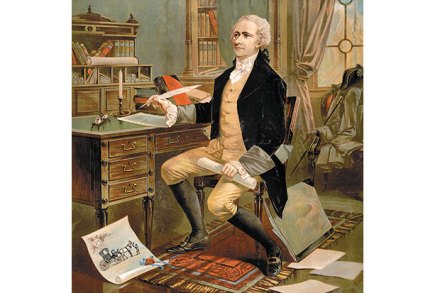
To anyone complaining that American politics in 2016 is uncivil, consider this: in 1804, the vice president of the United States shot the former Secretary of the Treasury in a duel. Alexander Hamilton, the retired secretary, probably fired first and aimed into a tree, to show he meant no harm. Vice president Aaron Burr, however, shot Hamilton in the abdomen and left him to die. He went home and had breakfast with a cousin, and failed to mention how he’d spent his morning. A few weeks later, Burr was back at his job, chairing the Senate. President Jefferson, who hated Hamilton, invited him to dinner. Trump calling Clinton a crook doesn’t compare. Ron Chernow’s magnificent biography of Hamilton is now out in paperback in the UK and has gained fame for inspiring a musical.

British Christians must start to think and act like a minority

From our UK edition

Rights compete for privileged status in a liberal society. The right to redefine one’s gender, for instance, conflicts with a woman’s right to undress in a room reserved strictly for women. The right to speak one’s mind on campus comes up against the right of students to live free from unwelcome opinions. And the right to articulate a deeply held religious belief crashes headlong into the right of a whole smorgasbord of groups who don’t want to hear it. Last year, a Christian bakery in Northern Ireland was fined for refusing to make a cake promoting gay marriage. The prosecution was backed by the Northern Ireland Equality Commission, which covered nearly £39,000 in legal fees. This story isn’t necessarily evidence of a conspiracy against true believers.

The Trump slump

From our UK edition

[audioplayer src="http://rss.acast.com/viewfrom22/theosbornesupremacy/media.mp3" title="Freddy Gray and Sebastian Payne discuss the rise of Donald Trump" startat=1607] Listen [/audioplayer]Lunatics with money are never ‘mad’, only eccentric. In America, they are also Republican presidential candidates. So Donald Trump, a barmy billionaire with a mouth bigger than his bank balance is leading the race to be the party’s next nominee. It’s a sad indictment of the American political process. And it is a distraction from how strong American conservatism could be. More than a dozen major Republicans are standing.

The sooner the Republicans stop Donald Trump, the sooner they can beat Hillary Clinton

From our UK edition

Lunatics with money are never 'mad', only eccentric. In America, they can also class as Republican presidential candidates. Hence Donald Trump – a barmy billionaire with a mouth bigger than his bank balance – is currently leading the race to be the party’s next nominee. It’s a sad indictment of the American political process. And it disguises how strong American conservatism could be if it only tried harder. So far, more than a dozen major Republicans have declared their candidacy. Jeb Bush stands out for his establishment support, Scott Walker for his credentials as a conservative governor who took on the unions, Marco Rubio for his charisma and ethnicity… and so on. In a field so incredibly wide, however, polling points are spread thin.

Fringe benefits | 9 April 2015

From our UK edition

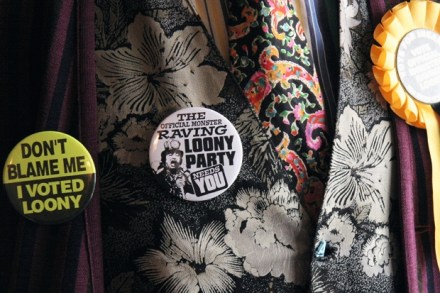
No election night is complete without a man dressed as King Arthur waving a plastic sword as the result is read out. Eccentricity is the bedrock of British democracy. The freedom of a madman to waste £500 to get on the ballot is precious. On these islands, we have a right to rave. And sometimes what we rant about is quite revealing. I’ve been fascinated by eccentric independent candidates ever since as a teenager I met Mr Mark Ellis, a perennial independent running against EU domination and casual littering. He used to patrol Sevenoaks high street with a shopping trolley, collecting rubbish. A profile in the local newspaper revealed that he slept on two chairs pushed together in his living room, and that he shared his house with a duck.

Rand Paul’s libertarian crusade will shake up the presidential race

From our UK edition

Finally, the presidential race got interesting. The thought of Hillary Clinton vs Jeb Bush was too much of a rerun of the same old thing: big government liberal vs big government conservative arguing about how best to spend Americans’ money. And they both share a taste for military excursions – white boots marching in foreign lands. Well, now there’s a candidate officially in the race who stands for something completely different. Rand Paul’s libertarian crusade could be about the most exciting candidacy in my political lifetime. It won’t star the most exciting candidate. Senator Paul (Kentucky) wears the standard uniform of the college Republican: blue blazer, red tie, grey slacks. The voice could send you to sleep; the face is forgettable.

Hangover? Try chewing on a deep-fried canary

From our UK edition

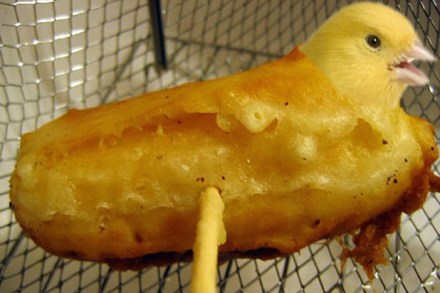
For hardened drinkers, looking for the perfect hangover cure is like the search for the fountain of youth. To drink and drink without any consequences is the stuff of fantasy – and it’s one that’s been indulged by countless civilisations. A return to one’s GCSE classics days proves it. It’s nice to know what Grumio really got up to in that culina when he wasn’t coquebatting. For the ancients, getting drunk was a sign of civilisation, proof of masculine virtue and bloody good fun.

Only capitalism can save Nigeria

From our UK edition

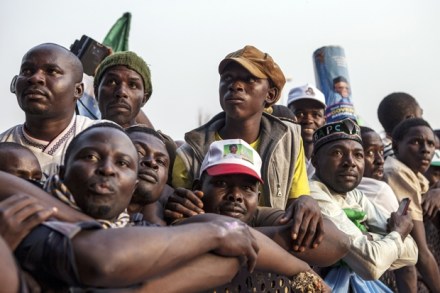
Abuja was eerily quiet when I arrived. The capital of Nigeria is normally bustling, but that morning the wide boulevards were empty. The red dust was undisturbed; the call to prayer echoed through the city like the sad lament of the lonely. There is an election approaching, and a lot of people take that as their cue to leave the country. You’ll find much of Nigeria’s ruling class in the Harrods food hall at this time. Although Abuja is far wealthier and more stable than most of Nigeria, its problems are representative of a country on the brink of disaster. Construction of the capital began in the 1970s, its layout heavily influenced by Milton Keynes. Today it is a mix of grand designs and organisational failure: my tour of the Ministry of Power was complicated by a power cut.

Return of the fairy-hunters

From our UK edition

If like me you get all your news from the Cornish Guardian, you may have spotted an article announcing that the Fairy Investigation Society is conducting a survey. They’re seeking information from anyone who has seen any pixies, elves or sprites — all on a strictly anonymous basis. I rang the man behind the research and he told me that in just three months, he’s had over 400 replies. An example: ‘I was walking down a field in Scotland when I noticed a winged being leaning up against the side of a sycamore tree. He was as tall as the trunk, maybe 15 feet.’ You might laugh it off, but the man was deadly serious — as are his informants.

Rand Paul is like Nigel Farage – except he might win

From our UK edition

When America’s National Institutes of Heath said that it hadn’t cured Ebola yet because of budget cuts, Senator Rand Paul had an acidic answer. No, he told an audience of Republicans, the problem was not underfunding. It was bad priorities. ‘Have you seen what the NIH spends money on?’ he asked. ‘$939,000 spent to discover whether or not male fruit flies would like to consort with younger female fruit flies. $117,000 spent to determine if most monkeys are right-handed and like to throw poop with their right hands.’ And best of all, $2.4 million for an ‘origami condom’, which suggests something shaped like a swan. In fact, it’s modelled on the accordion.