Tim Shipman

Tim Shipman

Tim Shipman is political editor of The Spectator.

Tim Shipman, Ben Clerkin, Maxwell Marlow & Hermione Eyre

From our UK edition

24 min listen

On this week’s Spectator Out Loud: looking back to 1973, Tim Shipman wonders how bad the energy crisis could get; Ben Clerkin interviews Steve Hilton, the former Cameron aide running to be California’s next governor; Maxwell Marlow explains how to solve the student debt crisis; and finally, ‘disorientatingly enjoyable’ is the verdict of Hermione Eyre as she reviews David Hockney at the Serpentine. Produced and presented by Patrick Gibbons.

Tim Shipman, Ben Clerkin, Maxwell Marlow & Hermione Eyre

Ten ways Trump is controlling us all

From our UK edition

Donald Trump is very likely the most consequential US President for the world and for British politics since Ronald Reagan, and arguably since Harry Truman. Everything he does is so, as the man would say himself, ‘yuge’, that it’s easy to overlook that he’s also the President whose actions have the most unintended consequences. Like the fluttering of the hummingbird’s wings that causes a hurricane halfway across the globe, Trump’s careening around the world stage is largely responsible for much of what is going on in British politics right now. This week is a case in point. Here are ten ways in which we are all in thrall to Trump, whether we like it or not: 1) The price of fuel is upPetrol hit £1.50 a litre for the first time in nearly two years.

Energy crisis: are we in 1973 territory?

Energy crisis: are we in 1973 territory?

From our UK edition

10 min listen

The panic has set in around the cabinet table about this energy crisis, and fears of history repeating itself. Tim Shipman writes in the magazine about the comparisons being made to 1973 and the Opec oil shock, with the government preparing for oil prices to reach £150 a barrel. What levers are available to the government to ease the economic fallout and 1970s-style inflation? And why is it that the UK is so uniquely impacted by this crisis? Oscar Edmondson speaks to Tim Shipman and Michael Simmons. Produced by Oscar Edmondson.

The curious case of Morgan McSweeney’s missing phone

From our UK edition

20 min listen

Questions are being asked about Morgan McSweeney's missing phone, which he reported stolen to police last year. What might seem like a minor case of petty theft actually has serious implications for the investigation into Peter Mandelson's appointment. It also raises questions about Keir Starmer's general approach to government. James Heale speaks to Tim Shipman and Cleo Watson, former special adviser to Boris Johnson, about the case – and also about how it can hurt public trust in government. Do you believe in cock up – or conspiracy? Produced by Oscar Edmondson and Patrick Gibbons.

The curious case of Morgan McSweeney's missing phone

To drill or not to drill, that is the question

From our UK edition

15 min listen

In the final Prime Minister's Questions before Easter recess, Kemi Badenoch pushed Keir Starmer to commit to new oil & gas drilling licences. The Conservatives spot an easy win here – cost of living concerns are rising as America's war with Iran continues. Plus, with a burgeoning welfare bill, the trade-offs are even trickier for Labour to resolve. Who should Labour target? Tim Shipman and Michael Simmons join Patrick Gibbons to discuss. Come for Tim's impression of the Prime Minister, and stay for Michael's very strong response when asked if renewables are the answer. Produced by Patrick Gibbons.

To drill or not to drill, that is the question

‘We’re into 1973 territory now’: How bad could the energy price crisis get?

The energy price surge caused by war in the Middle East has sent shockwaves through Westminster. It has pushed up inflation and the cost of borrowing, causing panic in the cabinet and the recognition that government intervention could be needed on a vast scale to support the cost of living. The Prime Minister told a private audience: ‘The assumption that the growth of the developed countries can proceed steadily on the basis of cheap energy has been shattered almost overnight.’ He further observed: ‘The problem is not simply one of inflation. It is the whole structure of the economy.’ In the Treasury there is something approaching a siege mentality. The Chancellor has ‘to spend [her] time firefighting’.

It’s Ed Miliband’s world – and we’re living in it

From our UK edition

23 min listen

Three big stories are on the agenda this morning: the war in Iran has dominated over the weekend, with Trump now failing to conceal his feelings towards Keir Starmer; Ed Miliband is also rising in profile, with those close to the cabinet briefing against him and his influence; and, finally, the Liaison Committee will sit later today, giving select committee chairs the opportunity to grill the Prime Minister. Will Keir Starmer manage to escape this week into a quiet recess? Tim Shipman and James Heale discuss. Produced by Megan McElroy.

It’s Ed Miliband’s world – and we’re living in it.

On the road with Nigel Farage

From our UK edition

30 min listen

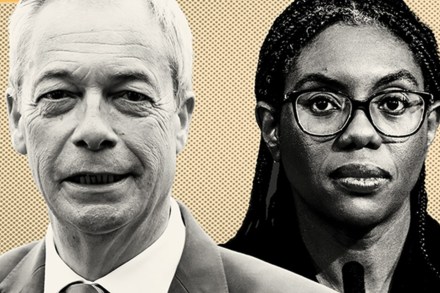
This week James Heale and Tim Shipman share a byline to tell the story of Reform since the 2024 election, and where they are going. Nigel Farage reveals he is talking to potential Blue Labour defectors, shifting his leadership style and offering a ‘less is more’ approach on policy. Essex and its resident Tory big beasts – Kemi Badenoch, James Cleverly and Priti Patel – are a major focus. Reform hopes to swallow the Tory vote come the 2029 election – ‘As long as Nigel is ahead of Badenoch,’ an adviser notes, ‘the Tory vote will disintegrate overnight.’ Also on the podcast, the Labour leadership contest (informally) started this week, with interventions from Angela Rayner and Andy Burnham. But are they right to put Labour members before the public? Tim and James discuss.

On the road with Nigel Farage

Five things we learned this week

From our UK edition

First of all, it’s farewell to Chuck Norris, the action movie star of such Hollywood classics (Generous – Ed.) as Delta Force II. The man who made beards fashionable, long before David Beckham dreamed of designer stubble, passed away at the venerable age of 86. Norris was one of those actors who bonded with politicians, bringing his tough guy chops to a bunch of Republicans, including Sarah Palin and Mike Huckabee. When he visited Benjamin Netanyahu, the Israeli PM said he could stand his security people down now that Chuck had arrived. Pity really, since he’s the kind of fellow who would have been sent to open up the Strait of Hormuz.

Britain’s decline – and how to reverse it | with John Bew

From our UK edition

48 min listen

In this special edition of Coffee House Shots, our political editor Tim Shipman is joined by historian, biographer and foreign policy adviser to four different prime ministers, John Bew. In his 7,000-word essay published in the New Statesman last week, John sets out the historical context which has contributed to the malaise and decline of the British state – and hypothesises that we are currently living in the ‘fourth great disruption’ to the political and economic order. He takes Tim through the previous three disruptions and the lessons that government needs to learn from them in order to stop the rot. Does the secret to forging a new place in the world order lie in fixing the machinery of government? Which figures from the past should we take inspiration from?

Britain’s decline – and how to reverse it | with John Bew

Net Zero vs AI: can Reeves convince Miliband?

From our UK edition

16 min listen

The Chancellor will deliver the annual Mais lecture today and is expected to focus on closer alignment with the EU, AI and improving Britain's economic geography ('levelling up' in all but name). While her comments on Europe might gain the most headlines, we're more curious about what she will say over AI – given the current geopolitical context. Given the energy requirements of AI, the Iran crisis has only further exposed the holes in Britain's energy policy – can Rachel Reeves convince Ed Miliband to adapt his policies? And is this about the Chancellor's political headroom as much as the economic?

Net Zero vs AI: can Reeves convince Miliband?

Is Labour sleepwalking back to the EU?

From our UK edition

Two big topics on the agenda today as Keir Starmer has his pitch – again – on the cost of living. He told us towards the start of the year that every minute not spent tackling the cost of living was a minute wasted, so what has he been doing in all that time? Also today, ahead of her Mais Lecture this week, Rachel Reeves has been laying the groundwork for closer ties with the European Union. This does seem like a change of rhetoric from the Chancellor, who is openly suggesting that Brexit was a mistake. So what would closer ties look like? And is this the only lever that remains for her to deliver growth? James Heale and Tim Shipman discuss. Produced by Megan McElroy.

When Mandelson could bring down Starmer

From our UK edition

Another day, another set of embarrassing revelations about Peter Mandelson. A photo has now emerged of Mandelson, Andrew Mountbatten-Windsor and Jeffrey Epstein all together, the first two wearing bath robes. That doesn’t change anything for Keir Starmer, but it reinforces the questions about his handling of the affair which were highlighted by the wafer-thin vetting exercise exposed by the papers released on Wednesday. There will be many bad days ahead for the Prime Minister Perhaps more extraordinary is the revelation in the paperback update of Gabriel Pogrund and Patrick Maguire’s book on Starmer, Get In, that the Prime Minister never once spoke to Mandelson before appointing him as ambassador to the US.

The Mandelson scandal exposes Starmer’s greatest flaw | with Gabriel Pogrund

The Mandelson scandal exposes Starmer’s greatest flaw | with Gabriel Pogrund

From our UK edition

15 min listen

Today we are delighted to be joined by the Sunday Times’ Gabriel Pogrund, whose book – Get In, which details Starmer’s rise to power – is out now in paperback with new revelations on the Peter Mandelson vetting process. It turns out that Keir Starmer did not even speak with his prospective US ambassador before offering him the biggest diplomatic position in Starmer's government. The whole scandal has exposed the prime minister’s startling lack of curiosity and a detachment from important process that seems especially baffling given his background as a lawyer. What is the reason behind this lack of curiosity? And how does Starmer compare to other prime ministers in recent memory? Oscar Edmondson speaks to Tim Shipman and Gabriel Pogrund. Produced by Oscar Edmondson.

America's Iran gamble – why the Royals could be Britain's Trump card

America’s Iran gamble – why the Royals could be Britain’s Trump card

From our UK edition

47 min listen

As oil prices rise, the Spectator’s cover story this week – written by deputy editor Freddy Gray – wonders if Trump’s gamble has backfired, and Operation Epic Fury could end up more like Operation Epic Fail. What does it mean to describe Trump’s plan as ‘failing’? And can we judge him by the same metrics that we have judged other presidents? For this week’s Edition, host William Moore is joined by political editor Tim Shipman, Bloomberg Opinion columnist Adrian Wooldrodge and actress and campaigner Sophie Winkleman. Adrian, author of Centrists of the Worlds Unite!, explains why comparisons with the 1930s might not be as hyperbolic as they seem – while Sophie sees logic in using the diplomatic power of Britain’s monarchy.

How will the Iran war end? | with Shashank Joshi

From our UK edition

26 min listen

In this special edition of Coffee House Shots, Tim Shipman is joined by defence editor at the Economist, Shashank Joshi. Two weeks in to the conflict in Iran, they give the definitive take on where we are at, the range of scenarios that the UK government are preparing for, and – crucially – how it could all end. Produced by Megan McElroy and Oscar Edmondson.

How will the Iran war end? | with Shashank Joshi

Starmer should be honest about why he picked Mandelson

From our UK edition

15 min listen

This afternoon we have had the first tranche of documents released by the government relating to the process by which Peter Mandelson was chosen to be US ambassador. Whilst we have got a clearer picture on the big question – how much Starmer and the government knew about Mandelson’s association with Epstein – Labour are not out of the woods. Quotes from Jonathan Powell reveal that the vetting process was rushed and that – he thought – they didn’t dig deep enough. There is also the small matter of Peter Mandelson’s request for a payout of over half a million pounds. Oscar Edmondson, Tim Shipman and Isabel Hardman discuss. Produced by Oscar Edmondson.

Starmer should be honest about why he picked Mandelson

Revealed: Keir Starmer’s new plan to get closer to the EU

A Labour MP, reflecting on the problems the Prime Minister faces over the war in Iran, observed this week: ‘Keir got it right, but things keep going wrong.’ His point was that Starmer kept Britain out of the Israeli-American air strikes, a position popular both with the parliamentary Labour party and the electorate, yet the impact of that conflict has laid bare three serious problems at the heart of the British state. First, there has been a fracturing of relations between Starmer and Britain’s defence chief, Air Chief Marshal Sir Richard Knighton. Second is the vulnerability of the economy to energy price shocks. Third is Ed Miliband’s net-zero crusade, which has put further pressure on the cost of living, Starmer’s biggest domestic problem.

Is Keir Starmer good in a crisis?

From our UK edition

19 min listen

Tim Shipman is joined by Isabel Hardman to discuss the domestic fallout from the conflict in Iran – from oil prices surging past $100 a barrel to renewed pressure on Britain’s cost-of-living crisis. They examine how the rising price of energy could derail Labour’s economic plans, why Rachel Reeves may face difficult choices on fuel duty and support for households, and whether Keir Starmer has the political authority to navigate another economic shock ahead of the May elections.

Is Keir Starmer good in a crisis?

Why we left the Foreign Office | Ben Judah & Ameer Kotecha

From our UK edition

35 min listen

Does Britain still have a coherent foreign policy? James Heale and Tim Shipman are joined by Ben Judah, former special adviser to David Lammy, and Ameer Kotecha, who recently resigned from the Foreign Office. Together they discuss why Britain’s diplomatic establishment is under growing criticism – from accusations that the department has become bloated and distracted by DEI, to Chagos and deeper concerns that Whitehall no longer has the expertise or strategic clarity needed in an increasingly unstable world. With wars raging from Ukraine to the Middle East and tensions rising with China, they ask whether Britain has adapted to a more chaotic global order – or whether the country is still operating with the assumptions of a different era.