Tim Shipman

Tim Shipman

Tim Shipman is political editor of The Spectator.

Rejoining the EU would cost £750m a week

Brexiteers behind Vote Leave’s victory in the 2016 referendum launched a new campaign group to keep the UK out of the European Union – by hitting Andy Burnham with the claim that going back in would cost Britain £750 million a week. Vote Leave’s internal mantra was always ‘double down’ when under pressure, so rather than resile from the notorious (but perfectly defendable) claim on the side of the famous red campaign bus, that EU membership in 2016 cost £350 million a week, they have come out firing, with calculations that changes to the EU would be more than double. The £750 million a week figure is based on expected gross budget contributions to Brussels of £39 billion a year, up from £19.

Pat McFadden on his plans to get the young into work

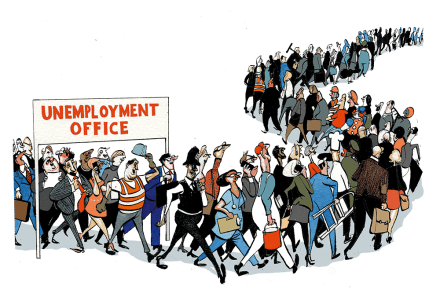
Pat McFadden, the Work and Pensions Secretary, was in a Job Centre in Bellshill, outside Glasgow, when he realised the urgency of the task he had assigned to Alan Milburn, the youth benefits tsar whose report will be published on Tuesday – the first step to reducing the burgeoning benefits budget. ‘The area manager said to me she ran a network of 13 Job Centres across central and east Scotland,’ he says. ‘Over 40 per cent of the young people that she was dealing with were what they call “on the health journey”, which is DWP’s term for either claiming or on the way to claiming long-term sickness benefits. That’s people under 25. I was really struck by that.’ Close to one million young people are not in education, employment or training (Neets).

Burnham has finally come clean about the welfare bill

Andy Burnham has this afternoon admitted the least well-kept secret in Whitehall – that his planned changes to benefits will at first see costs rise. In a succession of broadcast interviews, the PM pointedly did not say when the overall bill would start to fall. We are now clearly in the run-up to the publication of the Milburn review into the million young people who are not in education, employment or training (otherwise known as Neets). Burnham told Times Radio that this state of affairs left these youngsters ‘without hope’ and that ‘wholesale change’ would be needed.  ‘Of course, in time, the savings will come, and there will be a crossover point,’ he said, ‘but there will be a need to invest up front in young people.

Kim Darroch: ‘Trump was conned by Netanyahu’ over Iran

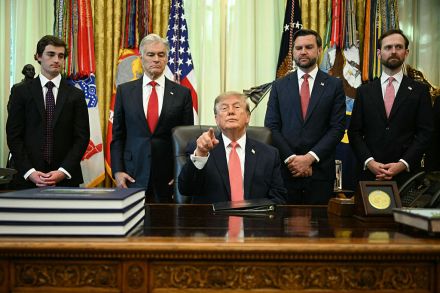
Donald Trump’s midterm defeat has thrown fresh uncertainty over the future of his presidency – and his foreign policy.On today’s Coffee House Shots, Tim Shipman speaks to Lord Kim Darroch, former British ambassador to Washington, about what happens next. With JD Vance already positioning himself for 2028, could the MAGA movement be starting to fracture? And how much damage has Trump’s approach to Iran done to his standing at home?They also discuss whether Andy Burnham can turn the crisis into an opportunity for Britain, who might succeed Trump in the White House, and why a deal to end the war in Ukraine still looks a long way off.Produced by Abigail Brierley. audio_URL:https://assets.pippa.io/shows/68359028e1abc4be6b032cd1/1793884037895-7a57add2-6ee8-4318-b899-04491b2c6ff3.

The blue tsunami: what does it mean for Britain?

12 min listen

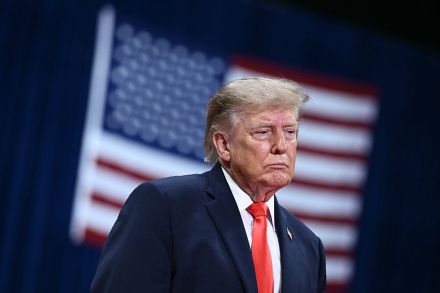
Donald Trump has suffered a generational defeat in the US midterms, with Democrats making sweeping gains across the country. Has the Trump coalition finally fallen apart? And what does the result mean for the future of the Republican Party?James Heale is joined by US Editor Freddy Gray and Political Editor Tim Shipman to discuss the fallout. Is this a vote against Trump rather than an endorsement of the Democrats? And could the result pave the way for a 2028 presidential run by Ron DeSantis or JD Vance?Plus: could Trump's response to the defeat reignite tensions with Iran, and what might that mean for Britain? And in Westminster, who came out on top at PMQs, as Alex Burghart faced Louise Haigh?Produced by Abigail Brierley. audio_URL:https://assets.pippa.

Will Trump and Netanyahu launch another round of strikes on Iran?

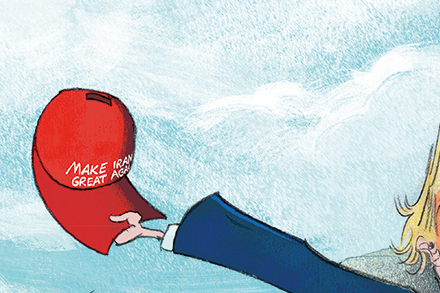
An American political operator contacted me last week, before the blue tidal wave swept aside Donald Trump’s Republicans in Congress, with his favourite quote from the 1997 movie Wag the Dog, about an American president starting a war to distract from domestic difficulties: ‘Change the story, change the lead,’ Robert De Niro’s character declares.  The politico, who once ran an abortive Democrat campaign for president, then predicted: ‘The bigger the defeat, the bigger the bombs Trump drops on Iran.’ At that point, the results of the Israeli elections had already eroded Benjamin Netanyahu’s chances of remaining Prime Minister and left two of the most dominant leaders of the last decade with their backs to the wall.

Goodbye to hardline immigration reforms

Shabana Mahmood has unveiled her long-awaited reforms to immigration rules, including on indefinite leave to remain, and with them the partial climbdown briefed over the past few days. Noa Hoffman is joined by Tim Shipman and James Heale to examine what has and has not changed in the new plans.

The real meaning of the Budget

I’ve been writing about politics for 25 years and, putting aside the two years (2007-09) I was based in Washington, John Healey’s first Budget on Wednesday was by some distance the most boring I have sat through. As I wrote in my column this week and explained in our live Budget event on Wednesday evening, one possible explanation is that Andy Burnham wants to keep the window open for an early general election, keeping the show on the road and not spooking the markets, while Labour’s poll numbers creep upwards. The markets gave a shrug, but so did everyone else. This was not the end to 40 years of neo-liberalism or the transformation of the British economy and society that Burnham promised. So what is he up to?

The OBR’s verdict on Healey

John Healey’s budget on Wednesday contained 98 measures, the most since 2010, and yet the OBR appears to be questioning the extent of his £15 billion in headroom. Tim Shipman speaks to the OBR’s David Miles about a tax take heading for a post-war high, the cuts pencilled in for the end of the parliament, and why, by his reckoning, Britain is 25% poorer than it expected to be in 2008.

The Spectator post-Budget briefing

29 min listen

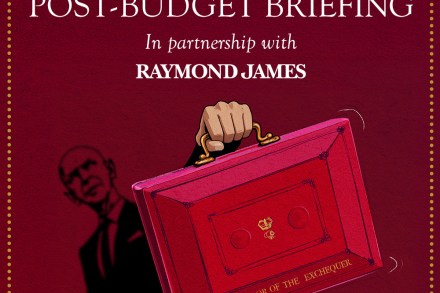
The Spectator’s editor Michael Gove, political editor Tim Shipman, economics editor Michael Simmons, economist and CEO of the Great British Business Council Catherine McBride and Harry Bell, director of financial planning at Raymond James, will give their insights into the autumn Budget, just hours after it is announced.

Is Burnham preparing to call a December election?

What is the purpose of a Budget? To stabilise the national finances? To kickstart economic growth? If you’re John Healey, it may be to show the markets that you’re fiscally responsible and the public finances are safe in your hands. If you’re Andy Burnham, the goal is to show the public that you’re trying to do something about the rising cost of living – and to convince Labour MPs that they were right to give you the job. But Burnham also has big plans to transform the country and this was a Budget more about tinkering than transformation. Yes, defence will get £5 billion more by letting the National Wealth Fund borrow off the public balance sheet to invest in defence companies.

SAS witch hunt: is Britain betraying its own special forces?

30 min listen

Just days after The Sunday Times revealed that five SAS soldiers were sent back into the war zone while under a three-year murder investigation, MPs passed the Northern Ireland Troubles Bill, which the SAS Regimental Association has threatened to challenge in the High Court. To understand it's implications, Tim Shipman speaks to Richard Williams, former commanding officer of the SAS, about lawfare, the chain of command and what it means for Britain’s standing with Washington. Produced by Oscar Edmondson and Henry Lloyd.

Drill Andy drill! – Burnham’s small victory

A week before the budget, and hours after ministers approved drilling at the Jackdaw gas field, Andy Burnham faced off with Kemi Badenoch at Prime Minister’s Questions in what James Heale reckons was the PM’s first win in the Commons since taking office. James and Isabel Hardman join Tim Shipman to dispute the score, pick over what Badenoch missed on welfare and immigration, and work out why John Healey’s budget may be smaller than expected.

Burnham’s unpopularity in Scotland makes a general election less likely

Andy Burnham has gone to Scotland, where the SNP annual conference is under way in Aberdeen. In his speech at Labour’s get together in Liverpool, he gave one of the most passionate defences of the Union by a major British politician since the Scottish referendum 12 years ago. Today he delivered a speech on devolution 150 miles away in Lanarkshire. He invited the SNP to join him in pushing power out of the capital and into the regions. Kemi Badenoch, the Tory leader, is also north of the border, urging Burnham to rule out another independence referendum. John Swinney, the SNP leader and First Minister, of course, is busy arguing that if Burnham wants to revisit the Brexit referendum result, the Scots should be allowed to have another go too.

Does Burnham have a foreign policy?

As Andy Burnham rolls out the red carpet for Volodymyr Zelensky in Downing Street, he has publicly sided with Kyiv against the Trump administration, days after the US President called for Zelensky to be replaced. Noa Hoffman is joined by James Heale and Tim Shipman to weigh up the politics, and to ask whether Ed Miliband’s desire to be seen as a saviour over Israel-Palestine has backfired, with friends of Jonathan Powell, the National Security Adviser, now saying he is likely to quit.

Ed Davey sees off a coup

After last night’s botched coup against the Liberal Democrat leader, Sir Ed Davey, and a rather temperate Prime Minister’s Questions in the House of Commons today, James Heale is joined by Isabel Hardman and Tim Shipman to review the events of the last 24 hours.

Does Andy Burnham actually have a foreign policy?

It often takes an outsider to see us most clearly. When I had breakfast with the ambassador of an EU country last week he asked me: ‘What is the Burnham government’s foreign policy? Because it seems to me there is only domestic policy conducted on the international stage.’ Keir Starmer and David Lammy’s approach was ‘progressive realism’. Under New Labour, Robin Cook advanced an ‘ethical foreign policy’. Andy Burnham, however, appears to have little interest, leaving the details to Ed Miliband, the Foreign Secretary. As a Labour peer notes: ‘We have Andy’s vibes and Ed’s conscience.

Is Polanski finished? – Labour crushes Green challenge in North London

Labour has held Holborn and St Pancras in the first major electoral test of the post-Starmer era – but what does the result tell us about the state of the left? James Heale is joined by Tim Shipman and More in Common’s Luke Tryl to discuss Andy Burnham’s appeal, Zack Polanski’s problems and whether the Greens have already missed their moment. Plus: are the Conservatives beginning to squeeze Reform, and is two-party politics making a comeback? Produced by Oscar Edmondson.

Fourteen things we learned from Kemi Badenoch’s Tory conference speech

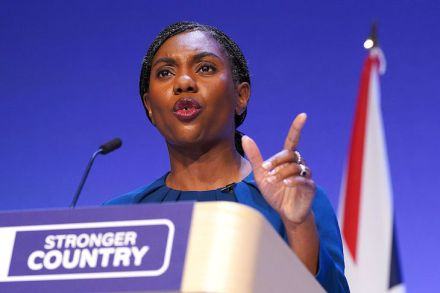
Kemi Badenoch delivered her Conservative party conference speech in Birmingham this afternoon. Here are fourteen things we learned from her speech: 1) Kemi Badenoch has her tail up Anyone who read my interview with the Conservative leader last week, where she claimed: ‘I get better every day,’ knows that Badenoch is not lacking for confidence, having turned her personal prospects around with a barnstorming speech to the party faithful at last year’s annual conference. Today she seemed confident in herself, her views and the arguments she wants to make — though the delivery was a little less urgent than last year, the pauses too prevalent and the energy a little thin until the final ten minutes. Badenoch’s plan is to remind people of how toxic that 2016-19 period was.