Thomas Casemore

Thomas Casemore is a writer and teacher. He is the founder of The Case For More Substack, where he publishes regular essays on politics, culture, and civilisation.

Why Meryl Streep shouldn’t voice Aslan

From our UK edition

Growing up in an evangelical Christian household, it will hardly surprise you to learn that I was a big fan of C.S. Lewis’s fictional children’s series The Chronicles of Narnia. Pictured below is my own copy; one I pored over as a child, continue to deeply treasure, and look forward to reading to my own daughter in a few years’ time. When in 2005, Andrew Adamson’s film, The Lion, the Witch and the Wardrobe, arrived in cinemas, I was amazed to see the story come to life. In subsequent years, it became one of my favourite films. As a boy, I wanted, and believed, that one day I could be brave like Peter. As I grew to understand the story as an older child, I perhaps increasingly wanted to believe that I could be redeemed like Edmund.

Why are white British pupils a minority at grammar schools?

From our UK edition

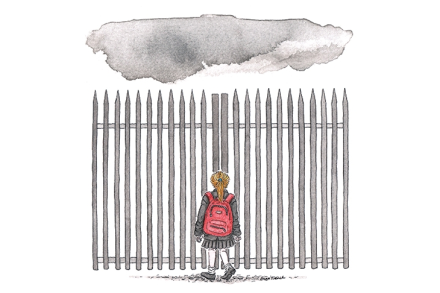
White British students have become a minority in England’s grammar schools. In 2026, white British children made up just 44 per cent of grammar-school pupils, compared to 66 per cent in 2016. Some cultures appear to have a different attitude towards education than some white British families This story, based on data from the DfE, has been reported on in various forms since June this year, but has now been picked up again by the press, and reposted by various people online, like Restore leader Rupert Lowe. What though is going on? Why has the proportion of white British students dropped so much? Having experienced grammar-schools both as a pupil and as a teacher, I feel I am well positioned to talk about this subject.

Private schools are part of Britain’s cultural inheritance – and Labour is squandering it 

From our UK edition

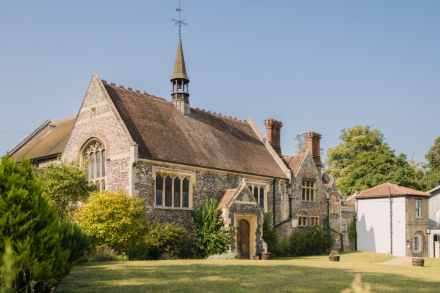
On 31 August, one of England’s oldest schools closed its doors forever, after almost 14th centuries. A thread connecting modern Britain to its past has been quietly severed.  Thetford Grammar’s origins can be traced back to ad 631 when King Sigebert of East Anglia founded a monastery on the site. Two of its classrooms are named after Dean Bund and Bishop Herbert De Losinga, who wrote about the school in c. 1114. Despite a hiatus in 1496, education continued in 1566 with the re-founding by Sir Richard Fulmerston.  The main school site holds within it a great deal of history too. The ruins of the old Blackfriars monastery are woven into the later buildings, and an 11th-century depiction of the tree of life sits over the doors to Old School.

The people of Thetford deserve empathy

From our UK edition

Over the last four nights, unrest has broken out in the small Norfolk town of Thetford over the housing of migrants in HMOs within the local estates. Depending on your choice of media, you will see a range of reactions to the unrest, ranging from the rare ‘mostly peaceful protest’, to the more common ‘thuggery’, ‘violence’, and ‘rioting’. I am hesitant to take either side, and so for the time being will continue to refer to it as precisely that – ‘unrest’. As a Thetfordian myself, though, having seen the responses of some of those involved and watched local footage, some of the reports about the unrest are exaggerated.

The growing anger about the RAF Barnham asylum plan

From our UK edition

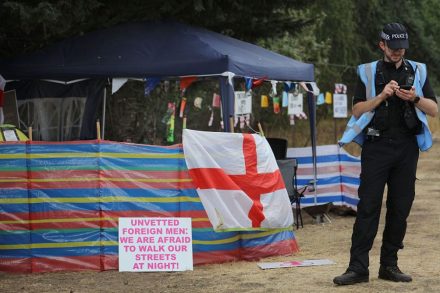
Last week, it was announced after much speculation that migrants would be housed in former military sites across the country; namely, RAF Barnham, MoD Bicester and RAF Linton-on-Ouse. I live in the nearest town near to RAF Barnham, Thetford, and on Sunday went along to a protest there about the accommodation plan. I have my own concerns about the move, given I live here with my wife and daughter. But I’m also a relatively new arrival to the area and so mainly went to hear from people who have been here for a longer time.