Theo Davies-Lewis

Theo Davies-Lewis is an associate director at FGS Global and a political commentator on Welsh affairs

Is Welsh devo-scepticism beginning to unravel?

From our UK edition

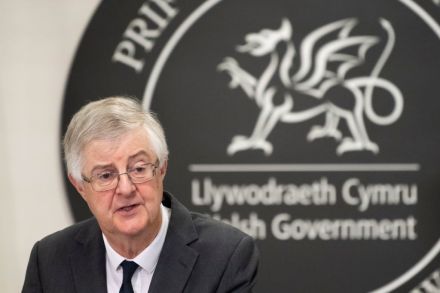
Calls to abolish the Welsh parliament are nothing new: Wales rejected devolution in 1979 and voted only by the smallest of margins for partial self-government almost 20 years later. In spite of this, the Welsh political establishment have embraced the potential of devolved politics over the last two decades. And so the devo-sceptics have never had a way to deliver their mission. But they didn’t go away. Quite the opposite: abolitionists have been given a new lease of life throughout the last 12 months. They have latched on to the backward perception that the Welsh cannot govern themselves, and have attacked Mark Drakeford and Labour throughout the pandemic for making different Covid decisions to London ‘for the sake of it’.


Welsh Labour’s Red Wall is crumbling

From our UK edition

For a long time, Lord Mandelson’s famous quip that the people of south Wales ‘will always vote Labour because they have nowhere else to go’ rang true. The party dethroned the Liberals in 1922 to become Wales’s voice at Westminster and have won every general election since. In more recent times the onset of devolution presented a new opportunity for Labour to dominate in a new seat of power in Cardiff Bay. They have done just that: the party has been in government in Wales without serious challenge for over two decades. The coronavirus crisis has been a relatively successful period for Welsh Labour too.

The 80-minute nationalism of Wales vs England

From our UK edition

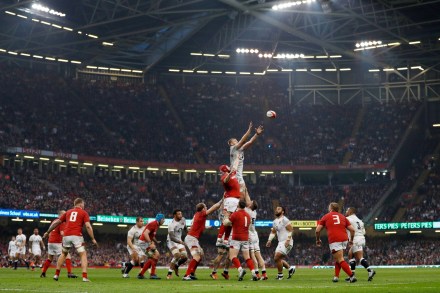
Every year, one match during the Six Nations – either in the heart of Cardiff or the depths of West London – sets the heart rate of Welsh rugby fans to dangerous levels. When Wales face England this weekend there is no doubt that millions west of Offa’s Dyke will be captivated by one of the oldest rivalries in sport. England versus Wales is a battle steeped in rugby history. In modern times it has produced moments etched in Welsh rugby folklore: Scott Gibbs’ blistering try in 1999 that robbed England of a Grand Slam at Wembley; Gavin Henson’s long-range kick in Cardiff six years later, which raised the curtain for a new era of the sport in Wales; and a nail-biting win at Twickenham during the World Cup in 2015.

Why the Welsh Tory leader has to go

From our UK edition

For a party that is so obsessed with bursting the ‘Cardiff Bay Bubble’, the Welsh Conservatives certainly enjoy the Senedd’s tearoom. This week reports emerged that Tory members of the Senedd, including party leader Paul Davies, drank alcohol on Welsh parliament premises, days after a ban on serving it in pubs took effect. A Senedd commission report confirmed today there was a ‘possible’ breach of rules and referred the incident to Cardiff city council and the standards commissioner. It's miserable timing for the Tories, coming four months before an election. All parties involved insist they haven't broken any Covid rules. But while Labour's Alun Davies has been suspended by his party, the Tories involved have not.

Wales’ vaccine problems mount for Mark Drakeford

From our UK edition

Mark Drakeford has been a popular figure throughout the pandemic. The Welsh First Minister’s authoritative grasp of detail and his professorial briefings have helped foster a sense of national confidence that ministers in Cardiff have a better grip on the public health emergency than politicians in Westminster. Today’s Welsh Barometer poll for ITV Cymru reaffirms that view: it shows overwhelming public support for the lockdown restrictions introduced by the Welsh government before Christmas. This popular support for the Labour government is no small thing to overlook; the Welsh public have embraced devolved politics and feel comfortable diverging from policy set in London. And with a new year comes new opportunities for varying strategies across the UK to combat the virus.

Has Wales turned on Mark Drakeford over Covid?

From our UK edition

11 December has long stirred the imagination of the Welsh. On this day in 1282, the last native Prince of Wales, Llywelyn ap Gruffudd, was slain by Edward I’s army at Cilmeri. The Tywysog’s head was then apparently taken to the Tower of London and put on display for 15 years. The Welsh he left behind were first conquered and later assimilated into their larger neighbour – marking the beginning of the ancient political, cultural and economic partnership between Wales and England. Nobody has credibly challenged the union since. Welsh legend has it that we will eventually be rescued from our English captors by Y Mab Darogan: a prophesised son of destiny.

Mocking the Welsh is still the last permitted bigotry

From our UK edition

Even after Wales voted marginally for a form self-government in 1997, there was incredulity that these remnants of Celtic antiquity thought they could look after their own affairs. Wales’ former first minister, Carwyn Jones, recalled what he saw as ‘casual racism’ towards the Welsh that still existed in the early years of devolution: ‘How incredible you Welsh feel that you can govern yourselves! This great experiment of devolution!’, was apparently the reaction of many in Whitehall.  After 20 years of devolution, not much has changed.

Wales is beginning to split from the rest of Britain

From our UK edition

‘I believe in the United Kingdom and in a successful United Kingdom’. For a committed unionist, Labour’s first minister of Wales, Mark Drakeford, has done more than most to fan the flames of nationalism during Covid-19. In taking a markedly more cautious and communitarian approach to the pandemic compared to Downing Street, Drakeford has managed to both improve his approval ratings and inadvertently led the resurgence of our long-forgotten independence movement. Wales is definitely not the same place it was six months ago. The Welsh government’s latest divergence from Westminster is its most dramatic yet: it has announced a travel ban from Covid hotspots across the UK into Wales.

Beg, borrow or steel: the case for saving Port Talbot

From our UK edition

Growing up in south Wales, it is hard to escape the past. More than most other tired industrial regions of Britain, there is still a strange nostalgia of days gone by. Heavy industry and manufacturing gave us Tinopolis (Llanelli), Copperopolis (Swansea) and Treasure Island (Port Talbot). Although it is only the latter that has managed to drag itself through economic depression, Thatcherism, and globalisation to the 21st century. Now, at long last, the day of reckoning fast approaches for Port Talbot’s steelworks. At the start of the pandemic, the plant’s owners Tata Steel pleaded for a £500 million government loan. Then it offered up a £900 million stake in the company to the British state.

Keir Starmer’s Welsh nationalism problem

From our UK edition

There is no region of the UK where Labour has dominated more – both politically and culturally – than Wales. Since 1922, the party has consistently won general elections there, and has ruled Cardiff’s devolved government relatively unchallenged since it was established in 1999. But Keir Starmer would be wise to keep his eye on events in Wales as he seeks to outflank the Prime Minister. The surprising impact of this Covid crisis has been a surge in Welsh nationalism, which until now was a slumberous movement reserved for the radicals of Plaid Cymru and Welsh football fans.

What Boris can learn from David Lloyd George

From our UK edition

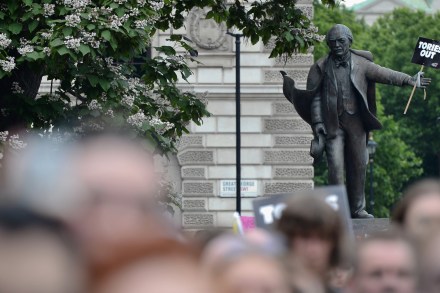
The question of nationalism within the United Kingdom is not a new one. The popularity of self-governance and separatism has ebbed and flowed, but it has been a constant force that has strafed against the Union. If Boris Johnson is truly intent on preserving the United Kingdom then he would do well to look to others who have navigated the nationalist question. One such figure is surely David Lloyd George, the architect of the modern UK settlement who secured the union of Great Britain and Northern Ireland by resolving the Irish question during the post-war coalition. For all this, however, he spent much of his career as the gadfly on Welsh issues.

It’s time to devolve the Welsh Conservatives

From our UK edition

Coronavirus has exposed the main weakness of Welsh Conservatives: as an essentially regional branch of an English party, its success has always relied on its national parent. This structure has made it a strong political force too. In December, the sweeping majority Boris Johnson won was largely down to his successful penetration of Red Wall seats, many of which were in North Wales. But as Welsh support for the UK government’s response to the pandemic continues to plummet – while Labour first minister Mark Drakeford’s approval ratings soar, coinciding with an interesting surge of support for an independent Wales – it is evident that ahead of next year’s Senedd elections, the Welsh Conservatives should seek to distance themselves from their London HQ.

Why Wales and Westminster don’t agree on the lockdown

From our UK edition

Nicola Sturgeon is a familiar figure to many even south of the border. But while Scotland's nationalists are frequently seen and heard on the airwaves in England, the same isn't true of Wales's politicians. If you ask a Brit to name the first minister of Wales, you wouldn't be surprised if they struggled to answer. But coronavirus has given Wales a new prominence – not least in the country choosing to go it alone in its response to tweaking lockdown rules. It seems all it took was a pandemic to prove that the Welsh, not just the Scots, have a competent parliament and leader to make decisions. Over the last couple of weeks, the Welsh government has ramped up efforts to communicate how its policies differ to those made in Westminster.