The Spectator

Letters: How Nicola Sturgeon outdoes Boris

Ask the English Sir: Toby Young rightly criticises the juvenile posturing of the devolved governments of the Union over Covid-19 (No sacred cows, 24 October). Each of these governments has implemented extreme lockdown measures without consideration of their cost to the taxpayer. As 90 per cent of British taxpayers are English, this represents an egregious example of ‘taxation without representation’. In contrast, I watched the Commons announcement of a Tier 3 lockdown in the north of England, which was followed by an opposition reply, and then a reply from the SNP. Surely I wasn’t the only Englishman to ask: ‘What’s it got to do with them?’ Toby Young is right to call for a new referendum to bring this nonsense to a halt.

Portrait of the week: Shopping bans in Wales, soft drinks in Scotland and stowaways at sea

Home Wales, entering a 17-day ‘firebreak’, closed most shops by law but then tried to stop supermarkets selling ‘non-essential’ items such as bedding, kettles and smoke alarms. At the beginning of the week, Sunday 25 October, total deaths (within 28 days of testing positive for the coronavirus) had stood at 44,745, including 1,166 reported in the past week, compared with 819 the week before. In England, Nottingham entered the most severe restrictions,Tier 3, taking the number of people so restricted to 7.9 million (in Liverpool, Greater Manchester, Lancashire, South Yorkshire and Warrington).

Where is there water in the solar system?

The Moon under water Nasa scientists using spectrometers claim to have found good evidence of water on the surface of the Moon. Where else in the solar system could you potentially go for a dip? — Signs of hidden oceans have been detected on Jupiter’s moons Ganymede, Europa and Callisto and on Saturn’s moons Titan and Enceladus. The latter is also believed to have icy geysers. Water is also believed to exist in craters on Mercury. — There are signs of ample water having been on Mars in the past, although most is believed to have been stripped away along with its atmosphere. The planet may, however, still have water beneath its surface and locked in ice caps at its poles. Free school meals How many children qualify for free school meals? In January, 15.

2478: Namesakes – solution

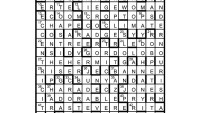
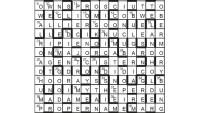
The lyrics of the perimetric I’M POPEYE THE SAILOR MAN and FALLING IN LOVE AGAIN were written by Sammy Lerner, while the lyricist of THE RAIN IN SPAIN and I TALK TO THE TREES (3D/16) was Alan Jay Lerner. LERNER (in the tenth row) was to be shaded.

The final 2020 presidential debate — live blog

From our US edition

8:30 p.m. ET — Matt McDonald: Hello and welcome to The Spectator’s live blog for the second and final debate between President Donald Trump and former vice president Joe Biden. Tonight's proceedings kick off in 30 minutes at Belmont University in Nashville, Tennessee. Hopefully we can offer a better quality of debate… 8:31 p.m. ET — Amber Athey: I just took an hour-long boomer nap to really simulate the experience of Biden and Trump preparing for the debate stage. Feeling very refreshed and ready to call anything I disagree with Russian disinformation. 8:32 p.m. ET — Chadwick Moore: I'm wondering if Trump goes in attack-dog style again it will be more effective this time, given the scandals.

final debate

How many school teachers are male?

Special Offa A regulation passed by the Welsh government to prevent people travelling from Covid hotspots in England has brought comparisons to Offa’s Dyke. — There is no firm evidence that the dyke, which takes its name from the king of Mercia between ad 727 and 796, even stretched along the entire English-Welsh border. Moreover, some of the sections which do survive have been dated as early as ad 430, 300 years before Offa’s reign. But whoever built it, its design seems to confirm that it was designed to keep the Welsh out of England rather than the other way round: the ditch is on the west, Welsh side and the dyke takes such a path as to ensure that there are uninterrupted distant views into Wales.

Letters: why Scots want independence

State of the Union Sir: Writing in a week that an opinion poll shows 58 per cent support for independence in Scotland, it seems bizarre for Professor Tombs to claim that commentators are ignoring ‘the death throes of separatism’ (‘Out together’, 17 October). He argues that nationalist supporters rely on the Brexit and Covid-19 crises to advance their cause, and that they will be in retreat once things return to normal. Then, once doubts begin to bubble up about the financial and economic uncertainties of independence, Scottish voters will return to the unionist cause. These arguments may give him some comfort, but here in Scotland they seem unreal.

End the Sage secrecy

At the beginning of the Covid-19 crisis it was easy to see why the Prime Minister was so keen to be seen to ‘follow the science’. He had a pandemic plan, designed by past governments, to be guided by the medical facts and expert judgment. There was to be no role for politics. He held press briefings at which he was flanked by the chief medical officer and chief scientific officer, armed with charts and graphs, making it known that everything he did hinged on their advice. At first, we were not even allowed to know the identity of the 50 men and women who sit on the Scientific Advisory Group for Emergencies (Sage). Now they have become the most influential group of people in the country, whose decisions shape the lives of millions.

2477: Rendezvous – solution

The unclued lights take an extra letter to make BRAMBLING (1A), BUDGIE (12A), STARLING (14A), REDSTART (23A), BRANCHER (27A), TURACO (34A), STILT (35A) and CHOUGH (38A), which could then meet at a BIRDBATH.

Portrait of the week: new alerts, birthday honours and fires on Kilimanjaro

Home ‘The weeks and months ahead will continue to be difficult and will test the mettle of this country,’ Boris Johnson, the Prime Minister, said in the Commons. In a complicated new system meant to be a simplification, English regions were put into one of three tiers of alert level: 1, medium; 2, high; or 3, very high, according to the proportion of coronavirus cases there. In tier 3, further local restrictions could be added. Liverpool was selected for tier 3, in which betting shops and libraries would close and pubs too, unless they sold main meals. Sir Keir Starmer, the leader of the opposition, called for a two- or three-week circuit-breaker national lockdown, with closure of pubs and restaurants, but not of schools.

Letters: what unites the two sides of the mask debate

Wind worries Sir: You are right to side with the 2013 version of Boris Johnson, when he claimed that wind power could not pull the skin off a rice pudding (‘Boris’s second wind’, 10 October). However, it was wrong to claim that offshore wind at £40 per megawatt hour makes Hinkley Point C, at over twice that price, look like a bad deal. The nuclear plant will be able to provide reliable, constant baseload power for up to 50 years. A wind plant will provide power only when the wind is blowing (and not blowing too hard). To provide reliable baseload requires fossil-fuelled backup. Second, the £40 per megawatt hour is the current strike price offered by the winners of projects to build new capacity.

The truth about race and pay in modern Britain

When the Black Lives Matter protests struck London in the same week that Public Health England published a report into the higher death rate from Covid among the black and ethnic minority population, the Prime Minister did not quite know how to react. He did what modern Prime Ministers so often do when presented with a little difficulty: he kicked the matter into touch by appointing a commission — on ‘race and ethnic disparities’. At least the person charged with overseeing the commission, Equalities Minister Kemi Badenoch, was brave enough to challenge those who were lazily trying to make out Britain is a racist hellhole. Britain is, she asserted in the Commons, ‘one of the best countries in the world to be a black person’.

Now the Tories must make it their mission to repair the country

The centrepiece of Boris Johnson’s speech to Tory party conference this year was his Damascene conversion to the merits of wind farms. Some people used to sneer and say wind power wouldn’t pull the skin off a rice pudding, he said — referring, of course, to himself, writing in 2013. Now, his post-Covid plan for Britain is wind farms powering every home by the end of the decade. But the Prime Minister was right first time. When he was dismissing wind power, it was eye-wateringly expensive and was forecast to stay that way for the foreseeable future. No one envisaged, then, how global competition and technology would force prices down.