The Spectator

Portrait of the year: Russia invades Ukraine, the Queen dies and Britain gets through three prime ministers

From our UK edition

January Civilians participate in a Kyiv Territorial Defence unit training session as Russia amasses troops on its border, 29 January 2022 (Getty Images) The first day of the year reached 16.3°C in St James’s Park, London. In France, 874 cars were set alight for the new year. Southern Railway suspended services because of staff absence through Covid. The legal obligation to wear face coverings in England ended. Sue Gray delivered her report into Downing Street parties. Together Energy became the 28th energy supplier to go bust as wholesale gas prices rose. Inflation reached 5.4 per cent. Some 1,339 migrants crossed the Channel in small craft. Around 100,000 Russian troops massed on the Ukraine border.

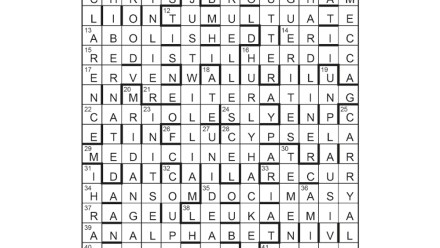
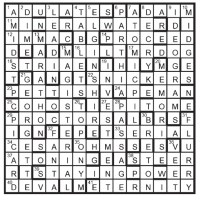
2583: Out of place – solution

From our UK edition

The unclued Across lights are British place-names beginning with P, L, A, C and E and the unclued Down lights are anagrams (i.e. they are ‘out of place’) of these place-names.

Letters: The politics of easy-peelers

From our UK edition

Divided we stand Sir: I was pleased to see that Jenny McCartney picked up on the recent poll from the Irish Times which took a lot of air out of the Irish Unity hot air balloon (‘A bridge too far’, 10 December). British citizens in Northern Ireland have been told for years that a united Ireland is inevitable and indeed is just around the corner. I am now 52 years old and all throughout my childhood (which coincided with the euphemistically titled ‘Troubles’) sympathetic commentators and republican politicians said we should all prepare for such a time. By 2016 we would be in an all-Ireland state to coincide with the centenary of the violent Easter Rising. That didn’t happen. Now we are told by Irish republican lobby groups that it is coming in a decade. It’s not.

What did psychics say would happen in 2022?

From our UK edition

Bank on it One event in 2023 which the government and Bank of England will not want to draw attention to is the 100th anniversary of the peak of the Weimar inflation. – The value of the German mark had already been plummeting in the early 1920s as the German government printed money to pay reparations to the victors of the Great War. But inflation was given a further boost in early 1923 as yet more money was printed in order to pay striking workers in the occupied Ruhr region. Between the beginning of 1923 and November of that year, prices rose a billionfold. Stabilisation was only achieved after the Weimar government issued new banknotes backed by mortgage securities, which in turn were backed by the price of gold. Inflation, strikes, demands for reparations.

2022 Christmas quiz – the answers

From our UK edition

Verbals 1. Boris Johnson, on resigning as leader of the Conservative party 2. Liz Truss, on being elected leader of the Conservative party 3. King Charles, greeting Liz Truss for her first audience as prime minister with him 4. Sue Gray in her report on ‘Alleged gatherings on government premises during Covid restrictions’ 5. President Joe Biden of the United States, of President Vladimir Putin of Russia, in a speech in Warsaw 6. Sergei Lavrov, the Russian foreign minister 7. Suella Braverman, the Home Secretary, in Parliament 8. Giorgia Meloni, leader of the Fratelli d’Italia party, who became prime minister of Italy 9. Liz Truss, as foreign secretary, on being asked whether Emmanuel Macron, the President of France, was ‘friend or foe’ 10.

A Spectator Christmas poll: What gives you hope?

From our UK edition

Volodymyr Zelensky   Volodymyr Zelensky makes a surprise visit to the liberated city Kherson, 14 November 2022 (Getty Images) I am inspired by the Ukrainian people – a courageous, creative and strong people who united in one moment against the brutal and unjust Russian aggression. All Ukrainians today are warriors – those on the front line, volunteers, journalists, IT specialists, doctors, teachers, absolutely everyone. These are strong and courageous people who are fighting for their homeland, their country and their lives. And nothing can break them. Not bombs, not rocket strikes, not the lack of electricity, water and heat in their homes, nor other types of Russian terror. This nation delights and inspires me and gives me confidence in the victory of Ukraine.

The devolution fallacy

From our UK edition

It is easy to see why Labour leader Keir Starmer should find himself tempted into the idea of greater devolution. Electoral geometry indicates that he might end up having to negotiate with the SNP after the next election. It is harder to see why Gordon Brown’s advice should be sought, given how badly his own attempts at devolution have backfired. As Tony Blair’s shadow chancellor, Brown argued that a new parliament in Edinburgh would scotch the snake of independence. It was a view widely held by Labour at the time. In the words of the then shadow Scotland secretary, devolution would kill the SNP ‘stone dead’. This has not, to put it mildly, gone according to plan.

Will the World Cup final be better attended in 2022 or 1930?

From our UK edition

Final countdown Could fewer people watch the 2022 World Cup final in the flesh than watched the inaugural 1930 contest? The first World Cup final, won 4-2 by Uruguay, was held in the Estadio Centario in Montevideo on 30 July 1930. The stadium officially held 93,000 people. That is more than the present Wembley stadium and 4,000 more than the capacity of the venue for this year’s final, the Lusail Stadium in Qatar. There are conflicting accounts of how many attended the 1930 final, however, with some sources saying it was full and others giving an official attendance of 68,346. A Brexit blow? Is it true that trade with the EU has declined since Brexit?

Letters: Brexit is indefensible

From our UK edition

When the wind blows Sir: Matt Ridley’s article ‘Blown apart’ (3 December) highlighting the wind-farm delusion touches only lightly on the planning process. Where he does focus on planning in England, he states that there is no ‘ban’ on onshore wind farms, only the standard planning requirements that they are confined to areas designated for that purpose, with community support a vital component. In Scotland decisions on wind-farm developments under 50 megawatts are taken by the local planning authority. Major developments over 50 megawatts are determined by Scottish ministers.  Assessment of both scales are based on interpretation of planning regulations, which is a subjective matter. Two planning officers looking at the same document can reach opposite conclusions.

What the census misses about Christianity in Britain

From our UK edition

When asked about their religion in a census, many British people have the same response: that it’s none of the government’s business. For a while, as a joke, tens of thousands stated their faith as ‘Jedi’, a fictional order of knights from Star Wars. Nevertheless, this year’s figure marks an important trend: just 46 per cent identified as Christian, down from 72 per cent two decades ago. Muslims are growing in number, but slowly: from 5 per cent of the population ten years ago to 6.5 per cent now. By the next census, those who profess any religion may be outnumbered by those who do not.

2581: In the balance – solution

From our UK edition

The theme word is scales: 1D, 14 and 40 are creatures with scales; 5, 9 and 17 are musical scales; 13, 34 and 39 all gave their names of scientific scales. 33 was to be highlighted. First prize Mrs D. Selvidge, Vale, Guernsey Runners-up G. Snailham, Windsor; H.A.

What was in the Wellcome Collection’s Medicine Man exhibition?

From our UK edition

Not Wellcome The Wellcome Collection closed its own Medicine Man exhibition on the history of medicine, complaining that it was racist. Some of the treasures it displayed: – Wax and cloth head of Elizabeth I, half of which shows a face and the other half a decomposing skull being consumed by insects. – Pair of bellows used for blowing smoke into the rectum of people fished out of the Thames, which some doctors believed could revive them after near-drowning. – Charles Darwin’s walking stick, topped with a skull. – Napoleon’s toothbrush, made from silver and horsehair. – A Japanese papier-mâché figure adorned with acupuncture points, used as a teaching aid.

Gathering Daffoldils

From our UK edition

In bulb-beds in the public park, daffodils lie headlong, scythed by Spring storms. The rate of attrition is high: one in ten felled beyond saving, fodder for slugs. I triage the casualties, their snapped stems, bruised blooms spattered with mud. These I bring home, and a vase of water will be their hospice: a tattered corps of buglers sounding the last post.

Letters: Why I left the Society of Authors

From our UK edition

Write and wrong Sir: As a former member of the Society of Authors I read with interest Julie Bindel’s article about its failure to defend J.K. Rowling when she received death threats (‘Write-off’, 26 November). I asked on the society’s ‘Children’s Writers and Illustrators’ Facebook page why they had not spoken out in support of a fellow children’s author and the administrator replied that Rowling ‘has not requested an intervention’. I hadn’t realised that the defence of freedom of speech was something which had to be specifically requested. The other responses I got ranged from blandly negative to downright vitriolic and it wasn’t long before the administrator closed the discussion.

In defence of Brexit

From our UK edition

Opponents of Brexit have been given plenty of ammunition in recent weeks. Trade with the European Union has taken a big knock. Many British exporters say that owing to the excessive bureaucracy they can no longer sell to the Continent. The United Kingdom’s new trade deals have promised a lot but delivered little. There is worldwide inflation, but Britain is still expected to be the worst economic performer in Europe next year, by some margin. Opinion polls suggest an ever-growing number of voters think it was a mistake to leave. This magazine is the only publication to have backed British independence in both the 1975 and 2016 referendums – arguing on both occasions that it was time to go ‘Out, and into the world’. That remains our view.