The Spectator

Letters: Save our independent schools

From our UK edition

Schools out Sir: Toby Young is absolutely spot-on in his assessment of the impact of Labour’s plans to put VAT on independent schools (‘Class conflict’, 11 February). Not only will it cost the government money, but it will destroy a sector that is one of the UK’s great success stories. The naive and childish perception on the left is that all independent schools are, like Eton or Harrow, backed by wealthy parents with very deep pockets. The reality is very different. A significant number of independent schools are really struggling, and several have closed recently. Many schools operate on the margins of profitability or run at a loss. The majority of parents in the sector struggle to find the fees, and an extra 20 per cent will make it unaffordable for most.

What Turkey needs

From our UK edition

This week’s earthquake in Turkey and northern Syria is a reminder that in spite of civilisation’s advance and human ingenuity, there are natural disasters we can do little to prevent or to protect ourselves from. Though the death toll from floods, drought and storms has fallen dramatically over the past century, the toll from tsunamis, earthquakes and volcanos has remained the same. We have little defence against shifting tectonic plates. Poorly conceived aid projects can perpetuate rather than tackle poverty After an earthquake, what matters is the speed at which aid arrives. Every minute counts in the effort to find people buried under the debris, to distribute food and to rebuild infrastructure.

Portrait of the week: Rishi reshuffles, Truss talks and a trigger warning for Shakespeare’s Globe

From our UK edition

Home Rishi Sunak, the Prime Minister, rearranged the deck chairs. The Department for Business, Energy and Industrial Strategy was broken up, and Grant Shapps, the Business Secretary, was put in charge of a new department: Energy Security and Net Zero. Kemi Badenoch, the Trade Secretary, added business to her portfolio, as the new Secretary of State for Business and Trade. Michelle Donelan, the Culture Secretary, became Secretary of State for Science, Innovation and Technology. The Department for Digital, Culture, Media and Sport had its ‘Digital’ lopped off and was put under Lucy Frazer. The new Conservative party chairman is Greg Hands, reckoned a safe pair.

Letters: How to stop the Ukraine war

From our UK edition

A negotiated end Sir: Owen Matthews’s piece hinted at the likely outcome of the Ukraine conflict, but his conclusion was too pessimistic (‘Spring loaded’, 4 February). It seems probable that the war in Ukraine will drag on without a decisive conclusion and that there will not only be disagreement among Nato members about supplying further arms, but that other governments will get tired of it. The only way to stop it will, therefore, be by negotiation. Given that the most successful negotiated settlements end with all sides being reasonably satisfied with the outcome, Russia, Ukraine, Nato and the EU will have to make compromises. Ukraine will have to agree to cede Crimea, and the Donbas too.

Portrait of the week: Workers striking, economy shrinking and Tesco buys Paperchase

From our UK edition

Home Teachers went on strike. Train drivers and railway workers went on strike for two days, with a day’s rest in between. Civil servants belonging to the Public and Commercial Services Union went on strike, including some who work for Border Force. Firemen voted to go on strike. Nurses and ambulance staff decided to go on strike next week. During a visit to Darlington, Rishi Sunak, the Prime Minister, told an audience of health workers: ‘I would love, nothing would give me more pleasure, than to wave a magic wand and have everyone, all of you, paid lots more.’ The Commons voted for a bill to impose minimum service levels in some kinds of work during strikes. The International Monetary Fund said that the UK economy would contract by 0.6 per cent this year.

What’s moved the Doomsday Clock the most?

From our UK edition

The final countdown The Bulletin of Atomic Scientists moved its ‘Doomsday Clock’ from 100 seconds to midnight to 90 seconds to midnight – the closest it has ever been to our apparent annihilation. How close was it during other periods of history? Cuban missile crisis, 1962 The standoff between the US and the Soviet Union brought the world to the brink, yet it was apparently a time of optimism compared with today – a few months later the clock was moved back from 7 to 12 minutes. Chernobyl, 1986 The world’s worst nuclear accident didn’t register on the clock: the hands were not moved for two more years, and then back from 3 minutes to 6 minutes.

2587: Silver – solution

From our UK edition

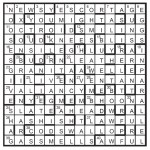
The five of a kind are stations on the Jubilee tube line in London, derived from: 26/27 (London Bridge), 40/41 (Stanmore), 46/47 (Waterloo), 3/34 (Baker Street) and 10/39 (Westminster). LOVELY JUBBLY (32/12D) suggests mispronounced praise. ORATE/ERATO were both accepted at 46A, as were SETTER/TESTER at 34D. Title: the line’s colour on tube maps. First prize Roy Robinson, Sheffield Runners-up Cathy Staveley, London SW15; R.A.

Letters: In defence of Steve Baker (by Steve Baker)

From our UK edition

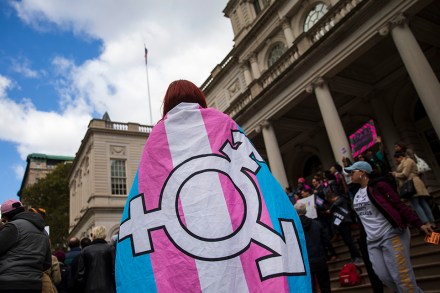
It’s not cynicism Sir: I was amazed to have suffered the projection of so much cynicism in return for my plea that no one should suffer hate for their identity (‘The cynicism of Steve Baker’, Toby Young, 21 January).  The simple truth is that one of my staff is out as a trans man. Another is a proud gay man with a non-binary partner. I like and admire them, and I have heard what they put up with. I am glad to be their ally. My staff still suffer abuse because of their sexual and gender identities, and I wish for them to live their lives without that abuse. This ought not to be controversial.  My team and I have genuinely been shocked that a benign tweet about supporting the LGBT+ community could spark such an aggressive backlash.

Shibui

From our UK edition

The Sacred Heart sister at Sophia Posts me an airmail letter With two sought-after stamps For her twelve year-old collector. Much later, on cassette, She talks of doing a doctorate On etiquette in Edo, Plus a traveller’s guide for the Gaijin. The millennium hosts its moment; A tsunami coasts toward Christmas. She tells me on the telephone Of an essay on Shusako Endo, The convert Catholic novelist, His link an east-west ligature And a job for her jubilee year. Call and response continue From the ’64 Olympics To the karaoke bar She runs with an Irish Jesuit For mystical male alcoholics.

Revealed: The damning probe into Zahawi’s tax affairs that led to his departure

From our UK edition

Rishi Sunak has sacked Nadhim Zahawi over his tax affairs and a 'serious breach' of the ministerial code. The PM had asked Laurie Magnus, the independent adviser on ministers’ interests, to probe the Tory chairman. Here is his conclusion which was released this morning and led to Sunak's decision to fire Zahawi: Dear Prime Minister, You have asked me to review the circumstances and facts concerning certain tax affairs of the Rt Hon Nadhim Zahawi, Minister without Portfolio, and that I assess these circumstances in the context of Mr Zahawi’s obligations under the Ministerial Code. This report sets out relevant facts that I have established whilst respecting Mr Zahawi’s right to taxpayer confidentiality.

Britain’s asylum crisis

From our UK edition

Lawangeen Abdulrahimzai, 21, an Afghan convicted this week of murdering a man in Bournemouth last year, had previously murdered two men in Serbia. He had also been caught drug-dealing in Italy. He had been allowed to stay in the UK despite doubts about his claim to be 14 years old (he was then 18) and was placed with a foster carer and enrolled in a secondary school. When his foster carer caught him carrying a knife, a social worker was sent to his home to give him a talk about the dangers of knives.  The case of Abdulrahimzai shows just how easy it is to outwit our authorities. It tells the world that Britain no longer has the will to guard its borders and that encourages more dangerous criminals to take advantage of the system.

Portrait of the week: Taxing times for the Tories, tanks for Ukraine and a giant Antarctic iceberg

From our UK edition

Home Nadhim Zahawi, minister without portfolio and chairman of the Conservative party, was asked to explain how a penalty formed part of a £5 million tax payment he had made. Rishi Sunak, the Prime Minister, asked Sir Laurie Magnus, his newly appointed ethics adviser, to examine whether Mr Zahawi had broken the code of conduct on ministerial behaviour. The appointment of Richard Sharp as chairman of the BBC was under review by William Shawcross, the Commissioner of Public Appointments, after it became known that in 2020, before his appointment, he had contacted Simon Case, the cabinet secretary, about an offer of a loan of £800,000 by Sam Blyth, an old friend of Mr Sharp’s, to Boris Johnson, then PM. The government borrowed £27.

How did ‘mummies’ get their name?

From our UK edition

Preserve us The British Museum said it would stop referring to ‘mummies’ and call them ‘mummified persons’ instead, out of respect to their dignity. How did they come to be called mummies in the first place? – The term has been traced back to 1615, and derived from the Latin Mumia, and the Arabic Mumiya, referring either to an embalmed body or the bituminous substance in which they were embalmed. The terms ‘mummified’ and ‘mummification’ did not come into use until the 19th century. Spent Has the Conservative government cut health and social care funding? NHS and social care funding in England at 2022/23 prices: 2008/09   £121.5 bn 09/10   £129.7 bn10/11   £130.2 bn11/12   £130.9 bn12/13   £131.

Letters: Scotland’s gender law doesn’t add up

From our UK edition

Scottish muddle Sir: The Scottish Sentencing Council guidelines, introduced last year, affirm research as showing that young people, defined in the guidelines as those up to 25 years of age, ‘are not fully developed and may not have attained full maturity’ (‘Gender wars’, 21 January). As a result they are seen as less able to exercise good judgment; are more vulnerable to external influences; may be less able to assess the implications of their decisions; and may take more risks. However, Scottish people nine years younger than that, faced with the complex experience of perceiving their bodily habitus to be at odds with their sense of their gender, are judged fully ready to make permanent, legally binding, life-altering decisions independent of any external advice or assessment.

Letters: Harry, Charles and the way to reconciliation 

From our UK edition

Back to work Sir: I read with interest Martin Vander Weyer’s clarion call to ‘Mr and Mrs Early-Retired Spectator Reader’ to return to work (Any other business, 14 January). The successful realisation of this aim is likely to require both a nudge from government, possibly through the tax system, and employers to show greater creativity. This pressing economic need will not be met if ‘grey returners’ are treated to the same expectations and orthodoxy as thrusting 35-year-olds. What is required, as Martin rightly notes, is flexibility. Flexible hours, flexible work practices and a flexible attitude to those who, having ‘seen and done it’ several times over, are confident in challenging, and demonstrating candour in, the workplace.

The Boris delusion

From our UK edition

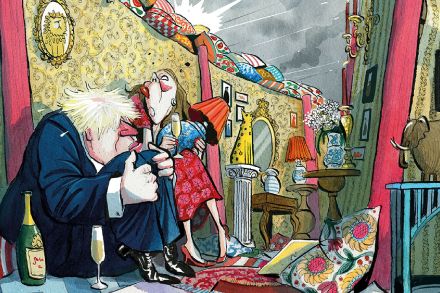
Loyalty, it used to be said, was the secret weapon of the Conservative party. That hasn’t been true for some time. Back in 2006, the then MP for Henley wrote of the Tory party having succumbed to ‘Papua New Guinea-style orgies of cannibalism and chief-killing’. Boris Johnson later had to apologise to Papua New Guinea for the insensitivity of that observation. But he wasn’t wrong about the new Tory tendency to kill the chief, as he discovered so painfully last year. Still, until recently a new party leader could expect a year or two of relative stability, when enemies would stay their spears and doubters would do their best to lend support. No longer. Rishi Sunak has been Conservative leader and Prime Minister for just three months.

Portrait of the week: Sunak vs Sturgeon, Nepal plane crash and Mexico bans smoking on beaches

From our UK edition

Home The government prevented the Gender Recognition Reform (Scotland) Bill, passed by the Scottish parliament, from proceeding to royal assent, under Section 35 of the Scotland Act, because of its ‘serious adverse impact’ on the operation of the Equality Act 2010. It was blocked by a statutory instrument laid before parliament by the Scottish Secretary, Alister Jack. The Scottish National party leader in the Commons, Stephen Flynn, called opponents to the bill ‘rabid gammon’. Nicola Sturgeon, the First Minister of Scotland, sought judicial review. Rishi Sunak, the British Prime Minister, had visited Scotland a few days before to help some Sea Scouts toast marshmallows and to have dinner with Ms Sturgeon.