Essential reading | 13 April 2008
From our UK edition
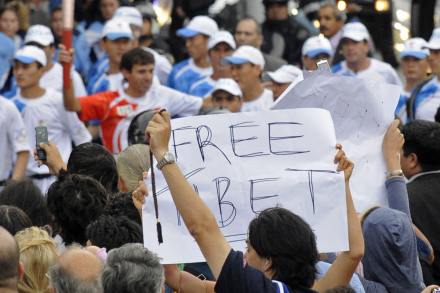
With the headlines dominated by Chinese action in Tibet, Issac Beech's new Web Exclusive article - Reporting from Tibet's cocoon - is essential reading. You can access it here.
From our UK edition
With the headlines dominated by Chinese action in Tibet, Issac Beech's new Web Exclusive article - Reporting from Tibet's cocoon - is essential reading. You can access it here.
Crowded isle Sir: You spell out the complexities of the immigration issue clearly in your leading article of 5 April, but the overriding problem, the nettle that simply has to be grasped, is its effect on the overall size of our island’s population. At more than 60 million it is already uncomfortably large, but a projection of its present growth trend puts it at more than 85 million by 2081! So where on earth is it going to end? Courageous decisions will have to be made by those political leaders whose love of this country is genuine.
From our UK edition
A German economist visiting Britain was recently said to have declared himself baffled that a report about rising house prices was deemed to be good news. In Germany, he retorted, inflation in house prices, like inflation in food or energy prices, would be considered quite the opposite. By implication, there is an intellectually respectable case for interpreting favourably this week’s news that the Halifax house price index has plunged by 2.5 per cent, the biggest monthly fall since the depths of the last recession in 1992. House prices in Britain have been horribly overvalued for several years — by 30 per cent in the opinion of the IMF.
From our UK edition
Matthew d'Ancona reports on the schools battle. Fraser Nelson identifies Brown's five steps to denial. Peter Hoskin suggests that relations between Britain and Iraq may be at a low ebb. James Forsyth points out how bad things are getting for Brown. And, over at Americano, James also sifts through John McCain's thoughts on Iraq.
From our UK edition
Head over to Trading Floor for the latest on the credit crunch, including: Fraser Nelson on the UK's shaky economic framework. And Michael Millar on why it's not all doom-and-gloom in the housing markets.
From our UK edition
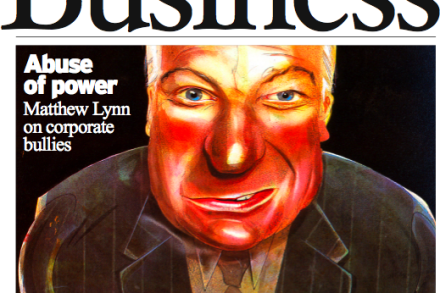
We’ve made a few changes to the website, in anticipation of the launch of our new magazine – Spectator Business – next month. An extra tab has been added to the navigation bar above, which will take you through to the Spectator Business part of the site. Alternatively, you can head to: http://spectator.com/business. There, you’ll eventually be able to access Spectator Business articles. But, for now, you’ll discover Trading Post TV and the Trading Floor blog. The blog is a business-minded sister to Coffee House, and will be frequently updated with news and analysis each day. Do check it out.
From our UK edition
Here are some of the posts made over the weekend: Peter Hoskin flags up a senior judge's thoughts on family breakdown, and reports on another good poll result for the Tories. James Forsyth asks: can Nick Clegg recover? And analyses the situation in Basra. And, over at Americano, James also gives his views on Mark Penn's resignation.
From our UK edition
A child’s needs Sir: I doubt the suggestion in your leading article (29 March) that clause 14(2)(b) of the government’s Human Fertilisation and Embryology Bill is a moral disgrace. The Bill breaks new ground in allowing two people of the same sex to be registered as the sole parents of a baby born through IVF. With female joint parents this raised the question of what was to be done about the provision in the Human Fertilisation and Embryology Act 1990 which requires that a woman shall not be provided with IVF treatment unless account is taken of the welfare of any resulting child. A parenthesis adds ‘(including the need of that child for a father)’.
From our UK edition
Yet again, New Labour’s predilection for spin and misleading statistics has landed the government in trouble. Ministers have long been fond of making the argument for immigration on the basis that it increases the country’s GDP. But as the House of Lords Economics Affairs Committee rightly points out in its new report, adding more people to the population will lead — barring a recession — to a higher GDP. So this is hardly a clinching argument for immigration. After all, the fact that Turkey’s GDP is larger than that of Switzerland scarcely means that the Turks are better off than the Swiss. The report also concluded that immigration does little for per capita GDP — a far more important statistic.
From our UK edition
Nick Clegg answers CoffeeHousers’ questions. James Forsyth points out how bad things are looking for Gordon Brown. Peter Hoskin questions the Government’s eco-town policy. Fraser Nelson says we should dispense with the bureaucrats. And Matthew d’Ancona suggests that Hillary Clinton should cool it with the Rocky comparisons.
From our UK edition
Do check out the latest posts over at Americano: James suggests that Obama may be losing his credibility. And someone's said that Obama "can't win" - but who was it?
From our UK edition
Here are some of the posts made over the weekend: James Forsyth reports on how divisions in Team Brown are working against Douglas Alexander. Fraser Nelson decodes Ivan Lewis' ideas on where the Labour Party should head next. And Peter Hoskin suggests that "Cycle-gate" hasn't harmed David Cameron, and attacks Michael Martin's life of luxury.
From our UK edition
Not black and white Sir: Marian L. Tupy deserves thanks for his excellent article (‘Mugabe is the Mobutu of our time’, 22 March), despite one seeming inaccuracy and an omission. Tupy says, ‘It was 1980 and Zimbabwe had just gained independence from Britain... the first ever multiracial election gave Mugabe’s Zimbabwe African National Union a majority.’ To the contrary, a universal franchise election in 1978 brought a coalition of Ian Smith’s Rhodesian Front and Bishop Muzorewa’s Democrats into office. Mugabe and Joshua Nkomo had been invited to take part but refused.
From our UK edition
The Spectator on the Government's handling of the Human Fertilisation and Embryology Bill To date, the government’s hand-ling of the Human Fertilisation and Embryology Bill has resembled what might be called ‘Vicky Pollard politics’. Challenged to grant MPs a free vote on these far-reaching and ethically contentious proposals, the Prime Minister’s officials sent hugely confusing signals: ‘Yeah but no but yeah but no but yeah.’ Now the Prime Minister has finally conceded that Labour MPs will be able to vote with their consciences on three key issues: the striking of the phrase ‘need for a father’ from the rules governing IVF treatment; so-called ‘saviour siblings’; and the creation of hybrid human-animal embryos.
From our UK edition
Revealed: the ten questions that CoffeeHousers will pose to Nick Clegg. James Forsyth says the Tories need to get serious about Iraq. Peter Hoskin assesses Nick Clegg’s first 100 days as Lib Dem leader. Fraser Nelson highlights a swathe of Brownies at PMQs. And Matthew d’Ancona asks you to comment on the state of the nation.
From our UK edition
Here are some of the posts made over the Easter weekend: Nadine Dorries MP criticises the Embryology Bill. Fraser Nelson warns Team Cameron that the Government may outflank them on education reform. Peter Hoskin suggests that Britain will benefit from a new nuclear power agreement with the French. The Skimmer assesses the response of brain-dead liberals to David Mamet's admission that he is no longer a "brain-dead liberal". James Forsyth asks whether the new Brown team is compatible with the old one. And, over at Americano, James also investigates what's next for Hillary Clinton and Barack Obama.
From our UK edition
Key question Sir: Debt, debt everywhere. Britain really is in trouble if — as Fraser Nelson suggests (Politics, 15 March) — the Conservative opposition is shying away from the ‘obvious strategy’ of proposing to freeze public spending or cut taxes. There is a sensible ‘bottom up’ approach for our leaders to take, namely to start budgeting from a base of zero expenditure. Then prioritise and add the spending that really must be made (schools, hospitals, defence and the like), while checking value for money at every step. The key question is, ‘What is essential for Britain?’ rather than, ‘What is in the current budget?’ or ‘What did Gordon promise on the Andrew Marr Show?
From our UK edition
Five years after the invasion of Iraq, Gordon Brown is right to concede the need for a full-scale inquiry into the war. He is wrong, however, to postpone the investigation on the grounds that it might ‘divert attention from supporting Iraq’s development as a secure and stable country’. There have already been four limited inquiries into various aspects of the conflict and its aftermath. What is required is an independent and unsparing inquisition that examines the war in its totality and tries comprehensively to address public disquiet about this most divisive and controversial of interventions. Self-evidently, the mere fact that the insurgency is still raging is a measure of failure.
From our UK edition
A downloadable podcast of last night's Spectator / Intelligence Squared debate - "The West is provoking a new Cold War with Russia" - is available here. Lloyd Evans' web exclusive report on the debate can also be accessed here.
From our UK edition
The latest Spectator / Intelligence Squared debate - The West is provoking a new Cold War with Russia - starts at 18:45. Speaking for the motion are the journalist Anatole Kaletsky; the award-winning historian Norman Stone; and Alexei Pushkov, the anchor of the popular Russian TV programme Post Scriptum. They will be opposed by the journalist Edward Lucas; Dr Lilia Shevtsova, Senior Associate of the Carnegie Endowment for International Peace; and Ronald D. Asmus, Executive Director of the Transatlantic Center of the German Marshall Fund of the United States. The debate will be chaired by Jonathan Freedland. For live audio click here.