Closing
From our UK edition
From our UK edition
From our UK edition
From our UK edition
From our UK edition
From our UK edition
From our UK edition
From our UK edition
From our UK edition
From our UK edition
From our UK edition
From our UK edition
From our UK edition
Being good without God Sir: It is a rash person who tangles with the Chief Rabbi, but his piece on ‘Atheism and barbarism’ (15 June) shocked me. After championing until his last paragraph the old lie that religious belief is a necessary foundation for morality, he suddenly says he doesn’t believe ‘that you have to be religious to be moral’, which effectively contradicts his whole thesis. But there are several derailments before that. He questions the ability of society ‘to survive without the rituals, narratives and shared practices that create and sustain the social bond’.
From our UK edition
Painting the town The tarting-up of Northern Irish villages on the route between Belfast International airport and Lough Erne, the resort which hosted the G8 summit, has been likened to the ‘Potemkin villages’ employed by the Soviet Union in the 1920s to impress foreign visitors. But is the concept of a Potemkin village itself a deception? — The origin of the term lies in a visit by Catherine the Great to the Crimea in 1787, when Grigory Potemkin, governor general of Russia’s southern provinces, is supposed to have constructed fake villages along the Dneiper River to impress the royal party. — The story is now disputed, with some suggesting rumours were spread to discredit Potemkin.
From our UK edition
Home On the eve of the G8 summit, at a press conference with David Cameron, the Prime Minister, President Vladimir Putin of Russia bluntly opposed British proposals to aid the Syrian opposition: ‘People who not only kill their enemies, but open up their bodies, eat their entrails in public before the cameras. Are these the people you want to support?’ At the summit, in a golfing hotel protected by the waters of Lough Erne, Co. Fermanagh, none of the leaders wore a tie. A joint statement on Syria did not call for the removal of President Assad. Before the summit, Mr Cameron made British Overseas Territories and Crown Dependencies agree to inform on investors to the tax authorities.
From our UK edition
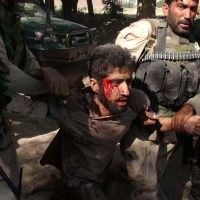
It’s not just soldiers who risk their lives in Afghanistan. Anyone who enters the country’s judicial service becomes an assassination target. Only last week, six Afghan judges were killed by a suicide bomb outside Kabul’s Supreme Court. A Taleban spokesman said they had been ‘sentenced to death’ for playing an ‘important role’ in ‘legalising the infidels’. Such attacks have killed over 3,000 civilians in Afghanistan so far this year, according to the United Nations. Of these, some 600 were children. Barack Obama’s administration invites us this week to welcome the prospect of peace talks between the Taleban and Hamid Karzai’s government as a sign of progress.
From our UK edition
From our UK edition
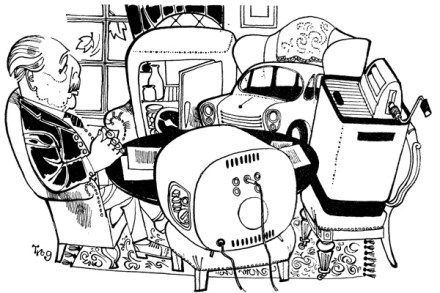
This week’s magazine is full to the brim with cracking book reviews. Here is a selection of quotes to whet your appetite. Sam Leith on Modernity Britain, David Kynaston’s rampaging account of the birth of the consumer age during Harold Macmillan’s premiership: ‘The jacket quotes a passage from late in the book that is an extreme but far from unique instance of the clattering cavalcade style. I wasn’t even alive then but I still feel nostalgic: Galaxy, Picnic, Caramac (‘Smooth as chocolate … tasty as toffee … yet it’s new all through!
From our UK edition
From our UK edition
From our UK edition