Bank 4
From our UK edition
From our UK edition
From our UK edition
From our UK edition
From our UK edition
From our UK edition

From our UK edition
From our UK edition

From our UK edition
From our UK edition

From our UK edition
From our UK edition
From our UK edition
From our UK edition
From our UK edition
From our UK edition
From our UK edition
Does workfare work? George Osborne announced a ‘work for benefits’ scheme. ‘Workfare’ schemes have been attacked by the left. Do they work? Wisconsin Works The introduction of the scheme, which obliges benefits claimants to accept community work placements, was followed by an 80 per cent reduction in welfare caseloads between 1990 and 2000. Washington state’s WorkFirst programme, which obliged claimants to accept unpaid work placements, increased employment among participants by 13%. A similar scheme which offered paid work increased employment by 33%. Ontario Works 56% of participants leaving the scheme found employment, two-thirds of them earning above the threshold which defines the ‘working poor’.

From our UK edition
Oborne’s ideas of ethics Sir: Your edition of 28 September included a 1,500-word demand from the journalist Peter Oborne to the effect that the Times, the newspaper that I work for, should sack its columnist Danny Finkelstein. The reason given by Oborne for this view is that Finkelstein is too parti pris and close to people in power to be a ‘proper’ journalist. He is wrong in his argument and also, I believe, deficient in his journalism. Oborne deploys the veteran cliché about true journalists ‘speaking truth unto power’. Yet the history of British newspapers is full of ‘political’ journalists such as Finkelstein. At the Telegraph there were great figures such as Bill Deedes and T.E.
From our UK edition
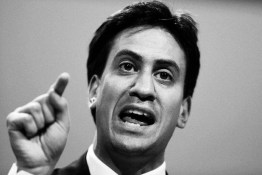
Every opposition leader sometimes needs to act as a saboteur. Ed Miliband showed his wrecking skills this week, picking a fight with the Daily Mail about an article it had published saying that his Marxist father ‘hated Britain’. The row overshadowed the Conservative party conference and sparked a debate which informed those who did not previously know (or care) that Ralph Miliband was an asylum seeker who arrived in Britain as a teenager and repaid his adopted country by fighting Nazis while serving in the Royal Navy. Miliband’s absurd overreaction upstaged what little the Tories had to say that day. Of the four main political parties, Labour had the most successful conference.
From our UK edition
Home Shares in Royal Mail are to be sold by the middle of this month, before postmen can go on strike; the company is valued at between £2.6 billion and £3.3 billion. The Church Commissioners, an investment arm of the Church of England, became part owners of the resurrected Williams and Glyn’s bank which will open branches relinquished by the Royal Bank of Scotland. The minimum wage for those aged 16 or 17 rose by 4p to £3.72 an hour; for those aged 18-20 by 5p to £5.03; and for those older by 12p to £6.31. Poundland, which has 458 shops in the British Isles, said it wanted to open 1,000. Teachers belonging to the NUT and NASUWT unions went on strike for a day, closing 2,500 schools.

From our UK edition