The Spectator

RMT leader Bob Crow dies – reaction

From our UK edition

RMT leader Bob Crow has died aged 52, the Press Association is reporting. Only yesterday the union boss was giving broadcast interviews, including this one on BBC Radio 4's PM programme. The RMT released a statement this morning saying: 'It is with the deepest regret that RMT has to confirm that our General Secretary Bob Crow sadly passed away in the early hours of this morning. 'The union’s offices will be closed for the rest of the day and the union will make further announcements in due course. The media have been asked to respect the privacy of Bob’s friends and family at this difficult and distressing time.' Here's Boris Johnson, Mayor of London: 'I'm shocked. Bob Crow was a fighter and a man of character.

Nick Clegg’s ‘I love Britain’ speech: full text

From our UK edition

Since I became the Deputy Prime Minister I have had the privilege of spending a bit of time representing Britain’s interests in other parts of the world. I have visited Latin America and Asia to boost exports. I have been to Africa, where we are building better education systems as well as helping fight corruption, poverty and disease. I have travelled to different parts of Europe and the United States to promote British trade. And while each trip varies from the last, there is a thread which runs through them all: you get to see Britain through other people’s eyes. Everywhere I have been – every nation around the planet – has its own story about Britain.

Why an EU summit will never solve the Ukraine crisis

From our UK edition

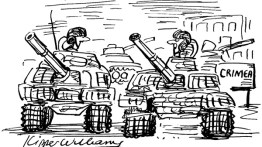
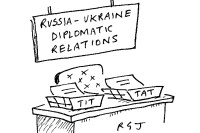
[audioplayer src="http://traffic.libsyn.com/spectator/Untitled_2_AAC_audio.mp3" title="Anne Applebaum, Matthew Parris and John O'Sullivan discuss Ukraine"] Listen [/audioplayer]For the first time in many years, the eyes of the world are on Crimea. As Russian troops violated Ukrainian sovereignty, the question swiftly became, ‘What can we do?’ If the answer is ‘not very much’, then we ought at least to consider why that is the case. Part of the answer is our diminished military capabilities and ambitions, the inevitable result of reducing the defence budget. But this week our diplomatic tools seem to have failed us. We urgently need to ask: what has gone wrong?

Spectator letters: Peter Atherton answers EDF, and Battersea Dogs Home answers Rod Liddle

From our UK edition

Political best buys Sir: Fraser Nelson’s excellent article ‘Cameron’s Northern Alliance’ (1 March) made me wonder whether we, as voters, at the next election could benefit from a simple and independent chart (perhaps a Which?-style guide) comparing the policies offered by the parties, and the outcomes of the varying policies adopted across Europe. We all carry out research before purchasing insurance or booking a holiday by checking guides, so why not have something similar when choosing a government? It must be better than voters making a decision based on the superficial grounds of the party leaders’ secondary education or resemblance to a cartoon character.

Where to open your brothel: an international comparison

From our UK edition

The best places to open a brothel The Commons all-party group on prostitution has called for a Scandinavian-style law where selling sex would not be illegal but buying it would be. How does the world treat prostitution? — In a survey of 100 countries by the educational charity ProCon, 50 were judged to treat prostitution as illegal, 39 as legal, with the remaining 11 making it an offence in some instances. — Among the most liberal were Canada, where laws against brothel ownership and pimping were recently overturned by the supreme court, the Netherlands, Germany, New Zealand and Greece. — The most severe criminal sanctions were found in Iran, where prostitutes face the death penalty, Iraq, Kenya and Saudi Arabia. You and whose army?

Portrait of the week | 6 March 2014

From our UK edition

Home David Cameron, the Prime Minister, said Russia was to blame for ‘violating the sovereignty and territorial integrity of another country’ by invading Ukraine, so ‘we shall have to bring to bear diplomatic, political, economic and other pressures’. Britain, with Russia and the United States, is a signatory to the Budapest Memorandum of 1994, guaranteeing the ‘independence and sovereignty and the existing borders of Ukraine’. Before flying to Kiev, William Hague, the Foreign Secretary, said: ‘The United Kingdom will join other G8 countries this week in suspending our co-operation under the G8, which Russia chairs this year.