Boris 3
From our UK edition
From our UK edition
From our UK edition
From our UK edition
From our UK edition
Breaking the unions Sir: By the time this letter appears we shall know whether the land of my birth has separated from the land of my life. I hope not. But is there not an uncanny parallel between the rise of the Scottish desire to quit England and the English desire to quit Europe? The same arguments about control from a city outside the nation; about elites and technocrats dictating to and imposing upon a sturdy independent people; the belief that outside the union (with England, with European partners) a radiant future beckons; endless columns, pamphlets and books explaining why rule from London/Brussels must be overthrown; and a charismatic, one-liner leader worshipped by his followers and given uncritical support by the BBC and other media.
From our UK edition
Home People living in Scotland voted in a referendum that asked: ‘Should Scotland be an independent country?’ A great deal of ill feeling had been generated as the referendum campaign went on. David Cameron, the Prime Minister, was told by backbench Conservative MPs that he faced a ‘bloodbath’ for joining the United Kingdom leaders of the Liberal Democrats and the Labour party in offering continued high levels of funding for Scotland.
From our UK edition
In his short and infrequent visits to Scotland this year, the Prime Minister should have found time to speak to those supporting the ‘yes’ campaign. He would have seen and heard precisely the same complaints and exasperation that are driving his other great foe, Ukip. For years, politicians have laughed about voters who are ‘mad as hell, and not going to take it any more’. That joke is no longer funny. People have derided, lamented or lampooned the death of the Tory party’s grass roots. But the independence debate revealed that in Scotland the Labour party has suffered the same fate. The Better Together campaign against Scottish independence was meant to be largely powered by Labour party operatives.
From our UK edition
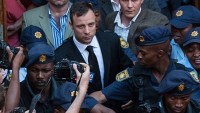
Draconian sentence Paralympian athlete Oscar Pistorius was cleared of murder but convicted of culpable homicide, the equivalent of manslaughter in English law. — The concept of a lesser charge of killing without intent was first put forward by 6th century Athenian legislator Draco, popularly known for the harshness of his legal code, which applied the death penalty for the smallest of offences, including stealing a cabbage. — Manslaughter, however, was seen as a relatively minor crime. Had Pistorius been convicted under Draconian law he would have been exiled rather than face the death sentence. The long ride Alan Yentob, the BBC's creative director, has spent £25,000 on taxi fares in the past five years.
From our UK edition
From our UK edition
No has won the referendum. Scotland won't become independent, but it will get new devolved powers, David Cameron promised this morning. Follow the developments on the PM's plans to change the constitution here. 08:13 The final result is in. Highland. Yes: 78,069 No: 87,739. That's 47.1% to 52.9% on a turnout of 87.0% 07.10 am: What are these 'further powers' that Scotland – and indeed the rest of the UK – might be given? If we're getting more powers I want telekinesis #indyref — Craig Rothney (@rothneychild) September 19, 2014 07.05 am: What happens next for the rest of the UK? Here's what Isabel has to say: The Prime Minister will give his response to Scotland's 'No' verdict at 7.10.
From our UK edition
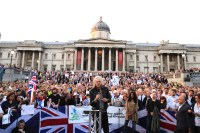
James Forsyth Until that YouGov poll putting Yes ahead, the No camp had steered clear of making an emotional appeal. But in the aftermath of that poll, people—finally—began to speak about Britishness and their pride in it. At the Usher Hall in Edinburgh last Friday night, a sizable crowd had gathered to hear George Galloway, Danny Alexander, Brian Wilson and Professors MacDonald and Tomkins make the case for No. The audience listened attentively as the economic arguments were made. But it was when speakers began to talk about Britain and their pride in our history that the audience became really engaged. Alexander talked movingly about the people who had come from all over the UK to train in the Highlands for the liberation of Europe. Then, Gordon Brown arrived.
From our UK edition
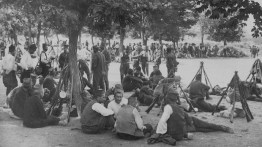
From ‘A review of the war’, The Spectator, 19 September 1914: It is the duty of all English publicists to make people here understand the splendid heroism with which the Servians have fought. They have contributed very greatly to the overthrow of Austria, and their brave Army and nation deserve all the help and encouragement that the Allies can give. We and the French very properly guaranteed a loan to Belgium. We, France, and the Russians ought to do the same by Servia, for the little nation’s finances must by this time be very nearly exhausted.
From our UK edition
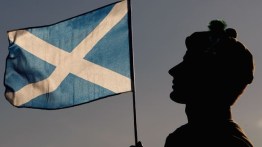
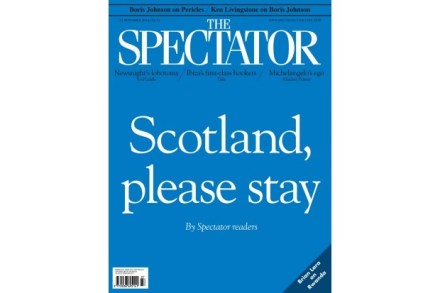
Scotland goes to the polls today, but whichever way the vote goes, it’s clear who lost the campaign: ‘No’ was outsmarted at every stage of the referendum battle. But how was this allowed to happen? In this week’s podcast, James Forsyth discusses what went wrong with Hugo Rifkind and Alex Massie. If Scotland does become independent, does the rest of Britain owe them anything? And if they stay, should we be forever grateful? In his column this week, Matthew Parris suggests the Spectator’s cover story last week – in which we asked our readers to write to Scots to ask them to stay – was unnecessary. He hopes that there will not be a special ‘Oh thank you, Scotland!
From our UK edition
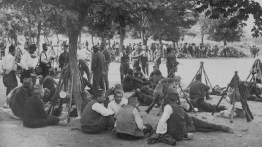
From ‘A review of the war’, The Spectator, 19 September 1914: It is the duty of all English publicists to make people here understand the splendid heroism with which the Servians have fought. They have contributed very greatly to the overthrow of Austria, and their brave Army and nation deserve all the help and encouragement that the Allies can give. We and the French very properly guaranteed a loan to Belgium. We, France, and the Russians ought to do the same by Servia, for the little nation’s finances must by this time be very nearly exhausted.
From our UK edition
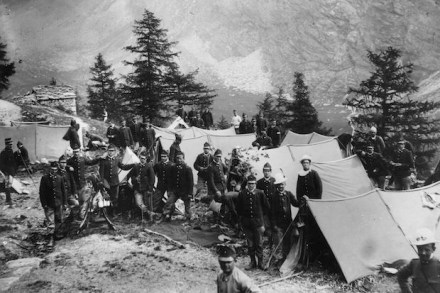
From ‘News of the Week’ in The Spectator, 19 September 1914: As friends of Italy, we feel bound to point out once more that she will make a capital error if she does not take action at once and join the Entente, and join it not in a half-hearted but in a whole-hearted way. To put the matter quite plainly, if Italy does not join in when her help would be valuable, but waits till no one has any particular need for her assistance, she will be told that nobody can receive the reward of a rescuer who encumbers with his help a man who has reached the shore by his own exertions.
From our UK edition
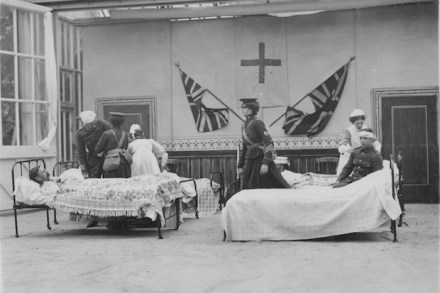
From The Spectator, 19 September 1914: WHAT a nefarious little person is the captious critic! His watchword is caution, and he goes about damping down the fires of enthusiasm, only happy when be can hear some aspiring little flame fizzling out. At present he is enjoying himself hugely. All good people are registering rash vows to be of some use at a supreme crisis, and he is busy explaining to them in detail that it is of no sort of good for them to try. All their attempts, he would have them believe, are defeating themselves. They had better do nothing than what they are doing, he persuades them. Their efforts are involving a very great risk. A woman cannot so much as make a shirt for a sick soldier but he is down upon her.
From our UK edition
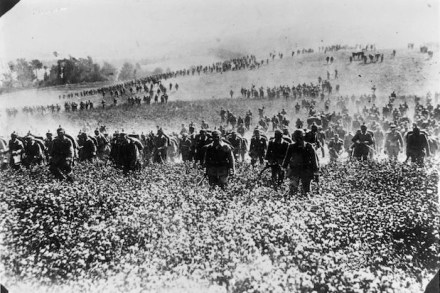
From The Spectator, 19 September 1914: ON September 5th we wrote: "We and the French have got the wolf by one ear and the Russians have got him by the other, and though he may use his teeth with terrible effect, if we have the hardihood and patience to hold on we shall finish him in the end. And we shall have the hardihood and the patience." It was perhaps premature to write that a fortnight ago, but at the present moment it represents the situation pretty accurately. During the past week the wolf has been struggling specially hard to drag his head out of French and British jaws, but he has not yet succeeded. As we write his paws are planted firmly on the river Aisne, and he is making a desperate effort to wrench himself free.
From our UK edition
This week's Spectator cover piece is written by our readers. Here are some more letters to Scottish voters, explaining why our United Kingdom should stay together. I come from the Isles of Scilly, which is as far away from Scotland as it’s possible to get whilst remaining in the UK. Flung out into the Atlantic ocean, 28 miles off Land’s End, I have always thought of my islands as part of the great Celtic fringe of this Kingdom. All I can do is plead with the people of Scotland to look beyond an opportunity to 'shake off Tory rule' and to consider instead how fortunate it is to be born British, and how much Scotland means to the rest of this country.
From our UK edition
From The Spectator, 12 September 1914: WE desire to address a word to the American people, a word which must be spoken, though we are fully aware that it will be liable to misunderstanding and misconstruction, and is certain to be distorted by those whose business it is to exercise pressure upon American opinion in the German interest. First, in order that we may as far as possible minimize such misrepresentation, let us say quite clearly what we do not ask the American people to do. We do not ask them to come to our assistance, either directly or indirectly. The notion of trying to involve them in our wars and our difficulties is one which we have never entertained for a single moment.
From our UK edition
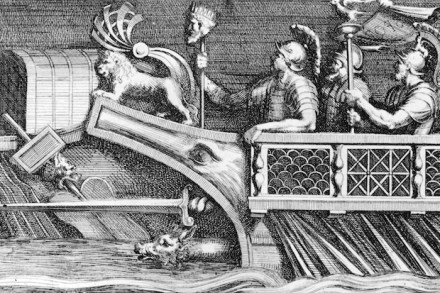
A reader’s letter from The Spectator, 12 September 1914: [To the Editor of The Spectator] Sir, I am afraid your correspondent "Ex-Scholar" (Spectator, September 5th), in quoting a "howler," has committed a little one himself. The incident of the sacred chickens to which he alludes did not take place in the "first sea fight between Romans and Carthaginians," nor was Duilins the commander who flouted the State system of auguries. It was Claudius Pulcher who (as the Romans thought, in consequence of his blasphemy) was defeated in 249 B.C. by the Carthaginians under Adherbal off Drepana (Lilybaeum) in Sicily. It was his sister, a true scion of the arrogant Clandian stock, who, incommoded by the crowds leaving the games, said : "Oh that my brother were alive and in command of our ships!
From our UK edition
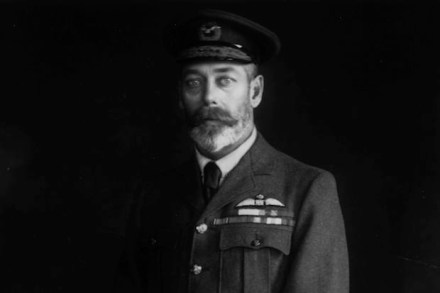
From The Spectator, 12 September 1914: The King's message addressed "To the Governments and Peoples of My Self-Governing Dominions," published to the world on Wednesday, is noble in its sincerity of word and thought. What could be said better or with a truer dignity than the following: ‘Had I stood aside when, in defiance of pledges to which my kingdom was a party, the soil of Belgium was violated and her cities laid desolate, when the very life of the French nation was threatened with extinction I should have sacrificed my honour and given to destruction the liberties of my Empire and of man- kind. I rejoice that every part of the Empire is with me in this decision.