Jamie
From our UK edition
From our UK edition
From our UK edition
From our UK edition
From our UK edition
From our UK edition
From our UK edition
From our UK edition
From our UK edition
From our UK edition
From our UK edition
Never say never Sir: Dot Wordsworth (Mind your language, 20 September) quotes various telling usages of ‘never’ for rhetorical or theatrical effect. But she missed one of the earliest and spine-chilling best: the Declaration of Arbroath of 1320. Quite apart from including the first-known written statement of the old Scottish principle that kingship is essentially a contractual appointment, and can be terminated if the people feel let down, the translation ends with: ‘For as long as but a hundred of us remain alive, never shall we on any conditions be brought under English rule.’ Even Scots like me, who would have voted ‘No’ last week if we had been able, thrill to the resonance of these words. So what do they do for a ‘yes’ voter, even after 700 years?
From our UK edition
Pot plants A 65-year-old Devon woman rang a BBC gardening show to enquire about a mystery plant only to be told it was a cannabis plant. Some other places cannabis plants have been found: — In 2012/13 British Transport Police found 500 plants growing across the rail network, including one at Hounslow station. — Under lights in the boiler room of a Streatham primary school, which was alerted by an electricity company concerned at excessive power consumption. — Outside the Tower of London, apparently planted by pro-drugs activists. Police decided that the campaigners had committed no crime because they had only scattered seeds, not cultivated the plants. — At Kew Gardens, which has an exhibition this autumn featuring illegal plants.

From our UK edition
Home David Cameron, the Prime Minister, visited New York for talks at the United Nations; he said Britain supported the American air strikes on the Islamic State. ‘These people want to kill us,’ Mr Cameron said on NBC news. Mr Cameron met President Hassan Rouhani of Iran in New York, the first such meeting since the Iranian revolution in 1979. Mr Cameron was caught by cameras in New York saying to Michael Bloomberg, its former mayor, that when he rang the Queen with the Scottish referendum result, ‘She purred down the line.’ Alex Salmond resigned as First Minister of Scotland and leader of the Scottish National Party, with effect from November. This followed the referendum for Scottish residences, which rejected independence by 2,001,926 votes (55.
From our UK edition
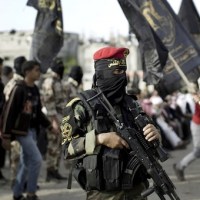
It is a mark of the uncertainty of our policy in the Middle East that just over a year ago Parliament was recalled to debate whether to launch military strikes in aid of rebels in Syria. This year, it has been recalled to discuss whether the RAF should join the strikes against the rebels in Syria — or, at least, the section of them that now call themselves ‘the Islamic State’. It is a sobering thought that, had last year’s vote succeeded, Damascus might have joined Raqqa, Mosul and Tikrit among the cities now being run by this pitiless band of barbarians. Michael Fallon, the Defence Secretary, tells James Forsyth on page 29 that Parliament should have the ‘courage’ to support military action.
From our UK edition
From our UK edition
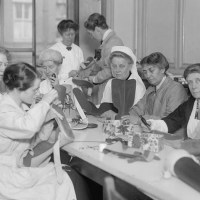
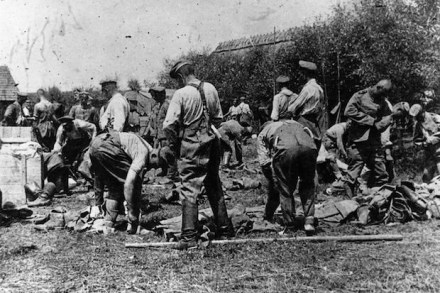
From The Spectator, 26 September 1914: There is nothing that a soldier needs more than good footwear; he can fight if need be on an empty stomach, but he cannot march on bare feet. Still, the means of supplying his needs are circumscribed. A commanding officer can make arrangements for accepting cartloads of goods at a depot; but a general in the field has to think of his transport with his supply, and though he might be grateful for the stock of a dozen drapers' shops, he has to move his troops besides clothing them, and he cannot pull unlimited quantities of flannel across a continent.
From our UK edition
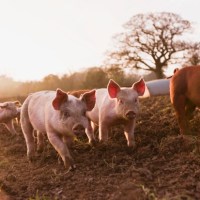
How will Cameron be remembered in years to come? As a steady-as-she-goes pragmatist or a radical reformer? In actual fact, he’s both. No modern Tory leader has been so good at looking calm under fire, yet there is a more radical Cameron. The insouciance is partly an act. In this week’s podcast, Freddy Gray, Fraser Nelson and James Forsyth examine these two sides of Cameron. With the party conference looming, and the election just eight months away, Cameron needs to make the case for Tory radicalism. The Manchester dogs’ home fire has revealed our strange attitude to animal suffering. There is a glaring double standard in our adoration for our pets and our tolerance for intensive farming.
From our UK edition
From The Spectator, 26 September 1914: Excellent use is made of captured documents, and we are treated to excerpts from a letter by a German private which deals with the fighting capacity of the British soldier:— "With the English troops we have great difficulties. They have a queer way of causing losses to the enemy. They make good trenches, in which they wait patiently. They carefully measure the ranges for their rifle fire, and they then open a truly hellish fire on the unsuspecting cavalry. This was the reason that we had such heavy losses. . . . According to our officers, the English striking forces are exhausted. The English people never really wanted war.
From our UK edition
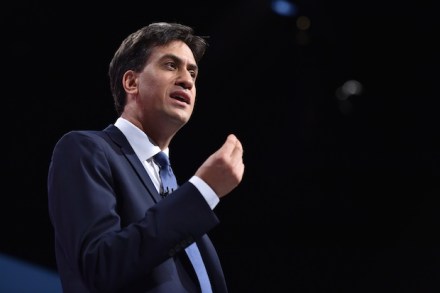
This afternoon Ed Miliband gave his last speech to the Labour conference before the general election.
From our UK edition
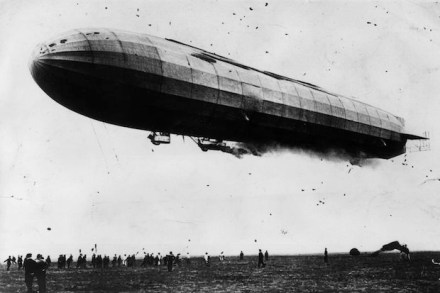
From The Spectator, 26 September 1914: The early afternoon papers of Friday publish a Reuter telegram to the effect that a Zeppelin flew over Ostend at eleven o'clock on Thursday evening, dropped three bombs, and flew away again. The damage was one office wrecked and one dog killed. If that is the bag of one Zeppelin in Ostend, what, after all, would be the bag of one hundred Zeppelins in London?
From our UK edition
From The Spectator, 26 September 1914: On Thursday the Press Bureau issued a very striking descriptive account of the situation at the front, written by "an eyewitness present with General Headquarters." It supplements the spirited narrative issued in the earlier part of the week, and shows that under pressure the War Office has discovered a very efficient military journalist among its combatant officers. "Todgers's can do it when it likes." It states that we are face to face with siege warfare, and that the Germans are in effect employing material which they had collected for the siege of Paris. The official war correspondent summarizes operations from September 18th to 20th by borrowing from the statement of a neighbouring French commander to his corps.