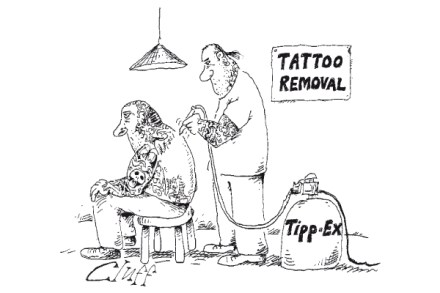
Tipp Ex
From our UK edition
From our UK edition
From our UK edition
From our UK edition
From our UK edition

From our UK edition
From our UK edition
From our UK edition
From our UK edition
From our UK edition
Silencing students Sir: The Stepford Students (22 November) are nothing new. The NUS-inspired ‘No Platform’ policy has been used to ban anything that student radicals don’t like since at least the 1970s — usually Christians, pro-life groups or Israel sympathisers. It should not be in the power of the narrow-minded activists of the student union to prevent individual students or groups from exercising their right to free speech and freedom of association. All students should have equal access to university-funded facilities, regardless of their beliefs.
From our UK edition
Dear Santas A £22.50 a head Christmas theme park in Warwickshire designed by Laurence Llewelyn-Bowen closed temporarily for improvements after visitors complained of mud, a skinny, swearing Father Christmas and elves who stood around smoking. What do you get when you take your children to see Santa? Prices for family of four: — £20 Santa Lane, Hyde Park. Rides, visit to Santa’s toy factory plus visit to Santa. (Visit to Santa is free; the charge is for the adjoining Magical Ice Kingdom.) — £44.40 Santa’s Magical Wonderland, Motherwell. Reindeer visit, indoor carousel, 1 hour soft play or skating, plus Santa visit. — £57.96 Twinlakes Winter Wonderland, Melton Mowbray. 25ft high toboggan run, 2.2km train ride plus visit to Santa.
From our UK edition
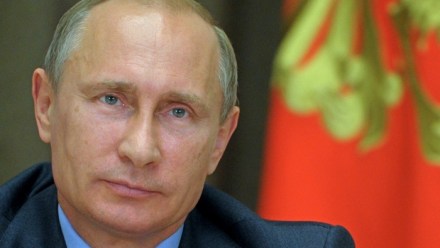
An official end to the Cold War was declared at a summit between President George H. Bush and Mikhail Gorbachev on a Soviet cruise ship moored at Malta on 2 December 1989. It is only a matter of time before western governments will have to admit that it has recommenced. While the rhetoric against Islamic State has been at full volume for the past few months, a soft and diminishing response has greeted Vladimir Putin’s escalating aggression. It is as if, Crimea having been ceded, western governments want their citizens to think that the rest of Ukraine is settling down into a mere domestic disagreement. The truth is very different: Putin’s ambitions have not retreated an inch since March.
From our UK edition
Home Theresa May, the Home Secretary, spent a few days announcing things. She broadcast on the Andrew Marr Show on television and then on Desert Island Discs. She said Britain was ‘unlikely’ to meet a target of reducing net immigration to the tens of thousands, because EU migration had ‘blown us off course’. Regarding child abuse, she said: ‘What we have already seen revealed is only the tip of the iceberg.’ She then announced a new Security Bill, obliging internet providers to retain Internet Protocol addresses to identify individual users, and requiring schools, universities and councils to counter radicalisation.

From our UK edition

From our UK edition
From The Spectator, 28 November 1914: If the press is to be muzzled, why do not the muzzling laws hold good in Ireland? It is against all common-sense to place Ireland in a privileged position — to give roving licences to any Irishmen who care to kill recruiting. Men have been arrested in England for spreading foolish false reports, which were not very much worse than the gossip of idiots. Why have the deliberate, callous preachers of sedition been allowed for so long to go untouched in Ireland?

From our UK edition
From ‘Sedition in Ireland’, The Spectator, 28 November 1914: If the press is to be muzzled, why do not the muzzling laws hold good in Ireland? It is against all common-sense to place Ireland in a privileged position — to give roving licences to any Irishmen who care to kill recruiting. Men have been arrested in England for spreading foolish false reports, which were not very much worse than the gossip of idiots. Why have the deliberate, callous preachers of sedition been allowed for so long to go untouched in Ireland?
From our UK edition
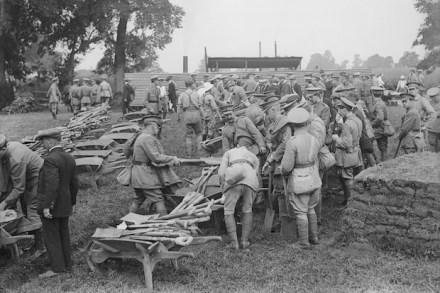
From The Spectator, 28 November 1914: After discipline and rifle shooting comes entrenching. We suggest, as a practical proposal, that every corps should practise its men at least once a week in trench digging. There ought to be no difficulty even in towns in inducing some patriotic man to lend them a piece of ground for the purpose. Further, in every district two or three model trenches should be prepared under expert direction. Trenches are not very difficult things to dig, but there are right ways and wrong ways of constructing them, and one practical example which can be inspected and copied is worth a hundred directions on paper.
From our UK edition
From The Spectator, 28 November 1914: In the Commons on Monday Mr. Wedgwood, who has served with the Naval Division in Belgium, asked for instructions as to what civilians were to do in the event of invasion. Were they to hand over their weapons to an appointed authority, or keep them and use them? The Government ought to tell the country. Mr. Tennant said that it was undesirable at present to issue any instructions. But surely now is the time for the Government to take the nation into their confidence. If a raid comes it will be sudden. It will be too late then for civilians to hand over their weapons, or for the Government to prevent them from acting on instinct. We cannot understand the Government's peculiar reluctance to be frank and open with the nation on such vital matters. Mr.

From our UK edition
From The Spectator, 21 November 1914: Both at home and abroad this war has already caused us to wonder whether we wake or dream, so different in many respects are the events from the anticipations. To begin with, there is a matter in which the Spectator has a particular reason for being sensible of the topsy-turviness of the war—the treatment of the voluntary and compulsory principles. We have written on this subject in another article, but may allow ourselves to dwell again on the paradox. For years we have been preaching the necessity of compulsory military training, and here we are to-day exhausting every expedient and ransacking our imagination in order to persuade the Government to save the voluntary principle! They have chosen the voluntary principle for the war.

From our UK edition
From The Spectator, 21 November 1914: No English writer knows more of German ways than Mr. Dawson, and his large book upon public administration in towns is a mass of information. It is his misfortune to have produced it at a moment when Englishmen are not likely to be eagerly receptive of the German methods that he praises, or very patient of his unfavourable comparisons of British muni- cipal activities with those which Prussia has adopted and encouraged other States to accept. It is as unnecessary to emphasize the fact that German machines, military or municipal, are efficient for the purposes at which they aim as it is to impress upon any one that we dislike some of those purposes.

From our UK edition
From The Spectator, 21 November 1914: The papers of Tuesday and Wednesday contained two exceptionally interesting despatches from an eyewitness at Sir John French's headquarters. These descriptive narratives have improved remarkably in value since the beginning of the war—a fact which does not seem to be in the least appreciated by some newspapers. The despatch of Wednesday described the operations from November 4th to 9th. During that period the Germans nowhere made an attack comparable with their attack on Ypres at the end of October. Their object seemed to be to wear out the British troops by incessant bombardment. Every attack or demonstration by German infantry resulted in great losses.
