Teeth 2
From our UK edition
From our UK edition
From our UK edition
From our UK edition
From our UK edition
From our UK edition
From our UK edition
From our UK edition
From our UK edition
From our UK edition
What’s a degree worth? Sir: Mark Mason’s article (‘Uni’s out’, 24 January) hits the nail on the head. A brief addendum: it is generally stated that graduates earn more over a lifetime than non-graduates — obviously a selling point to would-be students. This claim may be true in a very crude sense, but is meaningless without certain crucial caveats. The main caveats are so obvious they barely need stating. It depends what you study (e.g. medicine vs media studies) and what university you go to. It depends on what class of degree you get (a lower second or less may prove a disqualification for entry to many professions and jobs).

From our UK edition
Female bishops The Reverend Libby Lane was ordained as Bishop of Stockport, the Church of England’s first female bishop. — By the time the first 32 female C of E vicars were ordained in 1994, the Episcopal Diocese of Massachusetts had had a female bishop, Barbara Harris, for five years. — Yet the first Anglican woman priest was ordained half a century earlier. Florence Li Tim-Oi had been deacon at Macao Protestant Chapel in the early 1940s. When the war prevented a priest travelling from Japanese-occupied territory to administer communion, Li Tim-Oi was ordained by the Bishop of Victoria on 25 January 1944. Cash or card?
From our UK edition
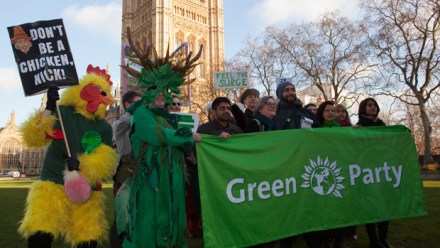
The Green party has been likened to a watermelon: green on the outside and red on the inside. But that is to do a huge injustice to generations of socialists and communists. Misguided though they were in many of their ideas, nobody could accuse them of actively seeking to make society poorer. That, however, is the unashamed aspiration of Natalie Bennett and what has become the fastest-growing political party in Britain. It is quite possible that a good proportion of the 9 per cent of the electorate who say they are planning to vote Green in May are unaware of this, but it is there in black and white (‘policy EC201’) on the party’s website.
From our UK edition
Home Party leaders mercilessly launched 100 days of campaigning before the general election on 7 May. David Cameron, the Conservative leader, said he would reduce the annual maximum household receipt of welfare to £23,000 from the current limit of £26,000. Ed Miliband announced a ten-year plan for the National Health Service, but Alan Milburn, a former Labour health secretary, said: ‘You’ve got a pale imitation actually of the 1992 general election campaign and maybe it will have the same outcome.’ Amjad Bashir, a Ukip MEP, switched to the Conservative party, upon which Ukip said he was being investigated over ‘unanswered financial and employment questions’, allegations he denied.

From our UK edition
From our UK edition
From 'What is Wrong With Germany?', The Spectator, 30 January 1915: If the inquiry is to be pushed to the ultimate point, what is wrong with the Germans is their dreadful, their slavish devotion to Logic— to the "Absolute" and to Abstractions. When Englishmen create an Abstraction they do not call upon all mankind to enthrone it. They treat it as something which is "there or thereabouts," as something useful, no doubt, but not to be pressed too far. When the Germans create an Abstraction they fall down and worship it. They not only treat it with intellectual servility, but regard it as a living thing. When their Abstraction is once established, they will not place any limits on its authority. They follow it ruthlessly, relentlessly, remorselessly, and to the bitter end.
From our UK edition
From ‘Reprisals’, The Spectator, 30 January 1915: There has been a tendency among some newspapers, and perhaps still more among private persons, to demand that the murder of non-combatants on the East Coast by German ships of war and Zeppelins should be visited with reprisals. ‘Murder is murder,’ they say in so many words, and should be treated as such. If we do not punish the Germans, no one else will or can, and the murderers will go free… The argument bears a strong likeness to arguments used over and over again in history. At the beginning of the Indian Mutiny it was firmly believed by most people — some excellent men among them — that reprisals alone would teach the mutineers the lesson they required.
From our UK edition
From ‘Reprisals’, The Spectator, 30 January 1915 THERE has been a tendency among some newspapers, and perhaps still more among private persons, to demand that the murder of non-combatants on the East Coast by German ships of war and Zeppelins should be visited with reprisals. "Murder is murder," they say in so many words, and should be treated as such. If we do not punish the Germans, no one else will or can, and the murderers will go free. Besides, quite apart from just punishment, how can we prevent the Germane from continuing in their criminal courses except by doing to them as they do to us? Therefore, if they should again fire or drop bombs upon undefended towns, we ought to behave similarly to their towns. That will give them pause.

From our UK edition
In 1899, Churchill headed to South Africa as a journalist for the Morning Post to cover the Boer War. He was captured in an ambush of an armored train but escaped with £75 and four slabs of chocolate in his pocket in hopes of finding the Delagoa Bay Railway. This from our archives, 30 December 1899 (link here). The Morning Post of Wednesday contained a characteristic telegram from their correspondent, Mr. Winston Churchill, describing his escape from Pretoria. Mr. Churchill, who had been taken prisoner after showing great gallantry in the armoured train action near Chieveley on November 15th, was confined at Pretoria.
From our UK edition
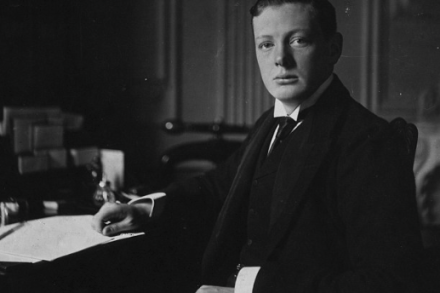
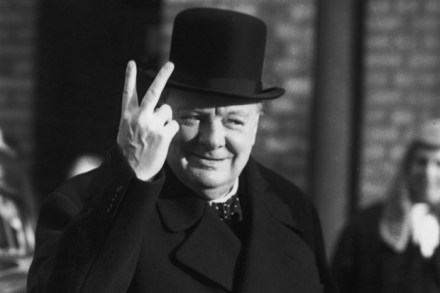
This is the Spectator's leader from 22 January 1965. Two days later, on 24 January, Winston Churchill died: Since the first news was given of his grave illness, the attention of the world has been concentrated on a quiet house in Hyde Park Gate. Old men and children, friends and strangers, came to pay homage and to be near him as he fought his last battle. The Archbishop of Canterbury on Tuesday prayed for him 'as he approached death' and the world waited and joined in prayer. There is more pride than tears in our grief. We are a free people because a man called Winston Churchill lived. By some miracle of communication he was able to call us to greatness, and we in eager response man- aged from somewhere to find a strength that we did not know was in us.
From our UK edition
From ‘Economic Quackery’, The Spectator, 23 January 1915: Ever since the war began there has been a tendency to rely upon the Government, instead of relying upon ourselves and upon the operation of economic laws. The political mischief resulting is the establishment of what is virtually an un-controlled Cabinet autocracy. The economic mischief, though it has already made itself evident in one important particular, may only be realized years hence. The instance to which we refer is the case of sugar. The public and the Government worked themselves up into a panic at the beginning of the war over the price of sugar, with the result that Mr. McKenna was permitted to gamble in sugar with many millions of the nation's money.
From our UK edition