Results
From our UK edition
From our UK edition
From our UK edition
From our UK edition
From our UK edition
From our UK edition
From our UK edition
From our UK edition
A vandalistic proposal Sir: Igor Toronyi-Lalic (Farewell, ENO, 7 February) displays a lack of judgment in advocating ENO’s demise and in suggesting that opera needs no opera houses, companies or subsidy. That its new arts editor should plead for the closure of England’s great repertory opera company is unworthy of The Spectator. Toronyi-Lalic is wrong to think that the hundreds of thousands of English opera-goers will be content with performances by itinerant ensembles only. Small-scale performances presented anywhere can be moving, but the public demand productions of a scale that befits the art form as it has grown over the last four centuries.
From our UK edition
Watching brief Samsung warned users of its voice-activated televisions that what they said in front of the TV could be transmitted to other people. The story attracted comparison with the telescreens in George Orwell’s Nineteen Eighty-Four, but the principle of keeping a population under control by surveillance was foreseen a century earlier by Jeremy Bentham. — In 1791 he came up with the idea for a Panopticon, a circular prison with one-way observation holes which would allow a single gaoler to patrol several hundred prisoners, none of whom could tell whether they were being watched at any one moment. — Bentham saw the government’s eventual rejection of the scheme as ‘sinister’, a word now more likely to be used to describe the idea itself.
From our UK edition
Britain is forfeiting its position on the world stage. With no national debate, we are surrendering our claim to be a major player in international affairs and undermining the Atlantic alliance that has kept Britain and Europe secure for 65 years. In these circumstances, it is easy to understand why Barack Obama has felt obliged to warn David Cameron of the damage he would be doing to the special relationship and to Nato if he failed to commit Britain to spending the bare minimum on defence. The Prime Minister has given several spending pledges — on education, health and overseas aid — so his silence on defence speaks volumes.
From our UK edition
Home Philip Hammond, the foreign secretary, told Parliament that Britain reserved the right to supply arms to Ukraine, as ‘We could not allow the Ukrainian armed forces to collapse.’ The Prince of Wales, embarking on a six-day tour of the Middle East, said on Radio 2 that he ‘particularly wanted to show solidarity really, deep concern for what so many of the Eastern Christian churches are going through in the Middle East’. John Longworth, the head of British Chambers of Commerce, called for a referendum on membership of the European Union to be held in 2016, a year earlier than David Cameron, the Prime Minister, has promised, in order to end uncertainty. Boris Johnson, the Mayor of London, said the same.
From our UK edition
From our UK edition
[audioplayer src="http://traffic.libsyn.com/spectator/TheViewFrom22_12_Feb_2015_v4.mp3" title="Peter Oborne and Dan Hodges discuss Ed Miliband" startat=1343] In this week’s Spectator podcast, we put a Labour and a Tory supporter next to each other to debate the virtues of Ed Miliband. The difference being that Peter Oborne is a passionate defender of the leader, and Dan Hodges his most vocal critic. Peter explains to Sebastian Payne that while he is a conservative journalist, his job is to tell the truth, and put political prejudices to one side, which leads him to conclude that Ed Miliband is a man of incredible accomplishment and bravery, whose efficacy is demonstrated by the ferocity of the press backlash against him.
From our UK edition
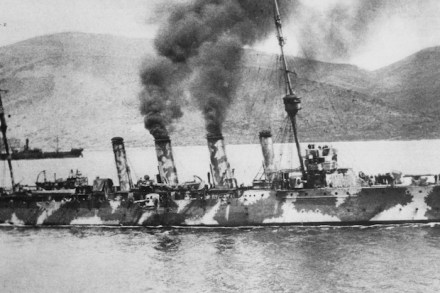
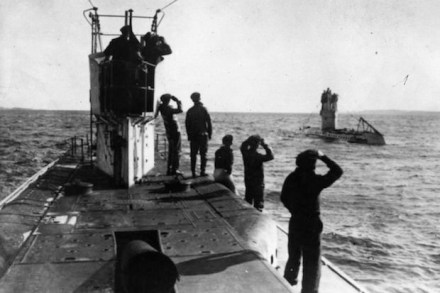
From ‘The New “Day” and Merchant Shipping’, The Spectator, 13 February 1915: THE Germans have such a mania for fixing a day for achieving some important purpose that we should feel guilty of a certain want of responsiveness if we grudged them anything of the pleasure they are deriving from contemplating the mystical date of February 18th. This is the new “day” on which the terrific process of starving Britain out by means of a few submarines is formally to begin. So be it it! The greatest day of all—Der Tag—was a kind of idealistic conception projected upon the screen of the future, like Messianic prophetic poetry.
From our UK edition
From ‘Prohibition in Scotland during the War’, The Spectator, 13 February 1915: At present the economic waste caused by drunkenness in Scotland is enormous. We are not going to attempt to calculate how many hours in the working year are lost through the inefficiency caused by alcohol, but unquestionably in the aggregate the total is huge… even if when the war is over Scotland gives up prohibition and once more flings open the doors of the public-house, she will have done herself a great deal of good by the temporary prohibition. Thousands of men and women throughout the length and breadth of the land will have realised how perfectly easy it is to get on without the consumption of alcohol.
From our UK edition
From ‘Compulsory Inoculation’, The Spectator, 13 February 1915: IT is a little difficult to keep one's patience with the Government's attitude towards compulsory inoculation. It is a capital example of “Letting ‘I dare not’ wait up ‘I would,’ like the poor cat i' the adage.” “The cat would eat fish, and would not wet her feet.” The Government would like to knock enteric out altogether from the list of serious Army diseases. They know that they can do so and ought to do so, but they have not done so as yet because they do not want to wet their feet politically—i.e., antagonize the faddists of their party.
From our UK edition
From The Spectator, 13 February 1915:.
From our UK edition
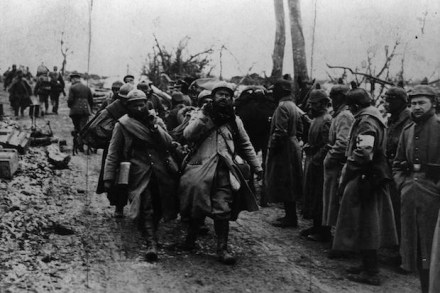
From ‘News of the Week’, The Spectator, 13 February 1915: FROM the eastern theatre of war there have been received daring the week details of the gigantic dimensions of Field-Marshal von Hindenburg's grand attack upon the Russian centre—i.e., upon the force on the Bzura which bars the German advance on Warsaw. On a very narrow front, not more, it is said, than seven miles, the Germans concentrated some hundred and fifty thousand of their best troops and burled them in close formation, five deep, upon the Russian trenches. This mighty mass of battalions, brigades, and divisions was supported by the fire of no fewer than a hundred batteries, or six hundred guns. The gun and rifle fire of the Russians swept away the beads of the formations as they advanced.
From our UK edition
In the latest issue of Spectator Australia, the leading article lambasts the Australian Liberal Party for trying to remove Prime Minister Tony Abbott: The determination by many in the media, even among conservatives, to hasten the demise of Tony Abbott’s prime ministership is as pointless as it is reckless. Pointless not because they will or they won’t succeed, but pointless because such an outcome would merely herald the beginning, rather than the end, of a long period of Coalition instability and in-fighting. Make no mistake: it is not Tony Abbott the man who is deeply unpopular (although his poll figures are, at present, nothing to write home about).
From our UK edition
From our UK edition