As it happened: the TV leaders’ debate
From our UK edition
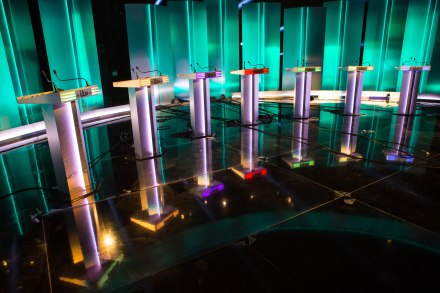
Welcome to The Spectator’s live coverage of the seven-way leaders' debate on ITV. We’ll be providing the latest developments and analysis on the programme, starting at 8pm this evening.
From our UK edition
Welcome to The Spectator’s live coverage of the seven-way leaders' debate on ITV. We’ll be providing the latest developments and analysis on the programme, starting at 8pm this evening.
From our UK edition
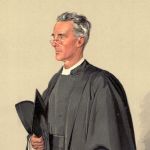
From 'News of the Week', The Spectator, 3 April 1915: Some remarks made by Dr. Lyttelton, the Head-Master of Eton, in a sermon at St. Margaret's, Westminster, on Thursday week have caused a storm in a tea-cup. Dr. Lyttelton argued that the Germans must be saved from the results of their own appalling venom by being made to feel that they were not excluded from the comity of nations. He used as an illustration of the kind of guarantee of goodwill which might be offered by Britain to somebody's suggestion that if the Kiel Canal were internationalized Gibraltar should also be internationalized. We think that the suggestion is utterly futile, and if it were ever seriously proposed we would leave no stone unturned to defeat it.
From our UK edition
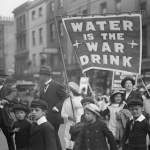
From ‘News of the Week’, The Spectator, 3 April 1915: The chief obstacle to prohibition, as we point out elsewhere, is not the temporary interference with individual liberty. It is the difficulty of how to deal with the great trade and industry which will be rendered partially or temporarily derelict by prohibition. But here ‘boldness, boldness, and again boldness’ is the only possible solution… We must never forget that the cutting off of expenditure upon liquor will very soon greatly increase our financial resources, not merely from indirect saving, but from the greater all-round efficiency which will come from an undrugged nation.
From our UK edition
The debate over the future of Britain's airports will reach its conclusion in just four months. In this View from 22 podcast special, The Spectator's Fraser Nelson discusses the current state of the debate and the likely outcomes of the Davies Commission with Stewart Wingate, CEO of Gatwick Airport; Simon Calder, Travel Editor of The Independent and Christian Wolmar, travel expert and a candidate for Labour's London mayoral nomination. Which outcome do our experts think is the most likely? What are the benefits of creating more competition between each airport? And what role will airports play in the upcoming general election and next year's London mayoral election?


From our UK edition
From 'National Concentration', The Spectator, 3 April 1915: A WORD or two of explanation seems necessary in regard to the attitude which we and others have taken up towards football displays, racing, and drinking during the war. Some people seem to think that those who hold our views want to find in the war an excuse for introducing Puritanism by a side-wind. Others seem to imagine that we think a war can only be waged successfully with sour faces and grim looks, and that there is no place for that gaiety and gallantry which have always marked, and, thank Heaven! still mark, the British fighting man.
From our UK edition
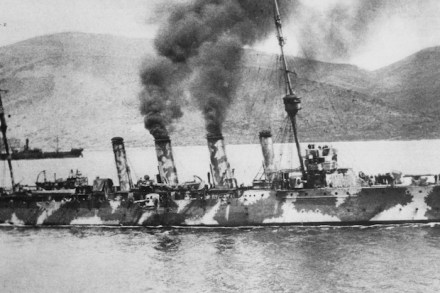
From 'News of the Week', The Spectator, 3 April 1915: Whether it is the lull before the storm or only an accident we do not know, but in any can there is a most curious absence of news both from the western and the eastern theatres of the war. In the western sea area we read of a certain amount of Zeppelin activity, but not of a very important kind. Of fresh news from the land there is very little except from the Argonne, where as neual the fighting sways backwards and forwards, but with a slight inclination in favour of the French. In the eastern theatre the reports from the centre show that the Russians are holding their own still in the Carpathians, and that their offenaive continues to gather strength and volume.
From our UK edition
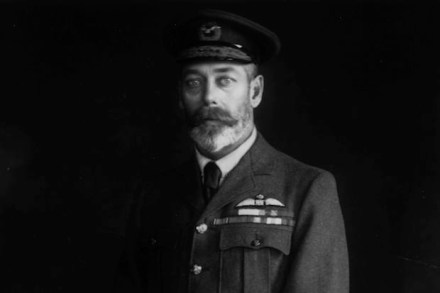
From News of the Week, The Spectator, 3 April 1915: THE King has done a big thing, and done it with characteristic modesty and freedom from sensationalism. On Thursday there was published a letter addressed by his private secretary, Lord Stamfordham, to the Chancellor of the Exchequer. "The King," says Lord Stamfordham, "feels that nothing but the most vigorous measures will successfully cope with the grave situation now existing in our armament factories." The evidence "without doubt" points to the fact that our inability "to secure the output of war material indispensable to meet the requirements of our Army in the field" is largely due to drink.
From our UK edition
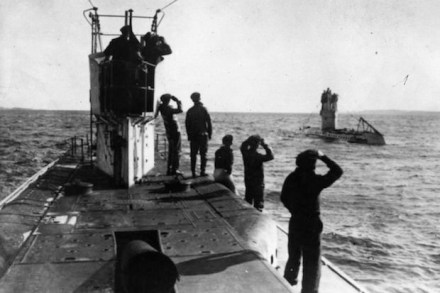
From ‘News of the Week’, The Spectator, 27 March 1915: On Friday the Admiralty announced that they bad good reason to believe that the German submarine 'U29' bad been sunk with all hands. The vessel was commanded by Captain Weddigen, who sank three British cruisers at the be- ginning of the war, and who on March 12th, when off the Scilly Islands, destroyed three trading ships. Captain Weddigen, for the courtesy he displayed to his victims, earned the name of the "Polite Pirate." He not only expressed his regret at having to sink merchant ships, but entertained the crews and towed their boats some distance towards the land. He was brave and skilful, and as humane as his orders would allow him to be.
From our UK edition
From our UK edition

From our UK edition
From our UK edition
From our UK edition
From our UK edition
From our UK edition
From our UK edition
From our UK edition
From our UK edition

From our UK edition
From our UK edition