Badgers 6
From our UK edition
From our UK edition
From our UK edition
From our UK edition

From our UK edition
From our UK edition

From our UK edition
From our UK edition
From our UK edition
From our UK edition
Why we don’t need mayors Sir: There are a number of arguments against Steve Hilton’s call for more than 10,000 mayors (‘We need 10,000 mayors’, 23 May). One is that such an idea ruptures the whole tradition of British municipal administration, under which a system of elected councils is maintained to which executive officers are answerable. Another is that it may be doubted whether there is enough administrative talent available to exercise a substituent mayoral system effectively and efficiently. Politics will always get in the way, for one thing — a factor that our present system of councils takes into account. Form is not so far encouraging, either. Mr Hilton might like to ‘jet’ over to mayoral Bristol and see a bad idea in action.
From our UK edition
Steam privatisation Cunard celebrated its 175th birthday by sailing three liners down the Mersey. The formation of the Cunard Line was an early triumph of privatisation. — The Post Office had been operating a monthly service to New York with sailing brigs since 1756. In 1836 a parliamentary committee decided that a steamship service should replace it, and that it would be more efficient for the Admiralty to put it out to tender to private operators. — Samuel Cunard defeated the Great Western Steamship Company and the St George Steam Packet Company by offering a fortnightly service from Liverpool for an annual subsidy of £55,000. The service, which at first only reached Halifax, began in May 1840.
From our UK edition
Home A Bill to enable a referendum on whether voters wanted Britain to ‘remain’ in the European Union figured in the Queen’s Speech. Another Bill prohibited any rise in income tax rates, VAT or national insurance before 2020. Tenants of housing associations would be given the right to buy their homes. Provision for Scottish devolution was promised in fulfilment of the recommendations of the cross-party Smith Commission. A ‘powerhouse’ in the north was to come into being through cities being given powers over housing, transport, planning and policing. Laws on strikes would be tightened. Red tape for business would be reduced, and a new quango set up to invigilate late payment to small businesses. Apprenticeships would be encouraged and childcare expanded.

From our UK edition
In this week’s Queen’s Speech, the government promised as usual to cut red tape for businesses. But David Cameron is remarkable in his enthusiasm for simultaneously wrapping his own government in red tape. He has proposed a law to prevent the Chancellor raising rates of income tax, and in one of the last acts of the coalition he pushed through a law which commits British governments for ever after to spent at least 0.7 per cent of Gross National Income (GNI) on international aid. There is little chance of the Prime Minister failing to meet his self-imposed spending target. Civil servants at the Department for International Development (DfiD) have proved themselves to be more than equal to the task of shovelling money in the direction of developing nations.
From our UK edition
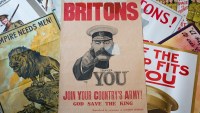
From 'Boys and Compulsory Service', The Spectator, 29 May 1915: [To the editor of The Spectator] Sir,— The wasteful expedient of universal service may be unavoidable, but I submit that loss will outweigh gain if we compel boys under twenty to fight abroad. To this, however, I would admit one exception—married men of whatever age. They have voluntarily incurred responsibility for the defence of their wives, and this, I think, must in their ease prevail against other considerations. But the unmarried are in a different position, and should be exempt from compulsory service abroad till a later age. Any that volunteer may be presumed to have some special suitability, but the rest should not be compelled to fight except to meet an actual landing of the enemy.
From our UK edition
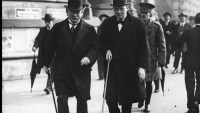
From ‘The National Government’, The Spectator, 29 May 1915: We do not suppose that the war, or the need for patriotic effort, has suddenly turned all the men on the new Cabinet list from very human human beings into angels. We do believe, however, that the war has changed them from politicians into fighting men… To put it plainly, they know that there is nothing behind them, that the reserves have been brought up, and that they must either hold the trench or die in it. This thought will keep the Cabinet together till success crowns their effort.
From our UK edition
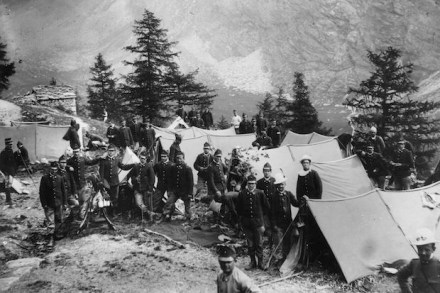
From 'What Italy Brings To The Allies', 29 May 1915: THE more the entrance of Italy into the war is contemplated the more romantic and gratifying it seems. Italy has joined the forces of Freedom with whom her heart has long been beating. It is her right and natural place. Why, then, it may be asked, did she ever join the Triple Alliance, tie herself to the Teutonic cart-tail, and consent in 1912 to re-tie the ropes which had held her in odious bondage? We pointed out in an article called "The Bridge of Peschiera," published on October 26th, 1912, that Italian statesmen dared not forget the standing menace of Austria-Hungary on her frontier. The menace was much too near to be ignored.
From our UK edition
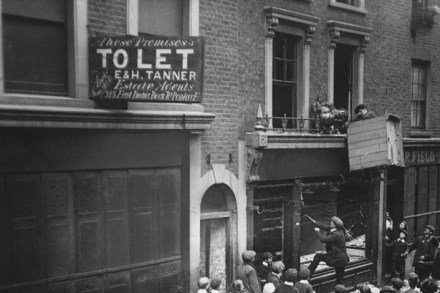
From 'Flat-hunting', The Spectator, 29 May 1915: ECONOMY is just now a fashion set by necessity. The professional class are eagerly reducing their outlay, and the most obvious thing to save on is the rent. The immediate result of this determination to live at less cost is that all the cheap flats and small houses have gone up in price, the explanation of course being that there is a run upon them. Dear flats and large houses have come down to a corresponding extent. Flat-hunting is at the moment a very exciting sport; but it should be undertaken, if possible, only by the physically and mentally hardy. The fortunate hunter may in the end "bring down" a flat to suit his own requirements, and well worth all his fatigues, but he will have a good deal to go through first.
From our UK edition
From 'News of the Week', The Spectator, 29 May 1915: The past fortnight, partly perhaps owing to the uncertainty of the political situation, has been marked by a great deal of anxiety and pessimism of a very unworthy kind. Yet there is no real cause for grumblings and lamentings, but strong cause for the reverse. We have been optimistic throughout the war, but we admit that at periods like that of the last days of October ours was optimism based on faith, faith in the invincible courage and great-heartedness of the British people. Now, however, our optimism is based upon facts. Provided that we hold on and do not flinch from the last and most painful pull upon the rope, nothing can prevent our winning.

From our UK edition
From 'Scraps of Paper', The Spectator, 22 May 1915: Fifty years ago Parliament was far more conscious collectively of the sanctity of contract than it is at the present time, and the change of attitude can only be attributed to the change of constituency. The House of Commons of previous generations was elected by a constituency composed of a limited number of voters, mostly belonging to the middle classes. Those classes, being for the greater part engaged in commercial occupations of various kinds, had all learned the value of contract.
From our UK edition
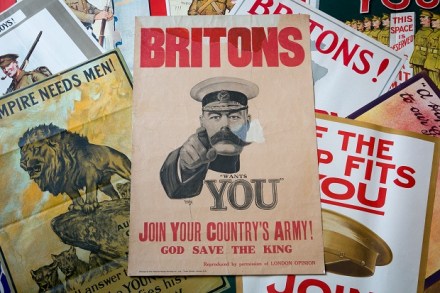
From 'Array the Nation', The Spectator, 22 May 1915 THERE have been many surprising things in this war, but perhaps the most surprising of all is Lord Kitchener's speech in the Upper House on Tuesday afternoon. In it he told the nation that he wants three hundred thousand more recruits "to form new armies." If he had asked for a million, or even two million, more men we should not have been surprised, though even then, taking the Army and Navy together, we should not be doing, per head of population; more than, or even as much as, the French; and should be doing a very great deal leas than the Germans. At such a juncture as this to ask for only three hundred thousand men literally makes one's brain reel.
From our UK edition
From 'The Future of Italy', The Spectator, 22 May 1915: WHEN the King of Italy found himself unable to accept the resignation of Signor Salandra at the end of last week the intervention of Italy on the side of the Allies became almost certain. The cause of the neutralist party had flared up for a moment, but had succeeded only in illuminating the strong reserves of the interventionists which were waiting in the background. The dramatic attempt of Signor Giolitti to keep Italy neutral—and, if possible, in an attitude of benevolence towards Germany—was but the affair of a few hours. Public opinion would have nothing to do with it. As we write we do not know when war will be declared, but we can say with confidence that the course of Italy is irrevocably marked out.