Elephants 3
From our UK edition
From our UK edition
From our UK edition

From our UK edition

From our UK edition
From our UK edition
From our UK edition
From our UK edition
From our UK edition
From our UK edition
From our UK edition
From our UK edition
The long arm of the FBI Sir: The White House may be less willing than it was to play the role of the world’s policeman in international affairs, but the FBI seems eager to be the world’s cop. No doubt, as Martin Vander Weyer has noted (Any other business, 6 May), the US Attorney General has been ‘careful to assert that many of the allegedly corrupt schemes of the Fifa officials so far arrested were planned in the US, and that US banking and “wire” services were used.’ Still, we are told that the FBI is also investigating matters such as the award of the next two world cups to Russia and Qatar, where there is no evident US involvement.
From our UK edition
Forty years on The forthcoming EU referendum has rekindled memories of the in-out Common Market referendum of 1975. But it seems a strange looking-glass world now. — Mrs Thatcher was a keen ‘yes’ campaigner, sporting a jumper with the flags of EC member states. Neil Kinnock campaigned for a British exit. The SNP and Plaid Cymru campaigned to leave the EC, the former calling it a ‘dangerous experiment in gross over-centralisation’. — The worry then was that England would vote to stay while Scotland and Wales would vote to leave. — But the most surprising supporters now seem the Daily Mail and the Daily Express, the latter declaring after the ‘yes’ vote had been confirmed that Britain was now ‘irrevocably’ European.
From our UK edition
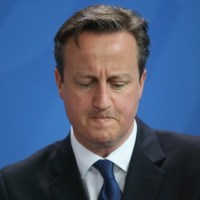
David Cameron is now facing the biggest challenge of his leadership: how to renegotiate Britain’s membership of the EU without destroying his party. His dilemma mirrors the situation of Harold Wilson 40 years ago this month. So far, the old Labour man looks the better strategist. Wilson, who had a majority of three, avoided mass resignations from his cabinet by suspending the convention that members of the government must back its entire programme in public. Of his 23 cabinet ministers, seven joined the campaign for Britain to leave the EU. They didn’t win the argument — but they ensured that the question was properly debated, and settled for many years afterwards. David Cameron need only have followed that example.
From our UK edition
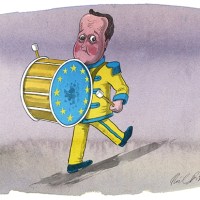
Home David Cameron, the Prime Minister, said of the EU referendum: ‘If you want to be part of the government, you have to take the view that we are engaged in an exercise of renegotiation to have a referendum and that will lead to a successful outcome.’ This caused a certain amount of uproar, with newspaper headlines saying things like ‘PM: Back me or I will sack you.’ Mr Cameron the next day said: ‘It’s clear to me that what I said yesterday was misinterpreted.
From our UK edition
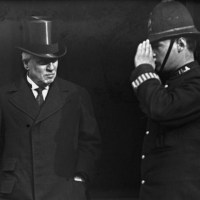
From ‘Cabinet Salaries and Cabinet Pensions’, The Spectator, 12 June 1915: THE National Government have very wisely taken a step which we strongly urged upon the late Government on February 28th, 1914, and again on July 4th of the same year. They are going to pool their salaries just as we then recommended, and make all holders of Cabinet rank, whatever their office, the recipients of £4,246 a year. The only exception is the Prime Minister, who is very properly to keep a salary of £5,000 a year—that is, £754 more than the rest of his colleagues.
From our UK edition
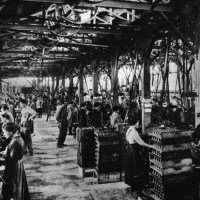
From ‘The Essential Need’, The Spectator, 12 June 1915: Just as wages must be ‘stabilised’ for the men at existing rates, so all additional profits due to war contracts must be credited, not to the individual employer, but to the state. The principle of no war rise in wages must be strictly applied to profits. Upon this foundation we could build up a sound organisation for the increased production of shell and other munitions, and build it up without unfairness either to masters or men. Both would become the agents of the government, and both would be fairly remunerated, but during the war neither would be able to take advantage of the needs of the state to increase that remuneration unduly.
From our UK edition
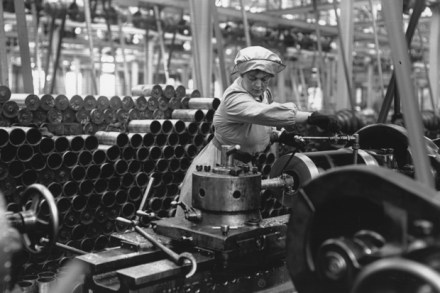
From ‘The Essential Need’, The Spectator, 12 June 1915: UNLESS we beat the Germans they will bleed us to death, and grind their heels upon our faces. Those who in their hearts nourish a secret feeling that if the worst comes to the worst we can always break off the war, and acknowledge ourselves conquered, but not utterly destroyed, and still able to hold our own as an independent nation, even if on a lower plane, are utterly mistaken. The Germans have come too near defeat ever to risk our continued existence as a free nation. If they win, they will ruin us completely. But the Germans will win if we have not enough shell and not enough of the other necessaries of war. Shell, remember, though the need of the hour, is by no means our only need. How are we to get more shell?
From our UK edition
From ‘The United States and Germany’, The Spectator, 12 June 1915: THE resignation of Mr. Bryan, the powerful American Secretary of State, which took the United States by surprise, must of course affect considerably the methods by which the American Cabinet will conduct their negotiations with Germany. Mr. Bryan, as he has in effect told his countrymen, was the brake, and the brake has removed itself. The difference between Mr. Wilson and Mr. Bryan is, in fine, this: Mr. Wilson thinks the beginning of pacificism is the respect for international law, which is being entirely set at naught by the German submarine war on merchantmen, and Mr. Bryan thinks that you can still accept the word of men who are breaking their word.

From our UK edition
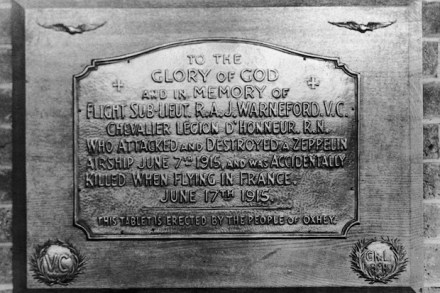
From ‘News of the Week’, The Spectator, 12 June 1915: A MAGNIFICENT feat of airmanship was performed at three o'clock on Monday morning by Flight-Sub-Lieutenant R. A. J. Warneford, R.N., who single-handed attacked a Zeppelin between Ghent and Brussels and destroyed it. He dropped six bombs on the Zeppelin, and had come so close to it that when the Zeppelin exploded his aeroplane was, so to speak, blown up. It turned completely over. According to some accounts, it turned over several times while falling, but Mr. Warneford regained control and landed safely, though of course within the German lines. The petrol had fallen out of his tank, and he had to refill it from his reserve supply before restarting his engine.
From our UK edition
From ‘Latent Creeds’, The Spectator, 5 June 1915: Has it not sometimes occurred to habitual church-goers to think how intensely interesting it would be if, when the congregation turned to the east, each man, instead of repeating after the choir, proclaimed aloud the creed of his soul? It would not perhaps be a bad spiritual exercise if each man made an effort to do so inwardly. We think many men might draw therefrom some measure of consolation, for the creed of the soul is not always the creed of the intellect; it is usually simpler and more satisfactory. The intellect is fearfully liable to the miasmatic influences of pessimism. It is almost impossible to maintain a state of optimism by reliance upon the mind alone. Life by all calculations is a tragedy.