The Spectator

Germany and the City

From our UK edition

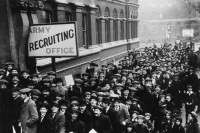
From ‘English versus German banking’, The Spectator, 18 November 1916: At the present moment a good many of us are in the mood to feel that we never wish to see any kind of German within our country again; but it is quite certain that this attitude of mind will not endure for ever, and it is equally certain that if we prevent German bankers from establishing themselves in London after the war they will take their business elsewhere, and to that extent London will lose its character as an international banking centre. Mr Pownall well expresses the main proposition: ‘It is the universality of London, its cosmopolitan composition, that creates its character. Deprive it of that character and its pre-eminence dies.

Books of the year | 17 November 2016

From our UK edition

Michela Wrong Back in 2006, David Cornwell, aka John le Carré, hired me as guide for his first trip to the Democratic Republic of Congo (DRC), to research The Mission Song. Evenings were spent on the terrace of the Orchids Hotel in Bukavu, watching pirogues languidly traverse Lake Kivu, ice cubes clinking in respective glasses of Scotch. It was easily the most entertaining ten days of my life, despite the stonking hangovers. Cornwell proved to be a thespian manqué. The wry, extremely funny anecdotes about his career as diplomat, spy and writer, his charming conman father, his peripatetic childhood and his encounters with the likes of Yasser Arafat, Richard Burton and Rupert Murdoch were all gloriously enriched by the fact that he can do all the voices.

Letters | 10 November 2016

From our UK edition

A downbeat Brexiteer Sir: Alexander Chancellor (Long Life, 22 October) wondered why Brexiteers were not more upbeat about their victory. I suspect many, like me, were worried about Remainers trying anything they can to overturn the vote. The news that the judges have ruled that Brexit cannot be triggered without a parliamentary vote shows how sadly right we are to be downbeat. Marion Gurr Pury End, Northants Shakespeare’s ‘nothing’ Sir: Charles Moore comments upon the difficulty of selecting just one word to sum up Shakespeare’s poetry. Like Cordelia, I would suggest ‘nothing’.

Portrait of the week | 10 November 2016

From our UK edition

Home Theresa May, the Prime Minister, said she still expected to start talks on leaving the EU as planned by the end of March, despite a High Court judgment that Parliament must decide on the invoking of Article 50 of the Lisbon Treaty that would set Brexit in train. Opinion was divided over whether the High Court had required an Act of Parliament or a vote on a resolution. The government appealed to the Supreme Court, which is to hear the case from 5 December. The judgment set off a confused game of hunt the issue. One issue was whether the press is allowed to be rude about judges. The Daily Mail’s headline had been ‘Enemies of the people’ and the Daily Telegraph’s ‘The judges versus the people’.

Conditions for surrender

From our UK edition

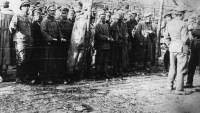
From ‘How to Shorten the War. I. Prisoners’, The Spectator, 11 November 1916: Unless we altogether mistake the mental character of the German military authorities, they will hold that there is only one effective way of dealing with our invitation to a British fireside in a prison camp, and that is by stamping with the utmost ferocity upon any symptom of readiness to surrender… If once we can set one or two plain questions rolling in the German lines, we shall have done what we want to do. ‘Is it worth while to bear this? Are we doing any good by bearing it? Does not the way we are treated give us a right not to bear it?

Books of the year | 10 November 2016

From our UK edition

Craig Raine  Philip Hancock’s pamphlet of poems Just Help Yourself (Smiths Knoll, £5): charming, authentic, trim reports from the world of work — City and Guilds, pilfering, how to carry a ladder, sex in a van (‘From the dust-sheet, wood slivers/ and flecks of paint stick to her arse’). One poem is called ‘Knowing One’s Place’; these poems know the workplace. Nutshell by Ian McEwan (Cape, £16.99) was hilarious and compelling. The Pier Falls by Mark Haddon (Cape, £16.99) was grim and compelling. Both books are ripping, gripping yarns — narrative Velcro. Paul Johnson  John Bew’s biography of Clement Attlee, Citizen Clem (Riverrun, £30), is a winner, though it might have been improved by cutting.

Hillary Clinton concedes to Donald Trump – ‘he must be given a chance to lead’

From our UK edition

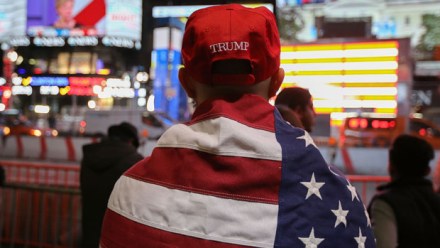
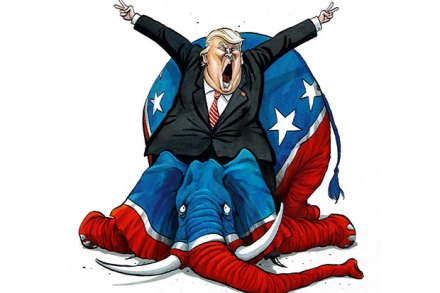
Donald Trump has been elected president of the United States. Hillary Clinton conceded defeat, telling supporters that Trump must be given a 'chance to lead' Barack Obama urged Americans to remember that 'ultimately we are all on the same team' Theresa May congratulated Donald Trump and said she looked forward to working with him. Russian President Vladimir Putin said his country was willing to ‘do everything to return Russian and American relations to a stable path of development’. A different tone was struck by German Chancellor, Angela Merkel, who reminded Trump of the country’s shared values of 'democracy, freedom and respect for the law'.

Theresa May’s passage to India

From our UK edition

When a Prime Minister flies off abroad with a few business-leaders it is seldom worthy of comment. Such trade missions tend to achieve little, beyond generating headlines intended to flaunt politicians’ pro-business credentials. But with the impending departure of Britain from the European Union,-Theresa May’s visit to India this week, accompanied by Sir James Dyson and others, has huge significance. For the first time in four decades, a British Prime Minister can discuss doing trade deals — something which we have until now been forced to contract out to officials in Brussels. Mrs May chose her destination shrewdly. With its rapidly expanding economy and the gradual liberalisation of economic policy, India is everything that the EU isn’t.

Brexit means defending UK laws and courts. Brexiteers ought to accept that

From our UK edition

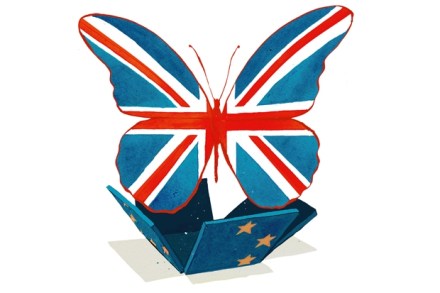
The 17.4 million who voted for Britain to leave the European Union were giving advice, rather than an instruction, to Parliament. This ought not to be a controversial point. David Cameron chose to hold a consultative rather than a legally binding referendum - and was able to do this because it would be unthinkable for parliament to ignore such advice, or stand athwart the result of that referendum. All parties regarded the referendum as politically binding. All knew that, if Brexit was voted down, then parliament would be quickly dissolved and a general election called. The British constitution is unwritten, reflecting a British distaste for schematic articles of political faith.

Barometer | 3 November 2016

From our UK edition

Strike force Nissan is to expand its plant in Sunderland, building two new models there. The Japanese company is praised for not losing a day to strikes in three decades in the city. But labour relations weren’t always so good. — In 1953, when part of Nissan’s business was assembling Austin cars in Japan under licence, the company suffered a bitter 100-day strike. Occupying US forces became involved, helping the Japanese government to arrest union leaders. — As a result of the strike, a new, less militant union was formed, with a Harvard-educated leader. The union accepted job losses but became involved in discussions over new technology. Global race And where did the UK fit in among the world’s largest car producers in the second quarter of 2016?

Letters | 3 November 2016

From our UK edition

An MP’s first duty Sir: Toby Young writes (Status anxiety, 29 October) that Zac Goldsmith’s decision to campaign for Leave in the referendum was an example of his integrity, because ‘anything else would have been a betrayal of his long-standing Eurosceptism as well as his father’s memory’. Goldsmith’s loyalty should have been to his constituents, not his deceased father. Ian Payn London SW6 Standing or sitting Sir: Can I suggest that a sitting MP who resigns their seat in the middle of a Parliament is prohibited from standing in the subsequent by-election? As a taxpayer, I resent having to pay the bill for multimillionaire Zac Goldsmith’s self-indulgent posturing.

A passage to India | 3 November 2016

From our UK edition

When a Prime Minister flies off abroad with a few business-leaders it is seldom worthy of comment. Such trade missions tend to achieve little, beyond generating headlines intended to flaunt politicians’ pro-business credentials. But with the impending departure of Britain from the European Union,-Theresa May’s visit to India next week, accompanied by Sir James Dyson and others, has huge significance. For the first time in four decades, a British Prime Minister can discuss doing trade deals — something which we have until now been forced to contract out to officials in Brussels. Mrs May has chosen her destination shrewdly. With its rapidly expanding economy and the gradual liberalisation of economic policy, India is everything that the EU isn’t.

Full text: Theresa May’s ‘Politician of the year’ acceptance speech

From our UK edition

Oh come on, we’re all builders now. Thank you very much indeed and it’s a great pleasure to receive this award. I am particularly pleased to receive the award from George, because I gather when it came to the voting it actually got very tight and I owe it to George - he just nudged me over the line because he told all the other members of the jury that if they didn’t vote for me, the economy would collapse and world war three would start. I feel I just have to make a comment or an intervention on a previous speech: Boris, the dog was put down, when it’s master decided it wasn’t needed any more. I have to say... the new job is very interesting, there's a lot to do but I am discovering some side effects of it.

Love and death

From our UK edition

From ‘Romance’, The Spectator, 4 November 1916: There is indeed a glamour and a pathos about the private soldier, especially when, as so often happens, he is really only a boy… You can’t help loving him. Most of all, when he lies still and white with a red stream trickling from where the sniper’s bullet has made a hole through his head, there comes a lump in your throat that you can’t swallow, and you turn away so that you shan’t have to wipe the tears from your eyes.

Letters | 27 October 2016

From our UK edition

Bear baiting Sir: I couldn’t agree more with Rod Liddle’s exposé of western politico-militaristic hypocrisy (‘Stop the sabre-rattling’, 22 October). We’ve already poked the Russian bear way too hard — unnecessarily so. What Rod could have also highlighted was that Nato has spread so far eastwards that it’s a blessed surprise the next world war hasn’t already started. It almost did in 1962 when Khrushchev tried to move nuclear missiles into Cuba. The same principle applies to what ‘we’ are doing now — frontline, aggressive technologies, nuclear-implied, established in the old Soviet states of Latvia, Estonia, Lithuania and even Poland.

Portrait of the week | 27 October 2016

From our UK edition

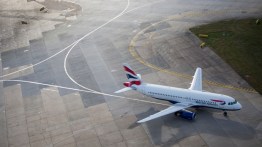
Home The government approved the proposal in Sir Howard Davies’s report for the building of an extra 3,800-yard runway at Heathrow airport, two miles north of the existing two, opening perhaps in 2025, at an estimated cost of £17.6 billion. Chris Grayling, the Transport Secretary, called the decision ‘truly momentous’, but Boris Johnson, the Foreign Secretary, said it was ‘undeliverable’. Sadiq Khan, the mayor of London, opposed the decision and Zac Goldsmith, the Conservative MP, succeeded in his application to the Chancellor of the Exchequer to be appointed Steward and Bailiff of the Three Hundreds of Chiltern. He thus triggered a by-election for his seat of Richmond Park, in which he means to stand as an independent.

Flights of fancy | 27 October 2016

From our UK edition

An extra runway for Heathrow was first proposed by a Labour government — not Gordon Brown’s, or Tony Blair’s, but Clement Attlee’s in 1949. The revived scheme, announced in 2003, has taken 13 years to win government approval. Even now it’s unclear whether it will ever be built, given the legal, practical and political obstacles. The MPs who will vote on this in a year’s time will have difficult questions to answer. Is it wise to further entrench the power and pull of Europe’s busiest airport, rather than expand Gatwick and promote competition? And must we expect regional traffic to go via Heathrow for long-haul flights? Why not allow smaller airports to expand, so that Mancunians can fly to Manchuria without needing to go near London?

Barometer | 27 October 2016

From our UK edition

Folio society A new collection of Shakespeare’s work credits Christopher Marlowe as co-author of the three Henry VI plays. Some other candidates claimed to have written Shakespeare plays: FRANCIS BACON (1561-1626). His poems are said to share a similar structure. But lacks motive to use Shakespeare as a pen name. WILLIAM STANLEY, 6th EARL OF DERBY (1561-1642): A Jesuit spy claimed he was secretly writing plays. EDWARD DE WERE, 17th EARL OF OXFORD (1550-1604): Theatre patron said to have used pen name because an aristocrat could not take credit for public plays. Dead for the last 12 years of Shakespeare’s life. ROGER MANNERS 5th EARL OF RUTLAND.