The Spectator

When Isis comes home

From our UK edition

The Islamic State’s pretence to nationhood was based on the holding of territory. With the battle for Mosul this week, together with the loss of the land that it controlled in Syria, that pretence is becoming harder to maintain. The area involved is now limited to a few shattered cities, and corridors between them. The decline of this terror organisation is to be welcomed. But this is a war which can have no neat ending. If Isis were a genuine state, it would by now be forced to consider unconditional surrender. That is not going to happen. More probably it will dissolve, its leaders and lesser agents making an escape or going into hiding. There is a danger that many Isis fighters will attempt to return to the European cities from which they came and continue an underground jihad.

Portrait of the week | 20 October 2016

From our UK edition

Home Steven Woolfe, the MEP who spent three days in hospital after an altercation at a Ukip meeting, said he was resigning from the party, which was in a ‘death spiral’. Nicola Sturgeon, the leader of the Scottish National Party, told its annual conference that an independence referendum bill would be published for consultation this week. A decision on airport expansion in England was postponed again, and Downing Street said that ministers would be allowed to express their personal opinions. Olympic athletes in a parade in Manchester were joined on an open-topped bus by two young impostors wearing Team GB tracksuits and plastic medals. The annual rate of inflation measured by the Consumer Prices Index rose to 1 per cent in September from 0.

The King’s contribution

From our UK edition

From ‘A Royal contribution’, The Spectator, 7 October 1916: His Majesty has passed through troublous times, in the constitutional controversy, in the Irish imbroglio, and in the war, when passion rose to its highest point. The temptation to go behind his Ministers, and to snatch popular favour at their expense, must have been tremendous sometimes. ‘Remember, I am not responsible for this!’ represents the attitude of many sovereigns who have called themselves constitutional. The King never by a hint, a suggestion, a word, or a gesture has taken the stage against his advisers.

Letters | 13 October 2016

From our UK edition

Cathedral going Sir: While I enjoyed much of Simon Jenkins’s analysis of why England’s cathedrals are thriving (‘Why cathedrals are soaring’, 8 October) his article misses the point. As a self-confessed non-worshipper, his understanding of these buildings and their significance lacks a crucial dimension. The raison d’être of our churches and cathedrals is faith and worship. By focusing exclusively on historical and aesthetic elements and ignoring their continuing important spiritual role, Jenkins risks behaving like a restaurant critic who never bothers to taste the food on offer.

Barometer | 13 October 2016

From our UK edition

Fears of a clown Professional clowns complained that the current craze for scaring people by dressing in clown outfits was damaging their trade. But why do some people find clowns frightening? — The effect was analysed in 1970 by Japanese professor Masahiro Mori as he researched robot faces. He found that the more lifelike faces induced increasing feelings of empathy until a critical point, at which point people began to find them scary. Then, as the face was made still more lifelike, empathy quickly returned. He called the effect the ‘uncanny valley’, after its shape on a graph. — Clown faces occupy a gap between primate and human, so the fear may originate from ancient aversion to breeding with near-human relatives.

Universities challenged

From our UK edition

On the face of it, this year’s Nobel Prize awards have been a triumph for British scientists. No fewer than five laureates come from these shores: three physicists, one chemist and an economist. But before anyone starts praising our higher education system, there is one small snag: all five are currently working at US universities. David Thouless, who was awarded half the Physics prize, has followed a typical career path. After taking a degree at Cambridge, he took a PhD at Cornell University and a postdoc at the University of California before heading back to Britain, where he worked for 13 years at the University of Birmingham. There, he started the work that would eventually win him his Nobel prize.

Sea strategy

From our UK edition

From ‘Decisive victory at sea’, The Spectator, 7 October 1916: The only excuse for changing our views of the magnificent rightness of the strategy of continually searching out the enemy, forcing him to action, and destroying him — the strategy on which Britain has been built up — would be that submarines and mines have so changed the conditions that we have to begin to write the rules of our strategy on a fresh page. No sane man, however, is either unaware of the different conditions introduced by submarines and mines or unwilling to make reasonable allowance for them. The question is not whether the method of the British Navy is to change, but whether its spirit is to change.

Letters | 6 October 2016

From our UK edition

Studying grammars Sir: Isabel Hardman (Politics, 1 October) states that no reputable research backs up the belief that grammar schools promote social justice. I am not sure she is correct. For instance, Lord Franks’s 1966 report on Oxford University recorded an accelerating rise in the share of places taken by state school pupils at that university in the 1939–1966 period. This increased from 19 per cent to 34 per cent, excluding the semi-private direct grant schools. Include the direct grants and the figure rises from 32 per cent in 1939 to 51 per cent in 1965. This change, reversed in the comprehensive years after 1965, coincided with the introduction of a national system of academic selection throughout the United Kingdom.

Portrait of the Week – 6 October 2016

From our UK edition

Home Theresa May, the Prime Minister, said at the Conservative party conference that hers was now the party of ‘working-class’ people and would occupy the ‘new centre ground’. She announced that Article 50 of the Lisbon Treaty would be invoked by next March, beginning the formal process for Britain to leave the European Union. The pound fell to a 31-year low and the FTSE 100 index rose above 7,000 to an 18-month high. Philip Hammond, the Chancellor of the Exchequer, said: ‘We will no longer target a surplus at the end of this Parliament,’ as his predecessor George Osborne had promised, but would spend on housing and transport. More than 500 people were stranded on the London Eye big wheel for three hours one evening by a mechanical fault. A No.

Where are the ideas?

From our UK edition

The Conservative party conference in Birmingham this week seemed a remarkably relaxed affair. The European question has been settled. Seldom has victory in the next-election looked more secure. The Labour conference in Liverpool had been a debacle, as the hard left set about picking off the remaining moderates. Diane James has resigned as Ukip leader after 18 days. It’s quite possible that her replacement could transform Ukip into a new working-class party — and then do to Labour in the north of England what the SNP has done to it in Scotland. One cabinet member put it well: the Tory party, he said, was like a piece of elastic that had been stretched much too far under David Cameron but has now been allowed to revert to a more natural position.

Jeremy Corbyn’s shadow cabinet reshuffle in full

From our UK edition

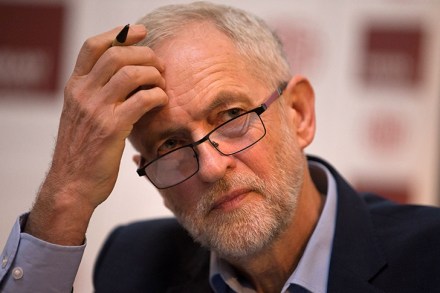
Jeremy Corbyn has begun a shadow cabinet reshuffle. Follow the details here. IN: Nick Brown has been appointed as Winterton's successor. A former Gordon Brown loyalist, the MP for Newcastle upon Tyne East will be responsible for instilling discipline in the increasingly divided party. On accepting the role, Brown said he hoped to 'play a constructive role in providing the strongest possible opposition to this Tory government'. Shami Chakrabarti has been appointed to the post of shadow attorney general. The newly appointed peer says 'it is an enormous privilege to take up the post of Shadow Attorney General in Jeremy Corbyn’s new team. I hope to follow in a great tradition of law officers on both sides of the aisle who have defended rights, freedoms and the Rule of Law'.

Conscription in Ireland

From our UK edition

From ‘More men’, The Spectator, 7 October 1916: Are we or are we not to apply compulsory service to Ireland? The difficulties, we admit, are very great. Personally, we dislike the idea of seeing the privilege — for such it is — of defending the Empire accorded to men who have disgraced themselves as did the Sinn Feiners and the disloyal population of Ireland in the recent revolt. At the same time, it does seem a gross injustice that the Irish people should not bear their share of the common burden.

Full text: Theresa May’s conference speech

From our UK edition

When we came to Birmingham this week, some big questions were hanging in the air. Do we have a plan for Brexit? We do. Are we ready for the effort it will take to see it through? We are. Can Boris Johnson stay on message for a full four days? Just about. But I know there’s another big question people want me to answer. What’s my vision for Britain? My philosophy? My approach? Today I want to answer that question very directly. I want to set out my vision for Britain after Brexit. I want to lay out my approach – the things I believe. I want to explain what a country that works for everyone means.

Full text: Ruth Davidson’s Conservative party conference speech

From our UK edition

Friends, five years ago I came to this conference, seeking to win the leadership of our party in Scotland. We’d just had our worst ever Scottish election result on the back of two decades of decline. As career moves went, the omens didn’t look exactly ideal. We were being kicked around by our opponents. And the media was calling us a corpse that wouldn’t twitch. And that was on a good day. But conference, you always kept the faith. When I argued we could win again as Conservatives, you granted me the privilege of allowing me to lead. We weren’t being credited with much in the way of prospects but we had our values, we had heart and we had belief.

Full text: Education secretary Justine Greening’s conference speech

From our UK edition

As a Conservative, when I look at where we’ve had the biggest impact in government, there's one area that really stands out. And that’s education. Through a lot of hard work, not least from teachers... ....we have come a very, very long way. Thanks to the reforms carried out by Michael Gove and Nicky Morgan... ... we've seen standards raised and 1.4m more children in good or outstanding schools. In higher education, the global rankings now show our universities right at the very top... ....with record numbers of our young people applying. Crucially, over the last six and a half years we've also seen a renaissance in apprenticeships.... ... well over two and a half million of them (since 2010). We've much to be proud of.