The Spectator

Royal engagements: A Spectator history, 1839 – 2010

From our UK edition

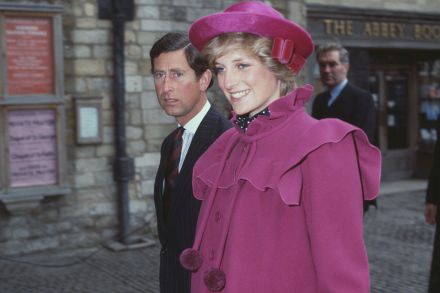
A Royal engagement is dominating the headlines once again. Here is how The Spectator has marked royal engagements over the years, from Prince Albert's 1839 proposal to Queen Victoria, through to Prince Charles popping the question to Diana in 1981: 30 November 1839: Queen VictoriaNow that it is certain the Queen has done with declining and is going to conjugate, Speculation, like a tasked schoolboy, is once more turned down to discover the potential, the imperative, the conditional, and all the other moods of the political future... All things are possible through marriage; and Prince Albert’s present sigh conjugal putting every affair, as has been said, in the potential, may cause even the welfare of an entire nation to be translated in some unforeseen manner.

Cancer diagnosis – the shortfall and the opportunity

From our UK edition

THE PROBLEM The number of Britons aged 75 and over is projected to rise by 89.3% by mid-2039. In 2014, their number stood at 5.2 million; the estimate for 2039 is currently 9.9 million. Britons aged 50-74 account for more than half (53%) of new cancer cases and the elderly (75 and above) for more than a third (36%). THE COST OF LATE DIAGNOSIS Early-stage cancer treatment is significantly less expensive than treating the disease at an advanced stage. STAGE 1 CANCER (The cancer is relatively small and contained within the organ it started in.) Colon: £3,373Rectal: £4,449Ovarian: £5,328Lung: £7,952 STAGE 4 CANCER (The cancer has spread from where it started to another body organ.

Hope in Zimbabwe

From our UK edition

With Robert Mugabe’s departure goes one of the caricatures of late 20th-century Africa: the tinpot dictator who brutalises his opponents, impoverishes his people yet manages to extract enough wealth from a decaying economy for a fleet of Rolls-Royces and a private jet to speed him off to private medical appointments in Singapore. But his long-overdue resignation should not be allowed to detract from what is going on elsewhere in sub-Saharan Africa. Zimbabwe, which did not stand out for its rottenness in the early years of Mugabe’s rule, now finds itself surrounded by either functioning democracies or fairly benign regimes with some element of democracy. Aside from Zimbabwe, African economies have grown consistently this century, averaging 5.

Letters | 23 November 2017

From our UK edition

The medium is the message Sir: In his piece about the tech-savvy Labour party, Robert Peston writes: ‘A party’s values and messages matter. But in today’s digital Babel, they are probably less important than how the message is presented and to whom it is communicated’ (‘Corbyn 2.0’, 18 November). Some of your readers may remember the late Marshall McLuhan who in the 1960s coined the phrase ‘The medium is the message.’ I’ve always thought this to have been prescient for its time and it has become ever more pertinent. It is an enormous downside to the digital age that the means of transmitting data is more important than its content.

Portrait of the week | 23 November 2017

From our UK edition

Home The cabinet, including Boris Johnson and Michael Gove, agreed that the European Union would have to be offered something like £40 billion in the fond hope that at the summit on 14 December it would agree to start talking about a trade agreement. Michel Barnier, the EU negotiator, made a speech reminding the City that ‘The legal consequence of Brexit is that UK financial service providers lose their EU passport.’ He also stressed the unresolved Irish border question. Arlene Foster, the leader of the DUP, criticised the Prime Minister of Ireland: ‘You shouldn’t play about with Northern Ireland, particularly at a time when we’re trying to bring about devolved government again.

Being boring

From our UK edition

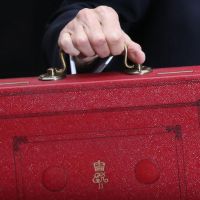
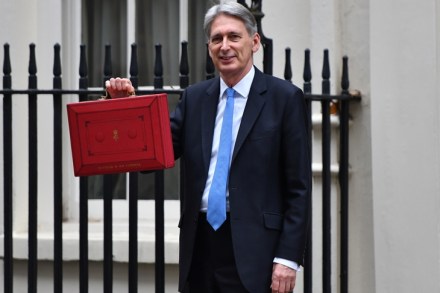
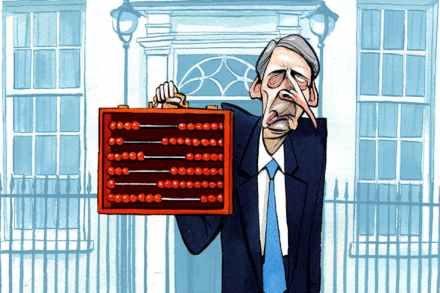
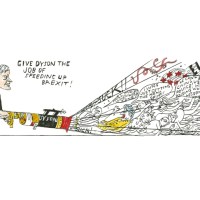
Philip Hammond began his first Budget, in March, by playing down its importance — for his big ideas on fiscal policy, he suggested we would have to wait until the autumn. It was a wait which was very nearly extended to eternity as he narrowly avoided losing his job in a post--election reshuffle. We found out this week that it was a bluff: he doesn’t have many big ideas, just a selection of small ones. Which, under the circumstances, is something of a relief. The Chancellor is getting better at telling Britain’s story, boasting about record employment and how the best-paid 1 per cent pay 27 per cent of all income tax. He didn’t say why (that tax rates for the best-paid were reduced), nor did he double down on more tax cuts that could have stimulated growth.

to 2334: sweet variations

From our UK edition

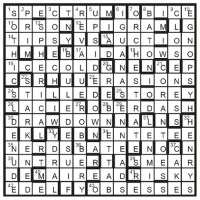
Four types of CAKE (37) were given UPSIDE-DOWN (5): 10D, 20D, 31D and 33D. Four other types of cake were TIPSY (14), i.e. anagrams: 26A (éclair); 40A (Madeira); 7D (Sachertorte); 30D (Dundee).

John McDonnell’s Today interview, full transcript

From our UK edition

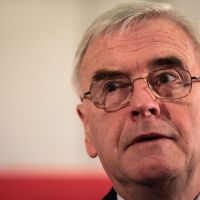
Mishal Husain: Let’s start with that economic picture. Do you agree with what the OBR said about growth; essentially that we’ll be poorer for longer, and about productivity? John McDonnell: I have to, based upon the information that they’ve arrived at that judgement. I think it’s something that we’ve been pointing out for a number of years now; that if you don’t invest in your economy, inevitably that will impact upon productivity, and that will impact upon growth, and, importantly, that will impact upon people’s wages. The prediction now from The Resolution Foundation is that average annual pay is going to be £1,000 lower in 2022 than it was forecast in the March 2017 budget, so it’s going to hit all of society.

Revenues past

From our UK edition

From 12 July 1828: The Chancellor made his financial statement on Friday, in a style of candour and clearness which pleased all men. Its substance was this: that the state of the revenue is flourishing; that there will neither be new taxes imposed nor old ones reduced; and that the sinking-fund shall be limited to three millions: not the real, but the desired actual surplus of revenue, which it is not in future years to exceed. The expenditure of 1828 is, in round numbers, 32 millions for the permanent charges, and 18 millions for the military establishments, the latter being one million less than the amount of last year.

Philip Hammond is not the man to take the battle to Jeremy Corbyn

From our UK edition

Philip Hammond began his first Budget, in March, by playing down its importance — for his big ideas on fiscal policy, he suggested we would have to wait until the autumn. It was a wait which was very nearly extended to eternity as he narrowly avoided losing his job in a post--election reshuffle. We found out this week that it was a bluff: he doesn’t have many big ideas, just a selection of small ones. Which, under the circumstances, is something of a relief. The Chancellor is getting better at telling Britain’s story, boasting about record employment and how the best-paid 1 per cent pay 27 per cent of all income tax. He didn’t say why (that tax rates for the best-paid were reduced), nor did he double down on more tax cuts that could have stimulated growth.

Live: Autumn Budget 2017

From our UK edition

Philip Hammond avoided any disasters in his second budget of 2017. Here are the headline announcements: Growth forecasts downgraded: Britain's economy is now expected to grow by 1.5 per cent in 2017, down from the prediction of 2 per cent made in March Stamp duty scrapped for first time buyers on homes costing up to £300,000 £3bn set aside for Brexit preparations Millenials' railcard confirmed; National Living Wage up; VAT threshold for small businesses maintained; £2.8bn more for the NHS; 100 per cent council tax on empty homes; target to build 300,000 new homes by 2020s Tobacco duty up; beer and wine duty frozen; No fuel duty rise for petrol and diesel cars next year Annual borrowing is £49.

Barometer | 16 November 2017

From our UK edition

No. 2 iron English Heritage launched a crowdfunding campaign for repairs to Abraham Darby’s 1779 bridge at Ironbridge, Shropshire. This is often called the first iron bridge in the world but in fact one was built ten years earlier to carry the Great North Road over the River Ure in North Yorks. While Darby’s bridge was built to show off its iron structure, the Ure bridge’s cast-iron beams were disguised by stone paving slabs. As the main road from London to Scotland, it bore far heavier loads than the Darby bridge — until 1945 when it finally collapsed. Carbon culprits Global carbon emissions are predicted to rise by 2 per cent this year — the first increase for several years. Which countries are, officially, the worst offenders? Qatar 45.4 Curacao 37.

The next Iraq war

From our UK edition

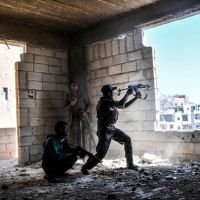
After the most intensive street-by-street combat since 1945, Isis’s so-called caliphate is no more. Last weekend, the Iraqi government won what should be the final battle and is now preparing to say that the war is ended. The jihadis still have the odd redoubt — but they have been forced out of Mosul and Raqqa after an intensive coalition campaign led by America and Britain. Donald Trump is unlikely to emulate his predecessor-but-one by appearing in front of a banner saying ‘Mission Accomplished’. Theresa May probably won’t deliver such a statement either. Indeed, the war against Isis has barely been mentioned by either politician, even though our involvement has been larger than expected.

Portrait of the week | 16 November 2017

From our UK edition

Home As the European Union (Withdrawal) Bill faced 470 amendments in its examination by a committee of the whole House, David Davis, the Brexit Secretary, promised that Parliament would be able to have a final take-it-or-leave-it say on the Brexit agreement, which would become law by an Act of Parliament. He said: ‘It’s a meaningful vote, but not meaningful in the sense that some believe meaningful [to be], which is that you can reverse the whole thing.’ A government amendment announced by Theresa May would incorporate in law the moment at which Britain would leave the EU: 11pm GMT on 29 March 2019. EU citizens who become British do not lose the right to bring a foreign-born spouse to the UK, the European Court of Justice ruled; British citizens do not enjoy this right.

to 2333: Unchangeable

From our UK edition

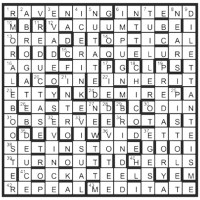
Answers to clues in italics are SET IN STONE (38). Resulting entries at 1, 2, 14, 25 and 43 (in which the types of stone are rag, agate, opal, pit and metate) are defined by 19, 42, 33, 20 and 6A. First prize Stephen Saunders, Midford, Bath. Runners-up Tim Hanks, Douglas, Isle of Man;Mrs N. Twickel, Shipston-on-Stour, Warwickshire.

Books of the Year | 16 November 2017

From our UK edition

Daniel Swift I spent too much of this (and last) year reading anaemic updatings of Shakespeare plays: pale novels which borrowed plots and missed points and, oddly, always misunderstood the minor characters. After these, Preti Taneja’s We That Are Young (Galley Beggar Press, £9.99) came as a relief and a surprise. Her novel is big, beautiful, and most of all bold: a rewriting of King Lear, transplanted to modern day Delhi, which is both a dazzlingly original reading of the play and a full novel in its own right. A masterpiece, and by a long way my book of the year. Graham Robb Mike Lankford’s genial and sassy biography Becoming Leonardo: An Exploded View of the Life of Leonardo da Vinci (Melville House, £19.25) has none of the stuffiness of that exhausting genre.

Does Theresa May’s zombie government even want to survive?

From our UK edition

Dealing with a hung parliament was never going to be easy, but no one quite foresaw the decay which now seems to have set in to Theresa May’s government. The best that can be said for the Prime Minister is that the past week’s events have weakened her rivals within the Conservative party. No one is talking up Priti Patel as a potential rival any more and a challenge from Boris Johnson is now highly unlikely, following his loose words about a British woman incarcerated in Iran — which the Iranian regime may use as a pretext to increase her sentence. Like John Major, the Prime Minister benefits from the feuding in the Cabinet and is kept in place by the fear that a leadership challenge would see the party rip itself apart.